

Skip to content

Shopping bag

Your cart is empty

Article: How to Build a Versatile Spring-Summer Colour Palette That Never Dates

How to Build a Versatile Spring-Summer Colour Palette That Never Dates

How to Build a Versatile Spring-Summer Colour Palette That Never Dates

Ever open your wardrobe and feel that nothing quite works, despite having plenty to wear? A compact, considered colour palette ensures pieces coordinate effortlessly, flatter the silhouette and remain resilient to passing trends.


This post shows how to anchor a wardrobe with personalised neutrals, choose harmonious accents and combine them with quiet confidence. You will discover practical rules and pairing templates that transform a curated palette into versatile outfits that stand the test of time, helping you get more wear out of every piece.


{"image_loaded": true, "load_issue": null, "description": "The image shows a close-up side view of a person with curly hair adjusting a light blue fabric draped over a black dress form or mannequin. The person's focus is on the fabric, using both hands to smooth or arrange it. The background is out of focus, showing an indoor environment with a dark wall and some indistinct furniture. The lighting is soft and natural, highlighting the texture of the fabric and the person's hands.", "people": {"count": 1, "roles": ["designer", "tailor", "seamstress"], "visible_demographics": "adult, individual with light skin and curly hair", "attire": "light-colored clothing, bracelet on right wrist, rings on fingers", "pose_or_activity": "adjusting fabric on dress form"}, "setting": {"environment_type": "indoor", "location_hints": "studio or workspace with dark and light walls, blurred background with furniture", "depth_scale": "close-up", "lighting": "soft natural lighting from one side", "temperature": "neutral"}, "objects": {"primary_objects": ["light blue fabric", "black dress form or mannequin"], "secondary_objects": ["rings on fingers", "bracelet"], "object_interaction": "person arranging fabric on dress form with hands"}, "composition": {"subject_focus": "person's hands and fabric on dress form in foreground, person's face blurred in profile on right side", "relationships": "person closely engages with fabric and dress form", "depth_structure": "shallow depth of field with blurred background", "camera_angle": "eye-level", "cropping": "close-up, framing hands and fabric prominently"}, "motion": {"motion_type": "implied", "motion_direction": null, "energy_level": "low", "sequence_implied": "single moment"}, "aesthetic": {"medium": "photograph", "style_subtype": "realistic, candid", "color_palette": "muted with emphasis on light blue fabric and natural skin tones", "contrast_level": "moderate", "texture_and_grain": "smooth, crisp focus on fabric and hands", "postprocessing": "minimal, natural coloring"}, "tone": {"visual_mood": "calm, focused", "lighting_influence": "soft and diffused natural light", "camera_distance_effect": "intimate, close observation"}, "confidence": {"demographic_confidence": 0.9, "activity_confidence": 0.95, "setting_confidence": 0.8}}


Anchor your wardrobe with personalised neutral essentials for effortless elegance


Select two or three personalised neutrals by holding fabric samples against your jawline in natural light. A shade that enlivens your complexion will serve as the base; one that dulls it signals a poor match. Observe fabric and finish: lightweight linen and cotton read cool and airy, while silk and satin often appear warmer or more luminous because of their sheen. Photograph each swatch both in shade and in sunlight to note any change. Build a neutral hierarchy for outfit construction with an anchor piece for structure, mid-tones for layering and lighter accents for highlights. Repeat a single neutral in at least two places, and choose anchors that are the most substantial pieces by weight or presence so they steer the look.


Use neutrals as a calm stage for colour: introduce a single accent at a time and repeat it in two different places in an outfit, such as a top and an accessory, so the accent feels intentional and establishes a gentle rhythm. Try pairings such as coral with warm beige or lime with cool grey to observe how one accent can shift the mood of a neutral base. Curate a swatch kit of fabric samples, photographs and saved outfit images, view it in varied light, and update it as your hair, skin tone or lifestyle evolve so your personalised neutrals remain relevant.


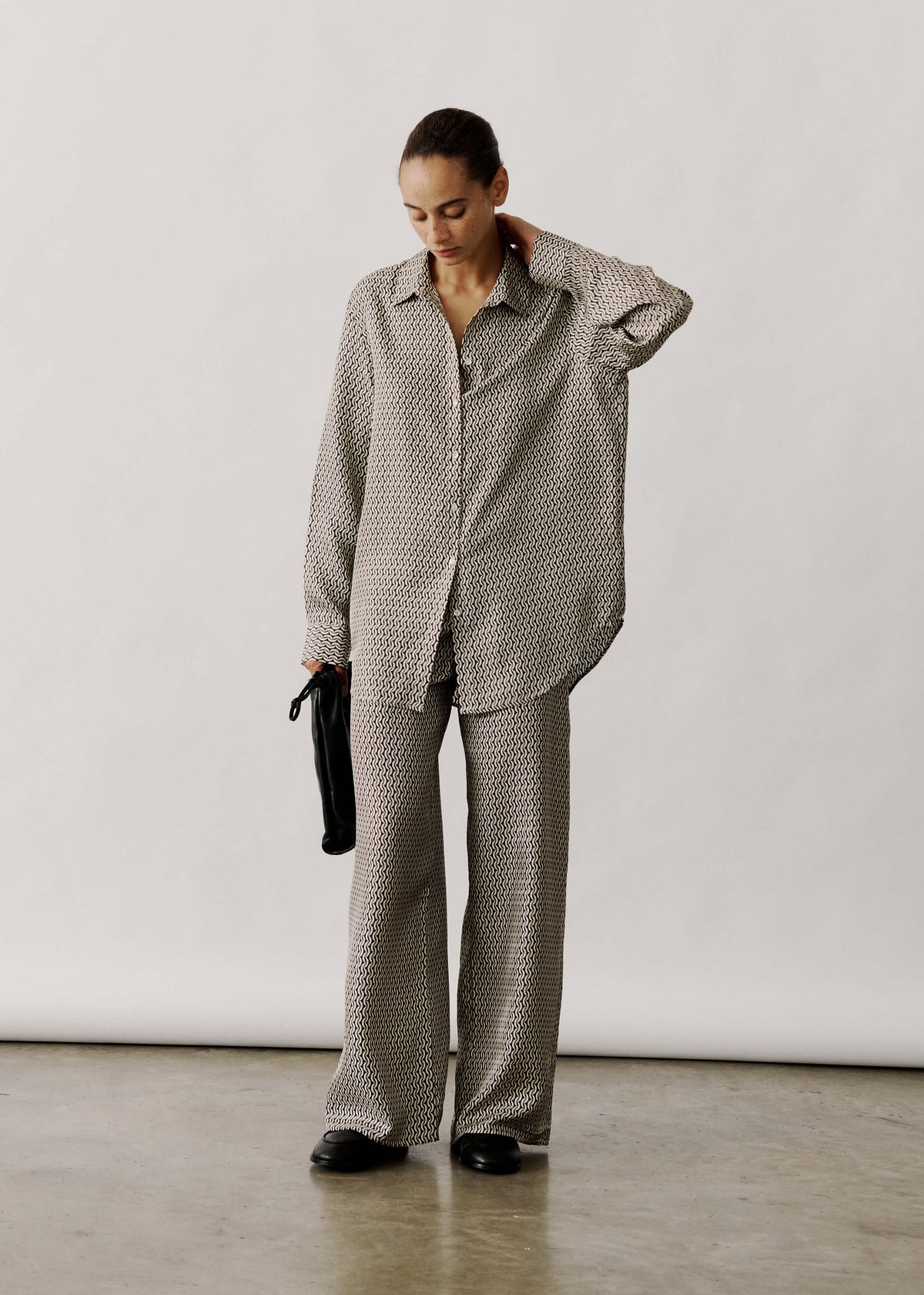
Anchor your neutral palette with silk trousers.


{"image_loaded": true, "load_issue": null, "description": "A young woman with medium-dark skin and curly hair stands barefoot in front of a mirror inside a room with wooden floors and ceiling beams. She wears cream-colored pajamas and holds two dresses on hangers: one black with a floral pattern and one white with a colorful floral pattern. The room has a partially open white door and some furniture including a dark wooden chair. The image captures her reflection in the mirror from head to feet.", "people": {"count": 1, "roles": ["individual choosing clothing"], "visible_demographics": "One young adult woman, medium-dark skin tone, curly hairstyle.", "attire": "Cream-colored pajama set.", "pose_or_activity": "Standing barefoot, holding two dresses on hangers, looking at herself in the mirror."}, "setting": {"environment_type": "indoor", "location_hints": "Wooden floors and ceiling beams, partially open white wooden door, some furniture visible including dark wooden chair, soft natural lighting.", "depth_scale": "medium", "lighting": "Natural light from an unseen source illuminating softly.", "temperature": "neutral"}, "objects": {"primary_objects": ["two floral dresses on hangers"], "secondary_objects": ["mirror with wooden frame", "door", "dark wooden chair"], "object_interaction": "The woman is holding both dresses in front of her while looking in the mirror."}, "composition": {"subject_focus": "Centered in mirror reflection", "relationships": "The woman is reflected straight-on while holding dresses, background details are behind her in the room.", "depth_structure": "Clear foreground (mirror and woman) and background (room interior) separation.", "camera_angle": "Eye-level", "cropping": "Full body reflected in mirror, framed by door and wall edges."}, "motion": {"motion_type": "static", "motion_direction": null, "energy_level": "low", "sequence_implied": "single moment"}, "aesthetic": {"medium": "photograph", "style_subtype": "naturalistic, candid", "color_palette": "muted neutrals with pops of color in dresses", "contrast_level": "moderate", "texture_and_grain": "smooth, natural indoor lighting texture", "postprocessing": "minimal, natural color grade"}, "tone": {"visual_mood": "calm, contemplative", "lighting_influence": "soft, natural light creating a neutral tone", "camera_distance_effect": "intimate, personal"}, "confidence": {"demographic_confidence": 0.8, "activity_confidence": 0.9, "setting_confidence": 0.85}}


Select harmonious accents and pair them with quiet confidence


Begin with a simple three-part approach: a neutral anchor that appears across most pieces, a mid-tone family for larger garments, and a single accent reserved for accessories. Photograph three-piece outfits in natural light to confirm the elements interact as intended. Use a practical 60/30/10 rule to weight colour across an outfit — 60 percent anchor, 30 percent secondary, 10 percent accent — lowering the accent share for very bright hues or temporarily inverting the balance to make one piece the focal point. Prioritise value and texture over hue alone by creating contrast through light and dark values or by choosing contrasting fabrics and finishes for similar colours. Check swatches outdoors and under artificial light to note shifts in sheen and perceived colour; this predicts real-world wearability and avoids surprises when you wear the outfit.


Begin with an analogous base and introduce a single complementary pop through a small accessory such as a scarf, belt or footwear to enliven the palette without overpowering the anchor. Keep saturation controlled so the overall effect reads as predominantly soft or predominantly rich, and repeat at least two colours within an outfit to make mixing and layering effortless. Maintain a consistent neutral bridge to tie pieces together, and view combinations in varied light to ensure they remain versatile and harmonious.


Anchor outfits with a printed silk dress.


{"image_loaded": true, "load_issue": null, "description": "The image shows a young woman sitting on a window ledge inside a room. She is wearing a light brown buttoned blouse, light blue high-waisted jeans, and black shoes. The woman is seated sideways, looking out the large multi-pane window to her left, with one hand holding back the curtain and the other resting on the window ledge. Outside the window, a roof and brick building fa\u00e7ade are visible. The interior features heavy beige curtains, wooden flooring, and a brick window ledge. The lighting is natural, coming from the window, and the shot is taken from a medium distance at eye-level.", "people": {"count": 1, "roles": ["model"], "visible_demographics": "young adult female, fair-skinned", "attire": "light brown blouse, light blue jeans, black shoes", "pose_or_activity": "sitting on window ledge, looking outside, holding curtain"}, "setting": {"environment_type": "indoor", "location_hints": "large multi-pane window with brick exterior view, beige curtains, wooden floor", "depth_scale": "medium", "lighting": "natural daylight from window", "temperature": "warm"}, "objects": {"primary_objects": ["window", "curtains", "woman"], "secondary_objects": ["brick building visible outside", "wooden floor"], "object_interaction": "woman holding curtain with one hand and resting other on window ledge"}, "composition": {"subject_focus": "woman positioned slightly off-center to right, framed by window and curtains", "relationships": "woman interacts with window and curtain", "depth_structure": "clear foreground (woman and interior) and background (outside rooftop and building) separation", "camera_angle": "eye-level", "cropping": "medium distance showing full seated body"}, "motion": {"motion_type": "static", "motion_direction": null, "energy_level": "low", "sequence_implied": "single moment"}, "aesthetic": {"medium": "photograph", "style_subtype": "naturalistic, lifestyle", "color_palette": "muted warm tones", "contrast_level": "moderate", "texture_and_grain": "smooth", "postprocessing": "soft focus, warm color grading"}, "tone": {"visual_mood": "calm, contemplative", "lighting_influence": "soft natural light creates gentle mood", "camera_distance_effect": "intimate but not close-up"}, "confidence": {"demographic_confidence": 0.9, "activity_confidence": 0.9, "setting_confidence": 0.95}}


Turn your colour palette into versatile, timeless outfits


Begin with a palette of three to four neutrals and apply a 60:30:10 rule so one colour anchors most garments, a second supports your layers, and a small accent appears in jewellery, scarves or shoes. Choose two accent colours that harmonise with your skin undertone by using the colour wheel to pick complementary or analogous pairs, then test them by holding fabric swatches near your face or photographing them in natural daylight. Build the wardrobe around versatile silhouettes — a lightweight blazer, a midi dress, tailored trousers, breathable shirts and a practical outerwear piece work particularly well. Prefer linen blends or cotton-poplin for structure and airflow, and reserve knits for cool evenings.


Use pattern and texture to broaden a wardrobe palette without introducing new hues. Opt for tonal stripes, small-scale florals or textured weaves that echo an accent colour so patterned pieces still sit comfortably alongside neutral trousers. When mixing patterns, vary the scale and ensure at least one shared colour so combinations read as harmonious rather than competing. Create simple outfit templates and test them to see how many looks you can make from a compact set: for example, three tops, two bottoms, a jacket and a dress can produce at least fourteen distinct outfits when you include combinations with and without the jacket. Photograph successful pairings to build a ready reference for dressing, packing and seasonal rotation. Keep accents to two and follow a 60:30:10 rhythm to anchor looks, reduce visual clutter and make accidental clashes less likely.


A considered spring-summer palette anchored by two or three reliable neutrals, organised around a 60/30/10 structure with one or two harmonising accents, simplifies dressing and increases the wearability of each piece. Hold fabric swatches to the jawline and observe them in both natural and artificial light, then repeat chosen colours in at least two places within an outfit to see how small, deliberate choices create a cohesive look.


Use the neutral hierarchy, swatch kit and pairing templates above to assemble three or four versatile neutrals, two accent colours and a handful of adaptable silhouettes that combine into many outfits. Photograph the most successful pairings and review them in varied light. The result: swifter dressing, more effortless packing and a wardrobe that endures beyond fleeting trends.
 

Leave a comment

This site is protected by hCaptcha and the hCaptcha Privacy Policy and Terms of Service apply.

All comments are moderated before being published.

Read more

3 Ways to Style Silk Pyjamas for Effortless Daytime Dressing

3 Ways to Style Silk Pyjamas for Effortless Daytime Dressing

Silk pyjamas possess an effortless allure, yet stepping out in them can feel daunting if you worry about appearing underdressed...

Read more
10 Ways Luxury Sleepwear Can Help You Unwind At Bedtime

10 Ways Luxury Sleepwear Can Help You Unwind At Bedtime

If you find yourself scrolling in bed, tossing the covers or waking unrefreshed, the cause may be more than a...

Read more