
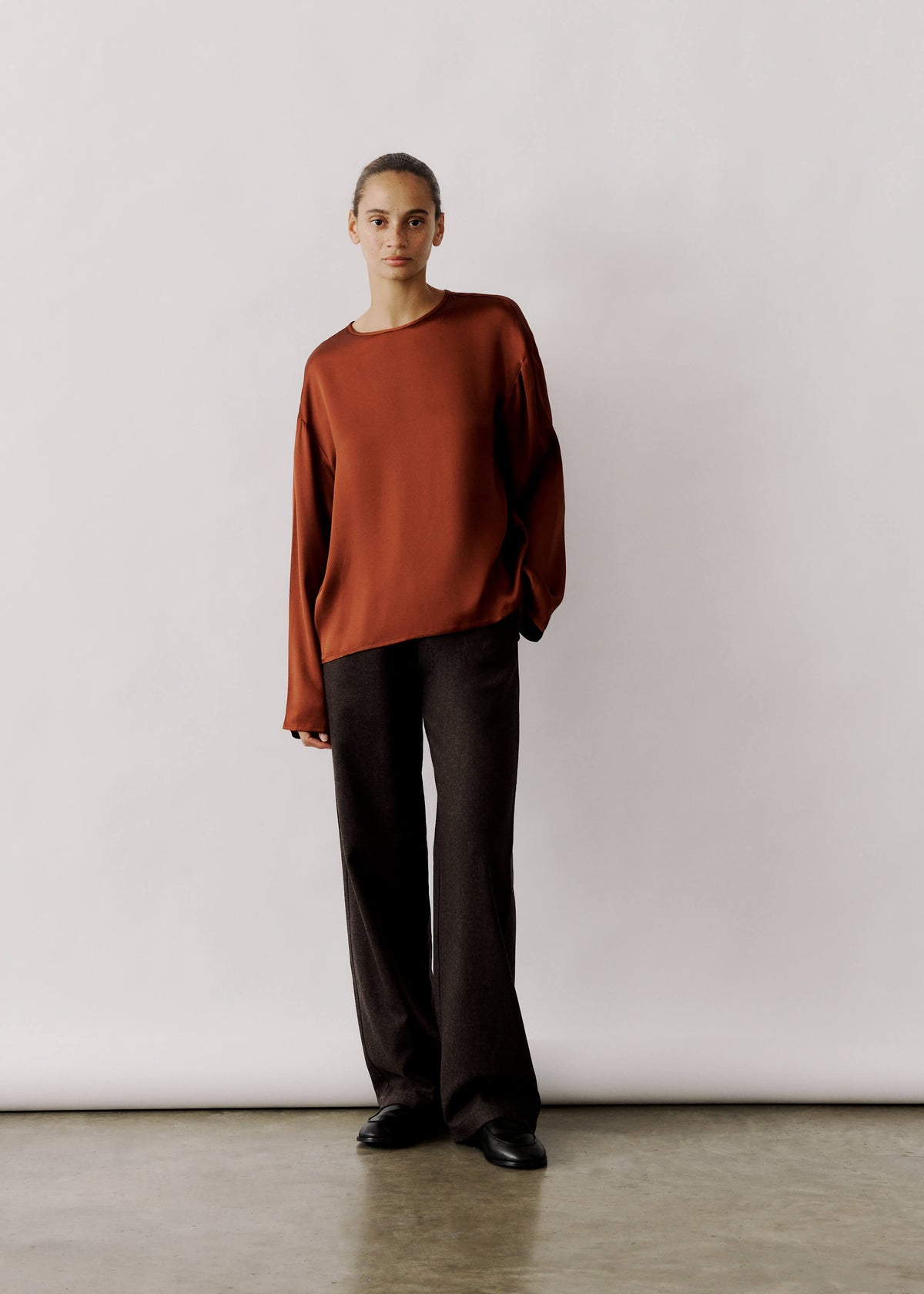
5 Principles for Balancing Scale and Proportion When Layering Prints and Textures
Layering prints atop textured fabrics can elevate a simple outfit into something striking, yet many attempts feel heavy or visually chaotic. How can you harmonise bold motifs, varied scales and tactile materials so the silhouette stays poised and effortless?
This guide sets out five practical rules: assess scale and proportion; match texture to fabric weight; choose print scale and motif to flatter the body and suit the setting; harmonise colour, contrast and tone; and layer thoughtfully to preserve silhouette and movement. Apply these principles so each layer reads clearly, movement remains natural, and you make confident choices that flatter your shape and the occasion.
![{"image_loaded": true, "load_issue": null, "description": "A single middle-aged woman with short, grayish hair is seated at a wooden table in a warmly lit indoor setting. She wears a long-sleeved, striped pajama-style shirt in shades of brown, blue, and white, and is arranging or handling some soft, patterned fabric items on the table. To her left, there is a pink flower arrangement partially in the frame. Behind her is a modern interior with a large black reflective panel, a window with natural light coming in, and some decorative items in the background. The lighting is soft and natural, suggesting a casual, comfortable environment.", "people": {"count": 1, "roles": ["individual"], "visible_demographics": "middle-aged woman", "attire": "striped pajama-style shirt", "pose_or_activity": "seated, arranging fabric items on table"}, "setting": {"environment_type": "indoor, residential or cozy modern space", "location_hints": "wooden table, large black reflective panel, window with daylight, decorative sculpture, upholstered chair", "depth_scale": "medium", "lighting": "soft natural light mixed with warm interior lighting", "temperature": "warm"}, "objects": {"primary_objects": ["striped pajama-style shirt worn by woman", "soft patterned fabric items on table", "pink flower arrangement"], "secondary_objects": ["decorative sculpture in background"], "object_interaction": "woman handling and arranging fabric items on table"}, "composition": {"subject_focus": "woman seated center-right of frame", "relationships": "woman at table with fabrics in foreground and interior elements behind", "depth_structure": "some foreground (fabric) and background (decor, window) separation", "camera_angle": "eye-level", "cropping": "medium framing, waist up"}, "motion": {"motion_type": "implied", "motion_direction": null, "energy_level": "low", "sequence_implied": "single moment"}, "aesthetic": {"medium": "photograph", "style_subtype": "realistic", "color_palette": "muted warm tones with natural light", "contrast_level": "moderate", "texture_and_grain": "smooth, natural skin and fabric textures", "postprocessing": "natural, minimal editing"}, "tone": {"visual_mood": "calm, cozy, natural", "lighting_influence": "soft, diffused natural light mixed with warm interior lighting", "camera_distance_effect": "intimate, welcoming"}, "confidence": {"demographic_confidence": 0.9, "activity_confidence": 0.8, "setting_confidence": 0.85}}](https://cdn.shopify.com/s/files/1/1327/6929/files/IMG_2526_3.jpg?v=1613748936)
1. Assess scale and proportion to create balanced, timeless compositions
Lay each garment flat and observe where motifs sit across the bodice, skirt and sleeve. Favour larger repeats on broad panels and finer repeats on narrow areas so motifs remain legible and proportionate. When combining prints, follow a scale hierarchy: select one dominant large-scale motif, introduce a supporting medium element and finish with a small-scale print or a textured solid to guide the eye and prevent patterns from competing. Consider texture alongside pattern: chunky knits and raised textures read as visual solids and pair best with delicate, high-frequency prints, while bold graphics benefit from smooth, lightweight fabrics to avoid visual muddiness.
Pin or layer combinations in place and photograph them from a natural distance to see whether a pattern overwhelms the silhouette or creates an unintended focal point. Position larger prints to draw the eye or to break a long line, and let smaller prints or neutral textures recede, adjusting placement as required. Balance horizontal and vertical pattern directions to preserve the body's proportions, and distribute pattern weight across panels so no single area dominates. Step back, review the photograph and shift repeats or textures until the eye is guided through the outfit in the direction you intend.
Layer a textured neutral to let prints sing.
![{"image_loaded": true, "load_issue": null, "description": "The image shows a close-up view of several pieces of lightweight fabric arranged side by side. The fabrics appear to be linen or a similar textured material, with visible weave patterns and gentle folds creating soft shadows. The colors of the fabrics, from left to right, include white, beige, and light pink. The lighting is natural, casting subtle highlights and shadows that accentuate the texture of the cloth. There are no people visible in the image, and the background is not discernible as the frame is closely cropped on the fabrics.", "people": null, "setting": {"environment_type": "indoor or outdoor with natural light", "location_hints": "Soft shadows and natural highlights on fabric surface suggest natural sunlight; no other environmental cues visible", "depth_scale": "close-up", "lighting": "natural, directional light creating soft shadows and highlights", "temperature": "neutral"}, "objects": {"primary_objects": ["white fabric", "beige fabric", "light pink fabric"], "secondary_objects": null, "object_interaction": null}, "composition": {"subject_focus": "central, fabric folds filling entire frame", "relationships": "fabrics placed side by side with overlapping folds", "depth_structure": "shallow depth of field with focus on fabric textures", "camera_angle": "top-down or flat lay, slightly angled", "cropping": "close-up, showing texture and color details"}, "motion": null, "aesthetic": {"medium": "photograph", "style_subtype": "realistic", "color_palette": "soft, muted neutral tones with pastel pink", "contrast_level": "moderate", "texture_and_grain": "visible fabric weave with smooth natural texture", "postprocessing": null}, "tone": {"visual_mood": "calm, gentle", "lighting_influence": "soft natural light enhances texture without harsh shadows", "camera_distance_effect": "intimate, detailed view"}, "confidence": {"demographic_confidence": null, "activity_confidence": null, "setting_confidence": 0.85}}](https://cdn.shopify.com/s/files/1/1327/6929/files/IMG_8576_2.JPG?v=1615925829)
2. Match textures to fabric weight for harmonious drape and comfort
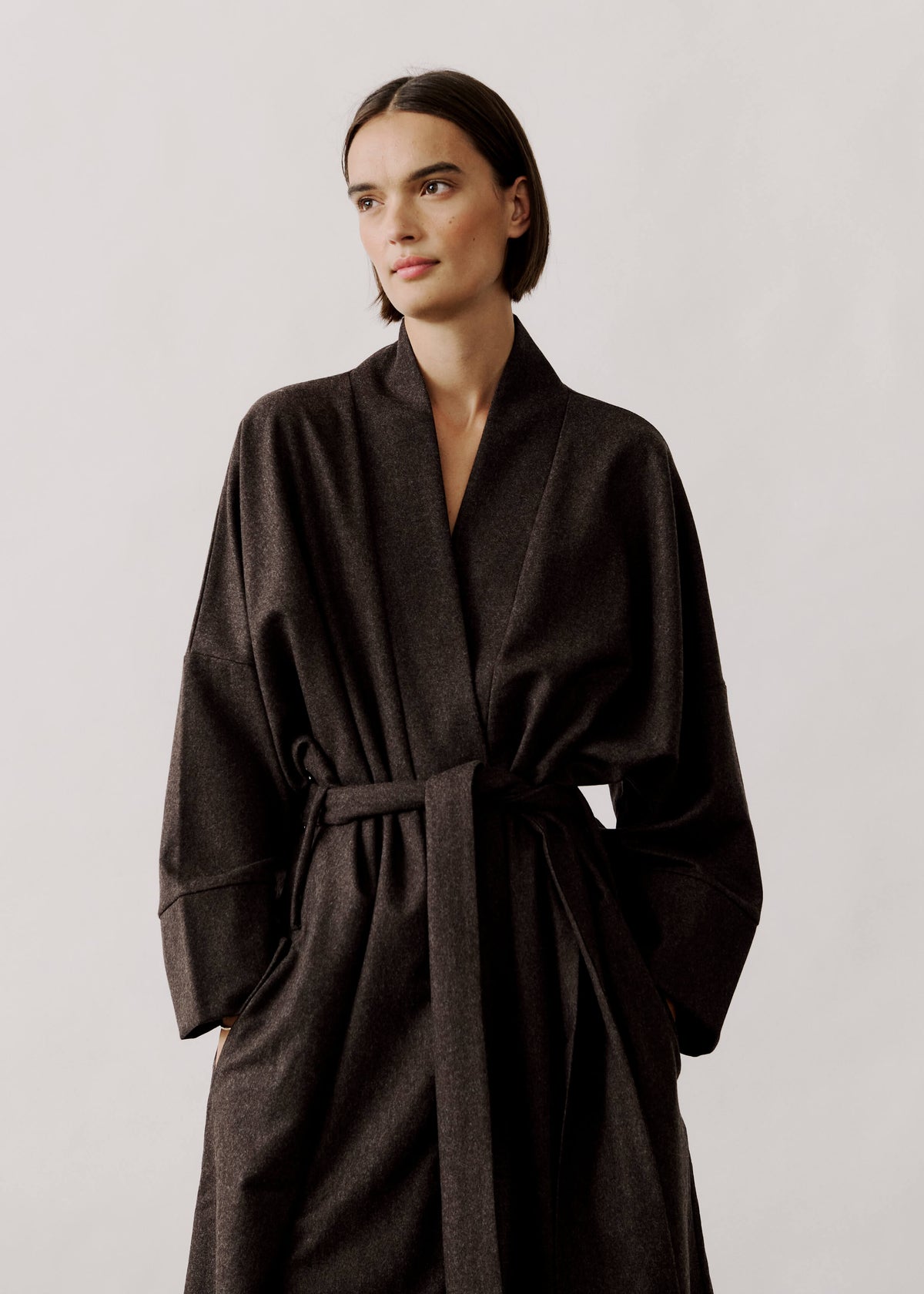
Match texture to fabric weight to preserve the silhouette. Chunky knits and bouclé can read bulky against fine linens, so balance heavier textures with equally substantial base fabrics or larger-scale prints to make an outfit feel deliberate. Weight alters how prints read: dense, heavyweight knits compress tiny motifs into a speckled surface, while lightweight silks and cottons allow small, detailed patterns to remain legible as the fabric drapes. When layering, favour a larger motif or a stronger contrast on the heavier layer so it retains presence rather than disappearing into texture.
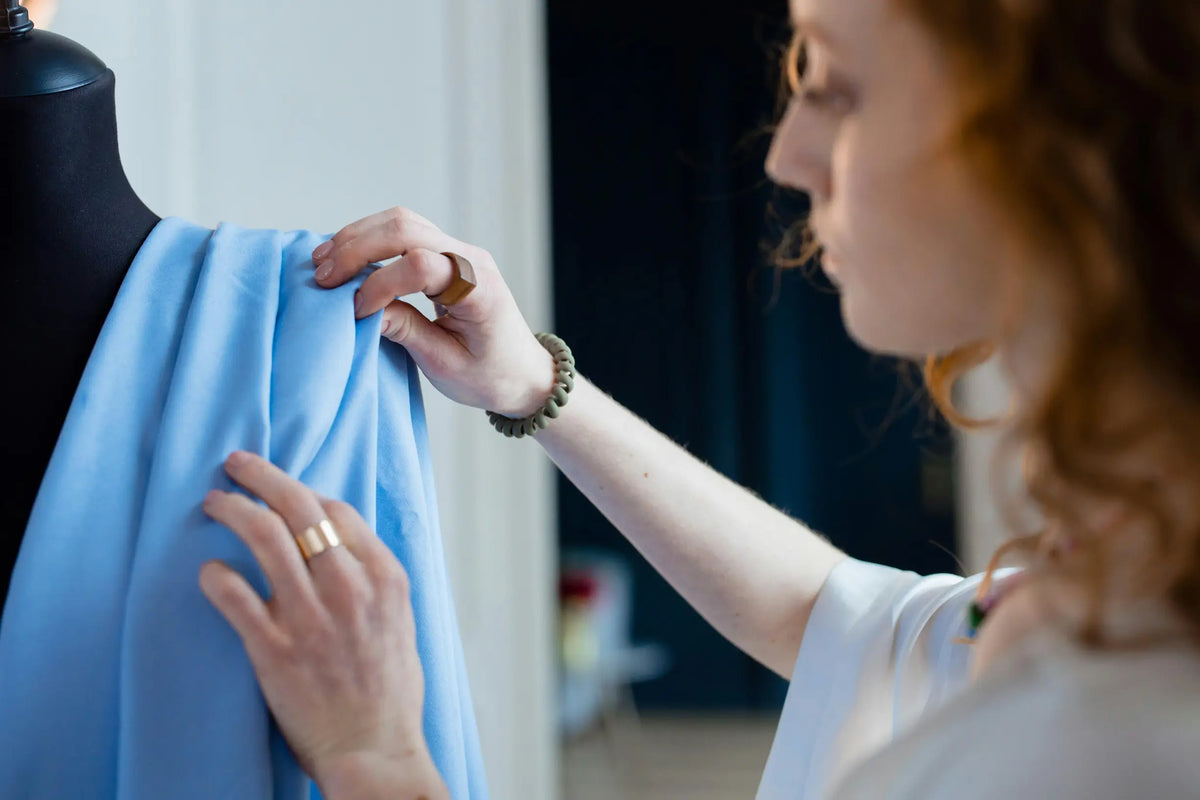
Begin by arranging layers by weight and surface finish: place the most textured pieces outermost and the smoothest, lightest fabrics closest to the skin to minimise friction and avoid visual competition. Test combinations in motion. Walk, sit and take photographs in natural light to observe how folds, stretch and compression alter print scale and the way textures interact. If a combination feels muddled, swap a single layer for a smoother or heavier option until prints read clearly and the silhouette remains balanced. Anchor busier areas with a tonal solid or a considered accessory, or pair one large-scale print with a smaller-scale motif to give the eye a resting point and create measured depth without clutter.
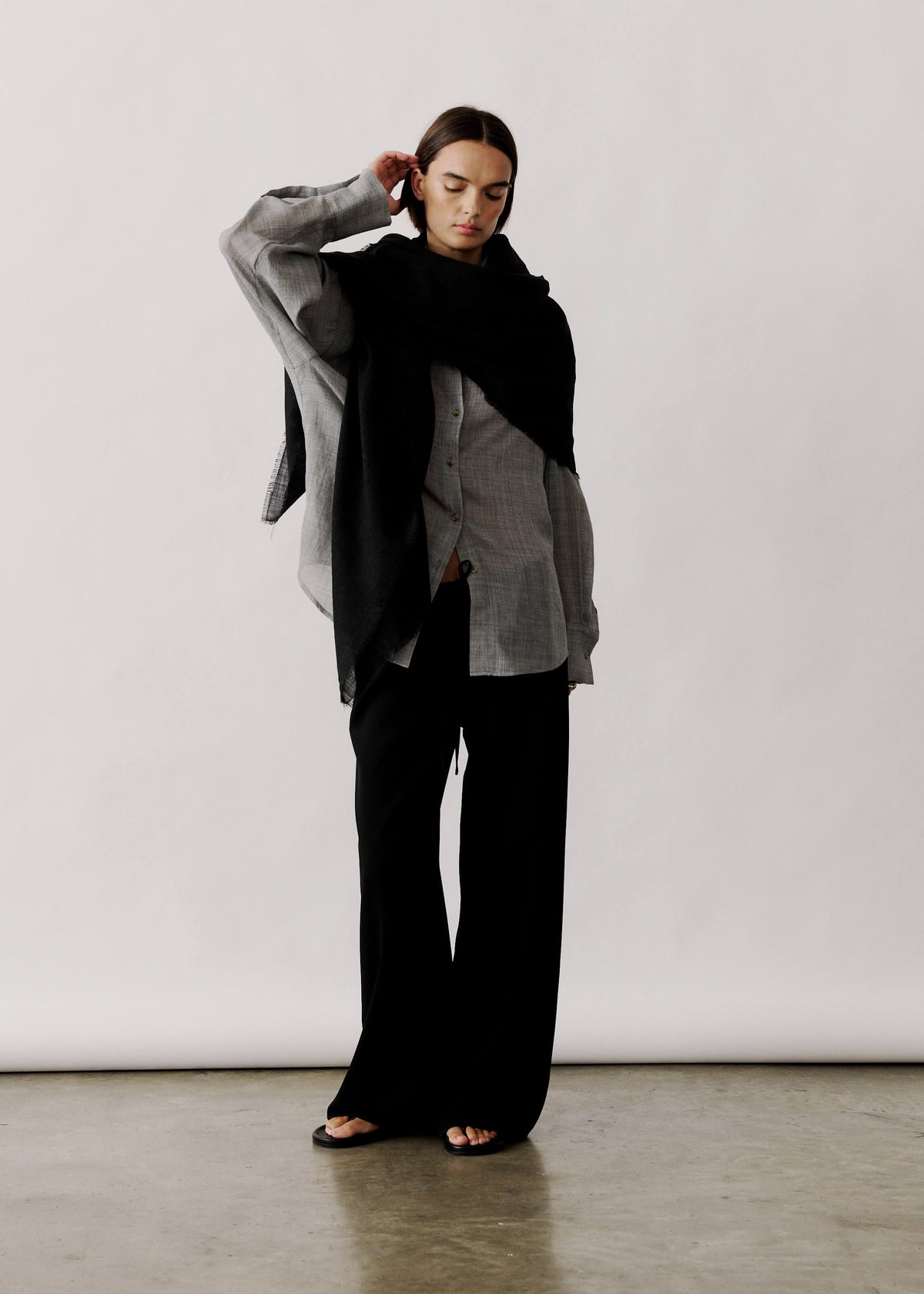
Choose a heavier linen to anchor textured layers.
![{"image_loaded": true, "load_issue": null, "description": "The image shows a close-up of a woman wearing an orange bikini holding a vintage Nikon camera. Her blonde hair is loose and partially covers her face. She is wearing multiple gold necklaces and bracelets. The background includes a large body of water with distant land and a partly cloudy sky.", "people": {"count": 1, "roles": ["person using camera"], "visible_demographics": "adult female, light skin tone, blonde hair", "attire": "orange bikini, gold jewelry", "pose_or_activity": "holding and adjusting a vintage Nikon camera"}, "setting": {"environment_type": "outdoor", "location_hints": "by a large body of water, distant land with some hills, partly cloudy sky", "depth_scale": "close-up", "lighting": "natural sunlight, warm, late afternoon or early evening light", "temperature": "warm"}, "objects": {"primary_objects": ["vintage Nikon camera"], "secondary_objects": null, "object_interaction": "woman holding and adjusting camera"}, "composition": {"subject_focus": "centered on woman's torso and camera", "relationships": "camera held with both hands near chest, hair partially covering face", "depth_structure": "foreground sharp, background softly focused", "camera_angle": "eye-level", "cropping": "medium close-up from mid-torso up"}, "motion": {"motion_type": "static", "motion_direction": null, "energy_level": "low", "sequence_implied": "single moment"}, "aesthetic": {"medium": "photograph", "style_subtype": "realistic", "color_palette": "warm, natural tones", "contrast_level": "moderate", "texture_and_grain": "natural skin texture, slight grain from lighting/shadow interplay", "postprocessing": "natural light with slight warm color grading"}, "tone": {"visual_mood": "calm, natural", "lighting_influence": "warm sunlight creating highlights and soft shadows", "camera_distance_effect": "intimate, personal"}, "confidence": {"demographic_confidence": 0.9, "activity_confidence": 0.95, "setting_confidence": 0.85}}](https://cdn.shopify.com/s/files/1/1327/6929/files/Lucy-Williams-FMN-Song-Saa-Cambodia-49.jpg?v=1613505338)
3. Choose print scale and motif to flatter your figure and setting
Select motif scale to suit the surface and viewing distance. Large motifs are most effective on walls, curtains or broad garments seen from afar; medium motifs sit well on sofas, skirts and jackets; small motifs are best for cushions, scarves and trims. Consider fabric texture, since pronounced weaves, napping or heavy slubs will break motif edges and make prints read smaller, while smooth fabrics keep motifs precise. Photograph swatches from the intended viewing distance to check legibility and to judge whether a print reads as a pattern or as a plain colour. For a balanced composition, combine one large, one medium and one small repeat to establish a clear visual hierarchy.
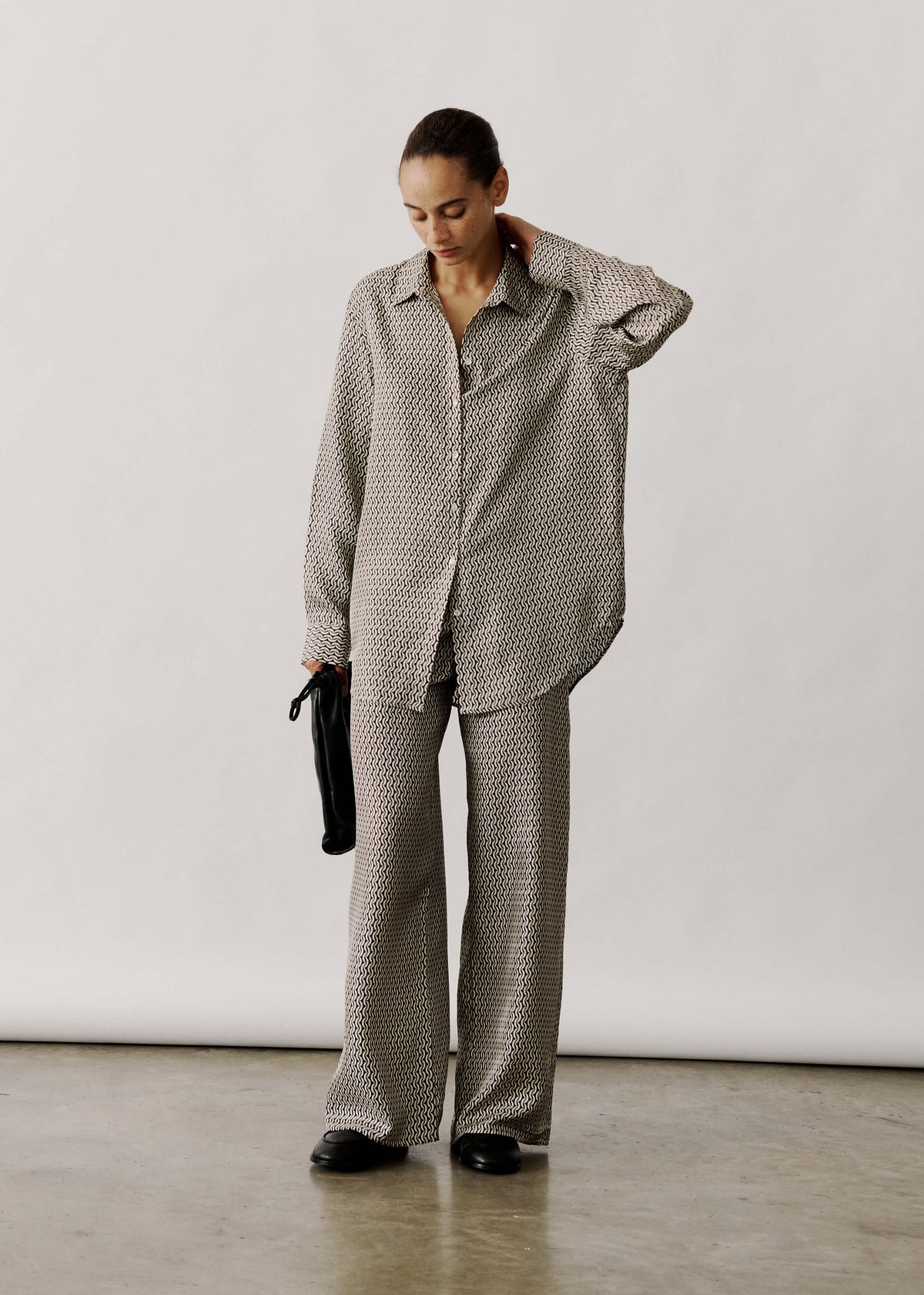
Position the largest repeat across the broadest plane and avoid clustering bold motifs on narrow or curved areas where distortion can alter their shape. Align repeats with seams to preserve proportion and minimise visual interruption. Allow large repeats to breathe against solids, tonal textures or plain borders, and employ tighter, denser prints as anchors or fillers when you want to draw the eye. Consider contrast, direction and rhythm: stronger contrast will make a motif read larger, similar directional lines can compete, and varied repeat rhythms introduce movement. Before finalising a combination, photograph the layered ensemble from the viewpoint it will most often be seen from, then remove or swap a print to isolate its proportional effect.
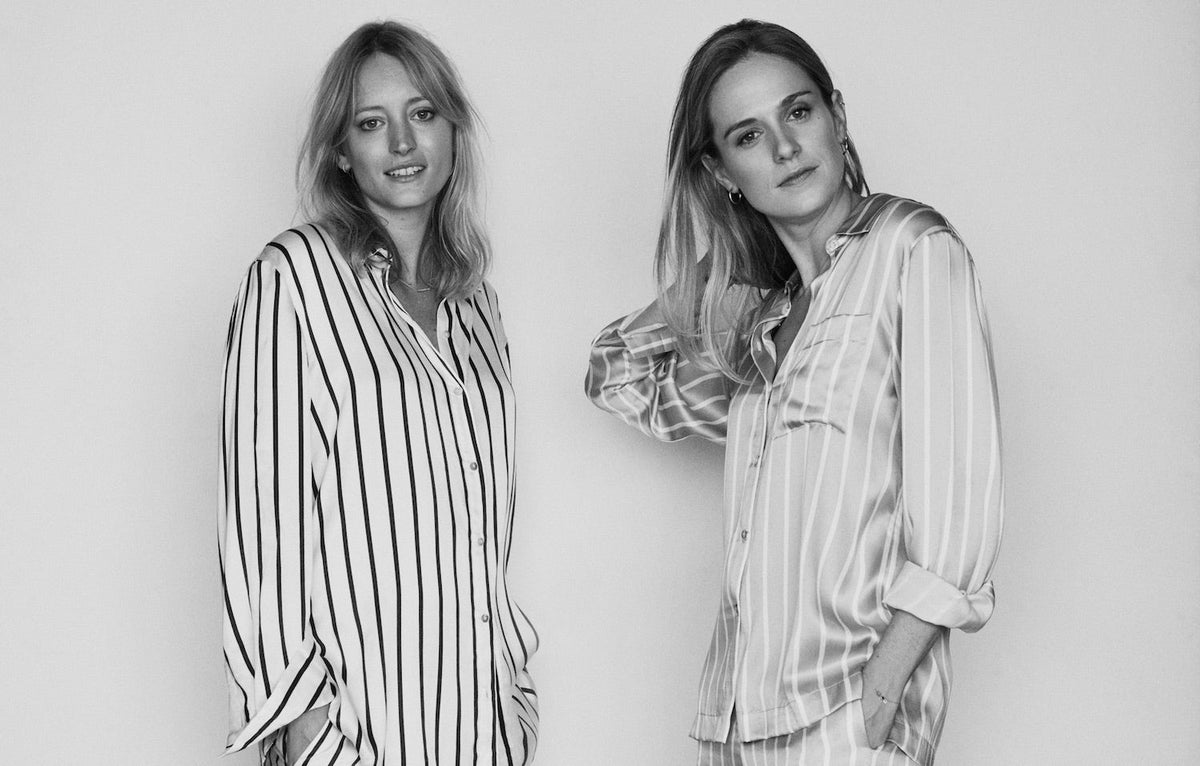
Showcase large motifs with a printed silk shirt.
![{"image_loaded": true, "load_issue": null, "description": "A cropped portrait of one person showing midsection and partial face, against a plain light gray background. The individual is wearing a white turtleneck underneath a mustard yellow satin button-up shirt, with a camel brown oversized coat layered on top. Light beige high-waisted trousers with a gray belt featuring a geometric gold buckle complete the outfit. The subject has hands in pockets and stands in a relaxed posture. The photo captures neutral tones and textures in soft, even lighting.", "people": {"count": 1, "roles": ["model"], "visible_demographics": "appears to be an adult female", "attire": "white turtleneck, mustard yellow satin shirt, camel brown wool coat, beige trousers, gray belt", "pose_or_activity": "standing with hands in pockets"}, "setting": {"environment_type": "studio", "location_hints": "plain light gray backdrop, even artificial lighting", "depth_scale": "close-up", "lighting": "soft, diffused", "temperature": "neutral"}, "objects": {"primary_objects": ["clothing items: coat, shirt, turtleneck, belt, trousers"], "secondary_objects": null, "object_interaction": "model is wearing the clothing with hands in trouser pockets"}, "composition": {"subject_focus": "centered on torso and upper body", "relationships": "overlapping layers of clothing", "depth_structure": "shallow depth of field with sharp focus on subject", "camera_angle": "eye-level", "cropping": "close-up framing from below the chin to mid-thigh"}, "motion": {"motion_type": "static", "motion_direction": null, "energy_level": "low", "sequence_implied": "single moment"}, "aesthetic": {"medium": "photograph", "style_subtype": "minimalist, fashion editorial", "color_palette": "muted, neutral earth tones", "contrast_level": "moderate", "texture_and_grain": "smooth with visible fabric textures", "postprocessing": "natural colors, slight desaturation"}, "tone": {"visual_mood": "calm, refined", "lighting_influence": "soft and even lighting creates a neutral tone", "camera_distance_effect": "intimate, focusing attention on clothing details"}, "confidence": {"demographic_confidence": 0.8, "activity_confidence": 0.9, "setting_confidence": 0.95}}](https://cdn.shopify.com/s/files/1/1327/6929/files/Asceno_Shot_01_026_COLOUR_Easy-Resize.com.jpg?v=1613724007)
4. Harmonise colour, contrast and tone for unified imagery
Begin by comparing value rather than hue. Our eyes interpret form and depth through light and dark, so harmonising the tonal range of prints and textured fabrics prevents one layer from overwhelming another. Choose an anchor colour from a print and repeat it through your layers, using a textured piece or accessory to bridge different pattern scales and guide the eye. Check undertones too, keeping warm and cool bases aligned so a cool navy texture sits more naturally with prints that contain cool greys or blues than with those carrying yellow or orange casts.
Manage contrast with intention. Soften high-contrast prints by pairing them with mid-tone, low-contrast textures, or lift a subdued print with a reflective, richly saturated textured layer. Assess combinations by photographing them in natural light and viewing from a distance to judge how contrast reads at different scales. Treat texture as a tone modifier: matte, nubby and brushed fabrics absorb light and read darker, while silk and satin reflect light and read brighter. Use reflective fabrics to draw the eye and matte finishes to make areas recede, subtly shifting perceived proportions across layers.
Layer a cool, lustrous silk to lift prints
![{"image_loaded": true, "load_issue": null, "description": "A woman with short dark hair is seated on a light beige plush sofa against a white brick wall. She wears a cream-colored dress and matching shawl, both featuring black seashell and starfish prints. She is accessorized with gold jewelry, including a necklace with multiple hanging pendants and several earrings and rings. The lighting is soft and even, and the image is a medium close-up shot showing the woman from mid-body upwards.", "people": {"count": 1, "roles": ["model"], "visible_demographics": "adult female", "attire": "cream dress and shawl with black seashell and starfish print", "pose_or_activity": "seated on sofa, looking at camera"}, "setting": {"environment_type": "indoor", "location_hints": "light beige plush sofa, white brick wall, wooden floor", "depth_scale": "medium", "lighting": "soft, natural or diffused artificial", "temperature": "neutral"}, "objects": {"primary_objects": ["dress", "shawl", "jewelry"], "secondary_objects": ["sofa"], "object_interaction": "woman wearing clothing and jewelry, resting arm on sofa"}, "composition": {"subject_focus": "centered on woman", "relationships": "woman positioned against sofa and wall background", "depth_structure": "shallow depth with clear foreground subject and soft background", "camera_angle": "eye-level", "cropping": "medium close-up"}, "motion": {"motion_type": "static", "motion_direction": null, "energy_level": "low", "sequence_implied": "single moment"}, "aesthetic": {"medium": "photograph", "style_subtype": "realistic", "color_palette": "muted neutrals with black and cream", "contrast_level": "moderate", "texture_and_grain": "soft, smooth", "postprocessing": "natural with slight color correction"}, "tone": {"visual_mood": "calm, sophisticated", "lighting_influence": "soft, even lighting", "camera_distance_effect": "intimate"}, "confidence": {"demographic_confidence": 0.9, "activity_confidence": 0.95, "setting_confidence": 0.9}}](https://cdn.shopify.com/s/files/1/1327/6929/files/20250508_LUCY_DELIUS_LOOKBOOK_s14_037_copy.jpg?v=1747751409)
5. Layer with care to preserve silhouette and movement
Choose layers by drape and weight rather than colour alone. Lightweight, fluid prints sit beneath textured fabrics without adding bulk and preserve movement. Test combinations by walking and sitting to observe how each layer falls and whether stiffer textures compress the silhouette. Pay attention to sleeve and shoulder joins: pair voluminous outer sleeves with slim underlayers and smooth the seams at the shoulder, then lift your arms to check comfort and how the fabrics settle in motion. These practical tests will reveal combinations that read as light and mobile rather than heavy and restrictive.
Use length and vertical lines to maintain proportion: allow one layer to fall longer or introduce a long, narrow panel so a printed slip can show without broadening the silhouette beneath a cropped, textured jacket. Preserve waist definition with a narrow belt, a half-tuck or a lightly tailored mid layer to prevent soft fabrics from swallowing the shape. Match print scale to texture by viewing swatches in natural light and placing printed samples alongside textured fabrics; fine, intricate prints sit comfortably on denser textures, while larger motifs require cleaner, less nubbly surfaces to read clearly.
Layering prints over textured fabrics feels effortless when you treat scale, texture and tone as deliberate choices rather than guesses. Lay pieces flat and arrange them in a pyramid of scale, photograph combinations from a natural, conversational distance and observe how they move. These simple tests reveal where motifs read, where texture quiets or compresses pattern, and how the eye travels across the outfit.
Use the five rules as a practical checklist: assess scale and proportion, match texture with fabric weight, select motif scale for body and setting, harmonise colour and contrast, and layer to preserve silhouette and movement. Test each combination in natural light and in motion to confirm that patterns read clearly, movement stays natural, and the finished look flatters your shape and suits the occasion.

Leave a comment
This site is protected by hCaptcha and the hCaptcha Privacy Policy and Terms of Service apply.