
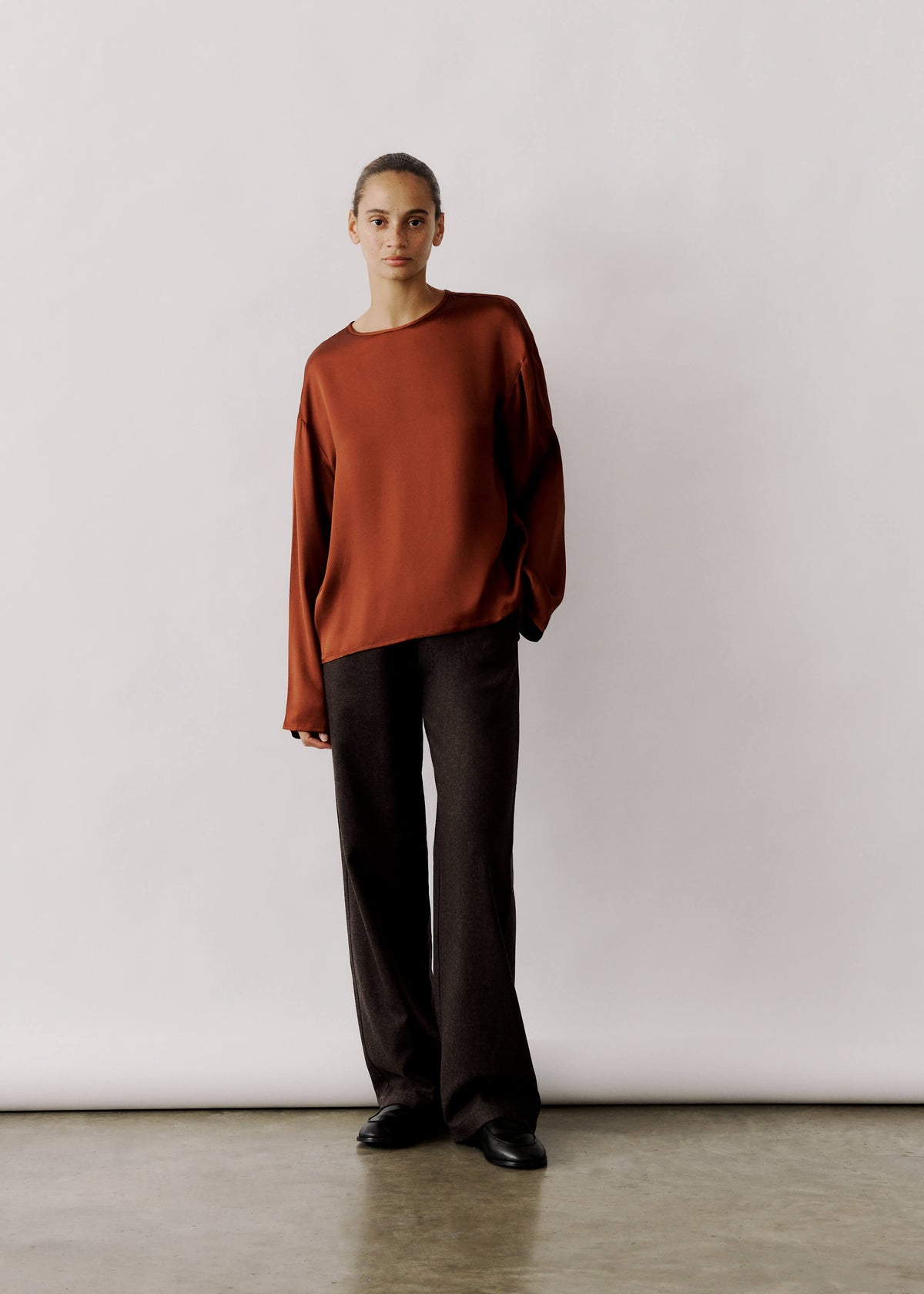
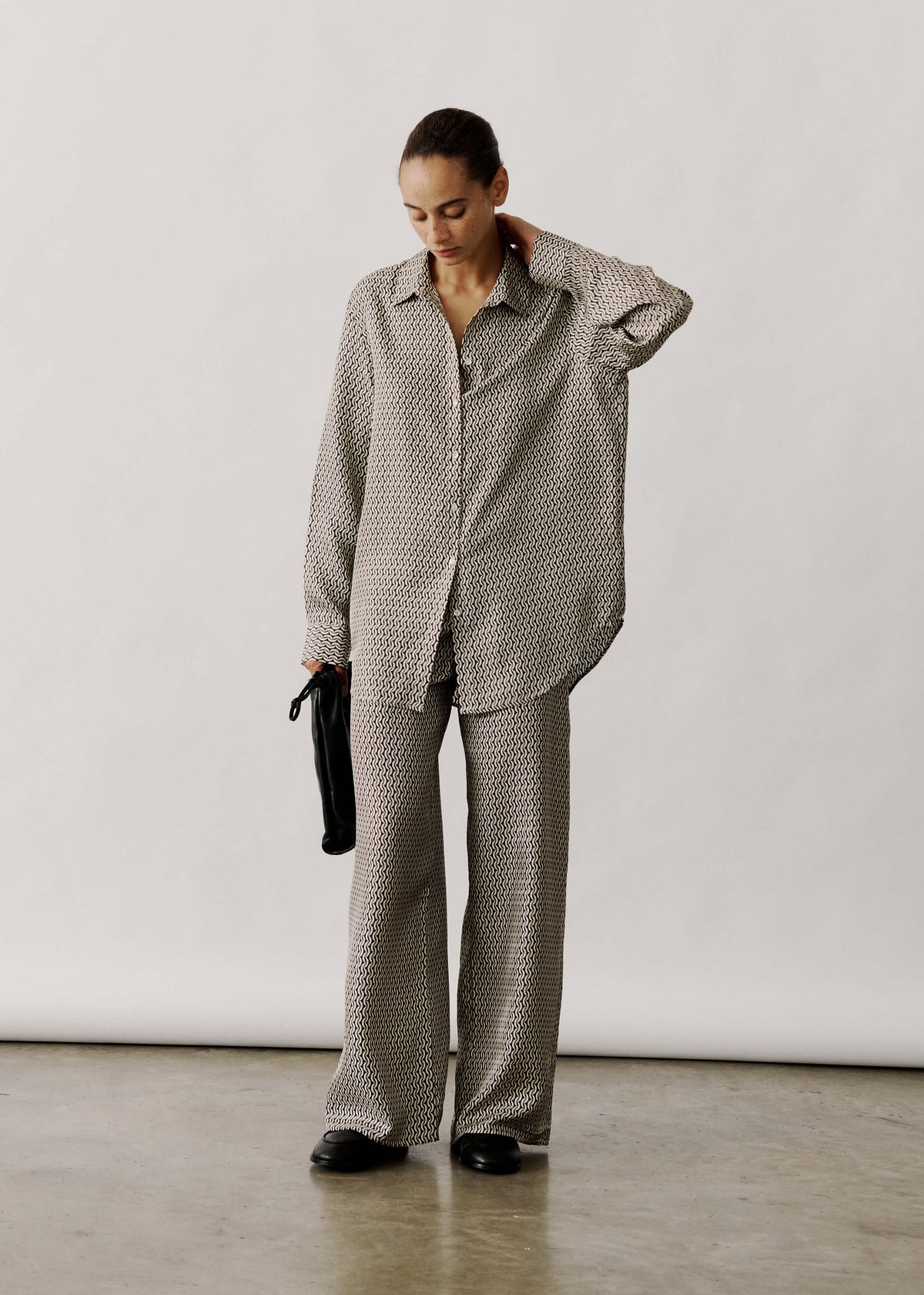
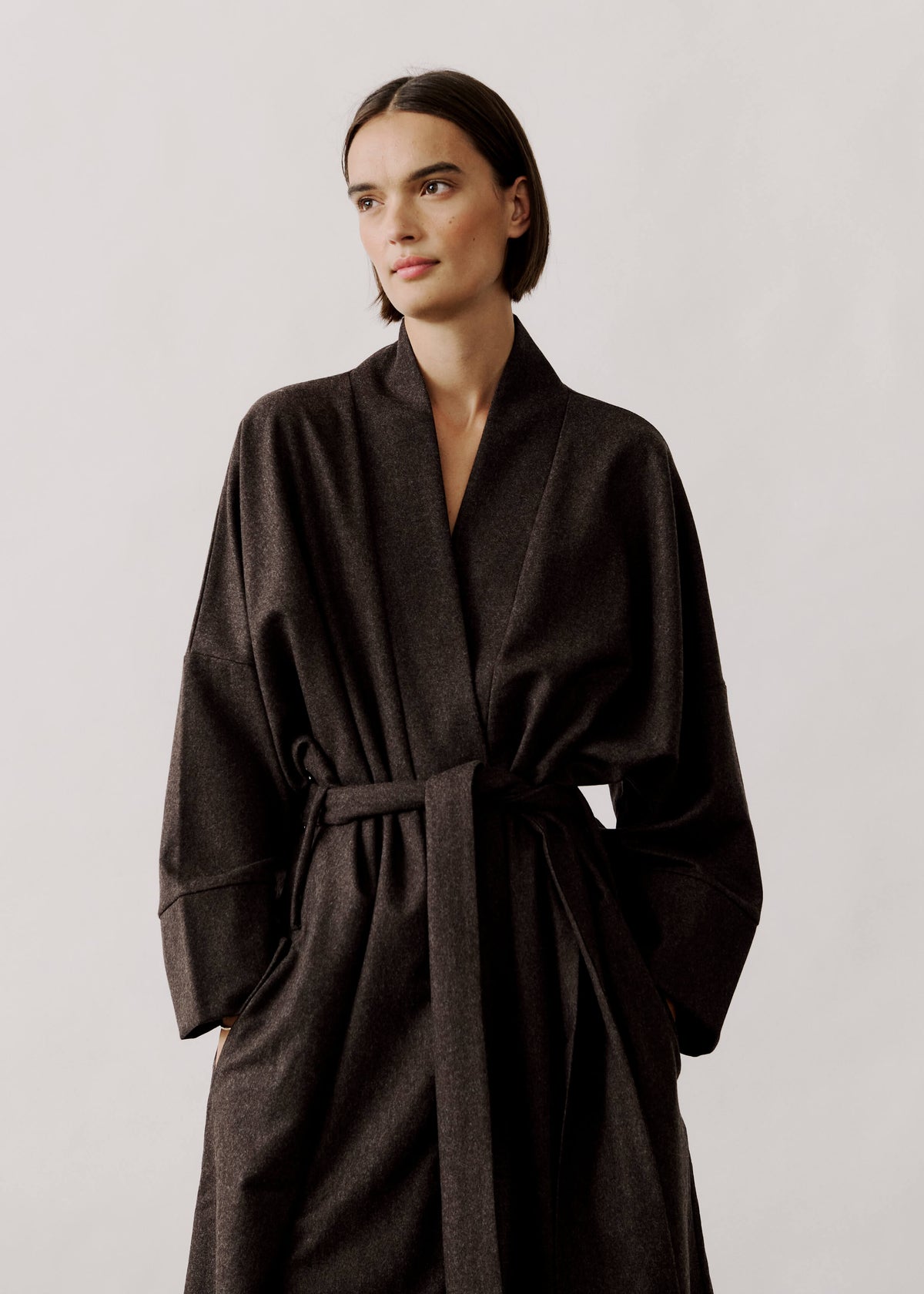
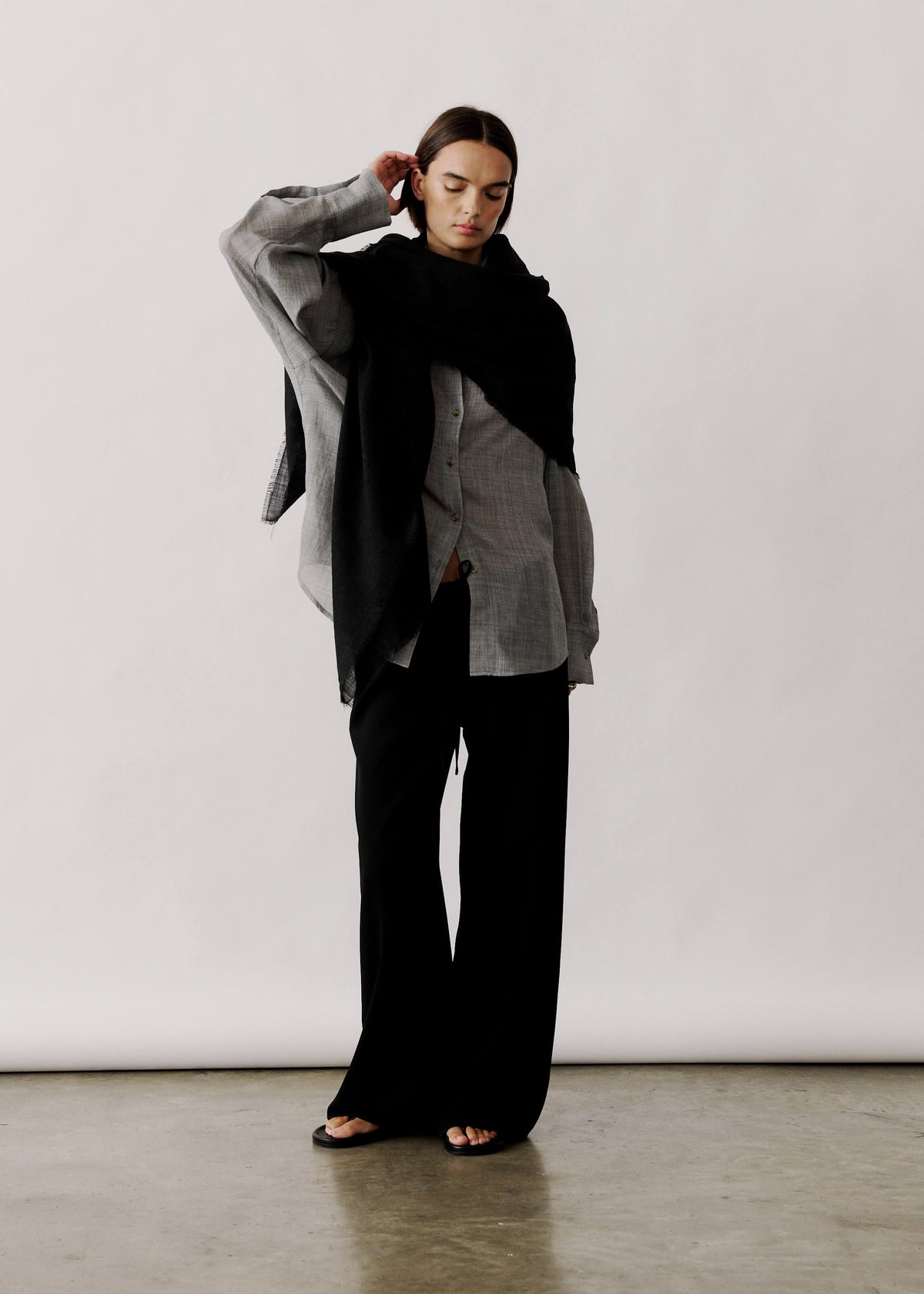

How to Build a Low-Waste Wardrobe: Practical, Actionable Steps
Have you ever opened your wardrobe and felt overwhelmed by items you seldom wear? This guide explains how considered, practical choices can minimise clutter, reduce garment waste and make getting dressed feel effortless.
Follow five considered steps: audit and declutter, clarify your style and core needs, choose versatile, timeless pieces, prioritise natural responsibly made fabrics, and shop mindfully while adopting simple repair and care routines. Each section offers actionable tasks and small habits you can begin to extend garment life, reduce replacements and build a wardrobe that works for your life.
![{"image_loaded": true, "load_issue": null, "description": "A woman stands indoors in a modern bedroom or dressing area, taking a mirror selfie with a smartphone. She wears a matching dark maroon sleeveless tunic top and wide-legged pants, paired with light-colored ballet flats. The room features light wooden flooring, a textured beige bench, and a long wooden dresser topped with various small items. Large windows with cream curtains allow natural light into the space. The lighting is warm and soft from both natural and artificial sources, including wall sconces and pendant lamps. The photo is taken from a full-body perspective with the woman positioned centrally in the mirror's reflection.", "people": {"count": 1, "roles": ["model"], "visible_demographics": "Adult female, light skin tone, long blonde hair", "attire": "Dark maroon sleeveless tunic and matching pants, light ballet flats", "pose_or_activity": "Standing and taking a mirror selfie with a smartphone"}, "setting": {"environment_type": "indoor", "location_hints": "bedroom/dressing area with wooden floor, bench, dresser, large windows with curtains, ceiling pendant lamps and wall sconce", "depth_scale": "wide", "lighting": "mixed natural and warm artificial lighting", "temperature": "warm"}, "objects": {"primary_objects": ["smartphone", "bench", "dresser", "books", "vase with flowers", "cosmetics items"], "secondary_objects": ["curtains", "clothing on dresser"], "object_interaction": "The woman holds the smartphone with one hand to take the selfie"}, "composition": {"subject_focus": "central in mirror reflection, full-body", "relationships": "woman positioned behind bench, dresser to the right with objects on it", "depth_structure": "clear foreground with bench, midground with woman, background with dresser and window", "camera_angle": "eye-level", "cropping": "full-body framed in mirror"}, "motion": {"motion_type": "static", "motion_direction": null, "energy_level": "low", "sequence_implied": "single moment"}, "aesthetic": {"medium": "photograph", "style_subtype": "realistic", "color_palette": "muted earth tones with warm accents", "contrast_level": "moderate", "texture_and_grain": "smooth", "postprocessing": "natural with warm color grading"}, "tone": {"visual_mood": "calm, composed", "lighting_influence": "warm and soft lighting creates inviting atmosphere", "camera_distance_effect": "intimate yet spacious due to use of mirror and wide framing"}, "confidence": {"demographic_confidence": 0.9, "activity_confidence": 0.95, "setting_confidence": 0.9}}](https://cdn.shopify.com/s/files/1/1327/6929/files/Tezza-0538.jpg?v=1765463638)
A mindful guide to auditing and decluttering your wardrobe for timeless ease
Move through your wardrobe one piece at a time, trying each garment on as you go. Sort items into four labelled piles: Keep, Repair or Alter, Donate or Sell, and Recycle. Use a simple, consistent rule to identify candidates for removal, for example pieces you rarely wear or those that no longer fit or suit your lifestyle. For items you intend to donate or sell, launder, measure and photograph them, and write concise, honest descriptions noting fabric and condition. Direct heavily damaged textiles to textile recycling schemes or give them new life through creative upcycling projects rather than sending them to landfill.
Assess each item under consideration for fit, comfort, fabric longevity and styling versatility. Photograph three outfit pairings to observe how readily an item integrates into different looks. Establish a simple repair and maintenance routine: learn basic mending, keep a compact kit to address buttons, hems and seams promptly, and catalogue items awaiting repair so they do not linger unrepaired. Maintain a concise wear log noting number of wears per item and any gaps in function or style. Use this evidence to prioritise durable, multifunctional replacements and to curb impulse purchases by focusing on clearly identified needs.
Choose a versatile drapey shirt to simplify outfits

Define your signature style and essential wardrobe pieces
Begin with a considered wardrobe audit: sort each garment into one of four piles — keep, mend, donate and recycle. For every item in the keep pile, create three distinct outfits to test its versatility; items that do not pair well should be rehomed or recycled so you can clearly identify genuine gaps. Select three to five style keywords that capture how you want to look and feel, and write one concise sentence per keyword outlining acceptable cuts, silhouettes, colours and textures to make it easy to assess existing pieces or future purchases. Assemble a core-item list based on your real activities, for example work trousers, casual tops, a weatherproof layer and comfortable footwear, and limit each category to the number you will realistically wear. Prioritise pieces that can be repaired, altered or restyled, keeping your wardrobe adaptable and reducing waste.
Begin with simple outfit formulas and a restrained colour palette: choose a dominant shade, a secondary and a single accent. Photograph five complete outfits, rotate them through your routine and note which combinations you keep returning to so you can remove or replace underused pieces. Use a wear-per-item approach when deciding what to keep or buy: estimate how many times you will realistically wear each garment and compare items by their expected number of uses. Favour pieces you will reach for often and that are easy to mend or alter. For example, a dress you wear fifty times rather than ten provides five times the utility, helping you choose pieces that make your wardrobe work harder.
Adds polished versatility for day-to-night wear

Choose versatile, timeless pieces
Versatility begins with a neutral colour palette and complementary silhouettes, so each piece can be mixed and matched with ease. Start by assembling a small capsule of core items to test combinations and identify gaps in your wardrobe. Prioritise durable fibres and solid construction, favouring tightly woven natural fabrics for breathability, longevity and ease of repair. Before you buy, inspect seams and stitch density to ensure garments are built to last. Mend loose threads and worn hems promptly to extend a garment's useful life. Choose timeless cuts, such as a tailored shirt, straight-leg trousers, a simple dress and a structured outer layer, so pieces remain adaptable across occasions.
Prioritise fit and consider discreet alterations: shortening hems, taking in seams or repositioning buttons can subtly refine a silhouette, enhance comfort and discourage premature replacement. Choose versatile, layering-friendly pieces so each item serves multiple purposes and multiplies outfit possibilities. Care for garments thoughtfully by rotating wear, following care labels, airing rather than over-washing to preserve fibres, and mending small faults promptly to extend their life.
Practical checklist for a timeless, versatile wardrobe
- Build a small capsule in a neutral colour palette, aiming for six to eight core pieces that mix together, including a tailored shirt, straight leg trousers, a simple dress, a structured outer layer, and one adaptable accessory; test combinations to identify gaps.
- Prioritise fit by ranking three high-impact alterations: shorten hems, take in side seams, and move or re-seat buttons; handle simple repairs yourself, such as sewing on buttons or small hems, and choose a tailor for shoulder, waist, or major reshaping.
- Inspect construction when buying or evaluating repairs: check seam alignment, stitch density, and the tightness of the weave, and favour tightly woven natural fibres for breathability and easier mending.
- Maintain garments to extend life: rotate wear to even out stress, air items between uses to reduce washing, treat stains promptly, and mend loose threads and worn hems as soon as you spot them.
- Create four go-to outfit formulas from your capsule for work, casual, travel, and evening wear by combining one structured piece, one soft layer, and one neutral base, then change accessories to shift the mood and function.
![{"image_loaded": true, "load_issue": null, "description": "A woman with dark hair tied in a messy bun is seen from behind, selecting a blue garment on a hanger from a clothing rack or closet. She wears a black sleeveless top with thin straps. The setting is indoors with framed pictures on the wall in the background and other clothes, including a cream and striped jacket, hanging next to the blue garment. The lighting is soft and natural or diffused, and the camera captures a medium-close view focusing on her upper body and the clothes.", "people": {"count": 1, "roles": ["customer or individual choosing clothes"], "visible_demographics": "adult female, likely Asian descent based on hair and skin tone", "attire": "black sleeveless top with thin straps", "pose_or_activity": "reaching to select or remove a garment on a hanger"}, "setting": {"environment_type": "indoor", "location_hints": "clothing rack or closet with jackets and garments, framed pictures on wall", "depth_scale": "medium", "lighting": "soft, natural or diffused lighting", "temperature": "neutral"}, "objects": {"primary_objects": ["blue garment on hanger", "cream jacket with stripes on hanger"], "secondary_objects": ["black hanger"], "object_interaction": "woman holding black hanger with blue garment"}, "composition": {"subject_focus": "woman centered, upper back and arm in focus", "relationships": "woman close to clothing rack selecting garment", "depth_structure": "foreground woman in focus, background clothing and framed pictures slightly blurred", "camera_angle": "eye-level", "cropping": "medium shot focusing on upper body and arm"}, "motion": {"motion_type": "implied", "motion_direction": null, "energy_level": "low", "sequence_implied": "single moment"}, "aesthetic": {"medium": "photograph", "style_subtype": "realistic", "color_palette": "muted, natural colors", "contrast_level": "moderate", "texture_and_grain": "smooth", "postprocessing": "minimal, natural color grading"}, "tone": {"visual_mood": "calm, contemplative", "lighting_influence": "soft and diffuse", "camera_distance_effect": "intimate"}, "confidence": {"demographic_confidence": 0.7, "activity_confidence": 0.8, "setting_confidence": 0.75}}](https://cdn.shopify.com/s/files/1/1327/6929/files/description_a_young_woman_with_dark_hair_tied_up_in_a_loose_bun_is_seen_from_behind_reaching_with_one_hand_towards_a_dark_hanger_on_a_clothing_rack_she_is_wearing_a_black_sleeveless_s.webp?v=1771501564)
Prioritise natural, responsibly sourced fabrics for timeless elegance
Natural fibres generally biodegrade more readily, shed far fewer plastic microfibres in the wash and tend to breathe better, which can reduce wear from perspiration and odour compared with synthetics. Consider this a considered trade-off rather than a moral judgement: synthetics often bring greater stretch and durability, while naturals can lower end-of-life impacts. Regenerated cellulosics such as lyocell and modal can sit between these options when produced in genuinely closed-loop systems, because solvent recycling and responsible wood sourcing influence their overall footprint. When choosing a garment, check the fibre composition; favour pieces composed mainly of natural fibre and note any proportion of synthetic fibre added for stretch or resilience.
When assessing a garment in person or online, begin by feeling its weight and examining the weave to judge density and drape. Gently rub the fabric between your fingers to check how prone it is to pilling. Inspect seams and stitching for neat, reinforced construction. Online, study close-up images and the product description, and ask the retailer for provenance or processing details if these are not provided. Look for independent certification that discloses fibre origin, chemical and water management, and social standards so you can interpret claims rather than rely on marketing alone. To extend a garment's life, follow the care label and attend to small repairs promptly, mending tiny holes and resewing loose buttons. Remove pills with a de-pilling comb or fabric razor, use gentler wash settings with lower agitation, and air-dry where appropriate. A single well-made natural garment worn for many years typically carries a smaller lifetime environmental cost than several short-lived pieces.
Choose structured linen trousers for durable, breathable everyday wear
![{"image_loaded": true, "load_issue": null, "description": "A medium close-up image shows a woman with short dark hair standing indoors near a clothing rack. She is wearing a shiny, olive green sleeveless dress and has her arms raised above her head with fingers interlaced. In the background, there is a clothing rack filled with various neutral-toned garments, including shirts and jackets. The setting appears to be a dressing room or boutique with wooden flooring and natural lighting.", "people": {"count": 1, "roles": ["customer", "model"], "visible_demographics": "adult female, approximate age 20-35", "attire": "sleeveless, olive green, shiny dress", "pose_or_activity": "standing with arms raised, fingers interlaced, eyes closed or looking downward"}, "setting": {"environment_type": "indoor", "location_hints": "clothing rack with neutral garments, wooden floor, white walls, natural light from window", "depth_scale": "medium", "lighting": "soft natural lighting from window, bright, diffused", "temperature": "neutral"}, "objects": {"primary_objects": ["clothing rack", "olive green dress"], "secondary_objects": ["various neutral-colored garments on rack", "mirror"], "object_interaction": "woman wearing dress; garments hanging on rack in background"}, "composition": {"subject_focus": "woman is centered and fills most of frame", "relationships": "clothing rack behind woman is out of focus, creating depth", "depth_structure": "shallow depth of field with background garments softly blurred", "camera_angle": "eye-level", "cropping": "medium close-up from upper torso up"}, "motion": {"motion_type": "implied", "motion_direction": null, "energy_level": "low", "sequence_implied": "single moment"}, "aesthetic": {"medium": "photo", "style_subtype": "realistic", "color_palette": "muted neutrals with olive green accent", "contrast_level": "moderate", "texture_and_grain": "smooth, natural skin texture visible", "postprocessing": "natural light with soft focus on background"}, "tone": {"visual_mood": "calm, serene, contemplative", "lighting_influence": "soft and diffused, bright yet gentle", "camera_distance_effect": "intimate yet casual"}, "confidence": {"demographic_confidence": 0.9, "activity_confidence": 0.8, "setting_confidence": 0.85}}](https://cdn.shopify.com/s/files/1/1327/6929/files/elegant_woman_in_a_green_dress_posing_inside_a_modern_fashion_boutique_SP5A7n2Qks.72l6pxaYP9.webp?v=1768601757)
Mindful shopping, repair and garment care for a timeless wardrobe
When selecting garments, turn them inside out and inspect the seams, stitch density and the security of buttons and trims to judge how well they will withstand repeated wear and repairs. Choose fibres with their end of life in mind, since natural fibres generally biodegrade more readily while synthetics can shed microfibres during washing. Check the care label early so you can plan laundering, donation or recycling. favour classic silhouettes and simple hems that a tailor can alter, and cultivate a relationship with a trusted alterations service so pieces are mended and remain in rotation rather than being discarded.
Assemble a pared-back home mending kit and learn three essential repairs: sewing on a button, mending a seam and darning knitwear. Include matching thread, spare buttons, a darning needle and a pair of small, sharp scissors so repairs are quick and long-lasting. Adopt gentle laundering habits to reduce wear: fasten zips and buttons before washing, turn garments inside out, use a washing bag for delicates and spot-clean or air items to avoid over-washing. Preserve shape in storage by folding knitwear and hanging shirts on shaped hangers, which reduces stress at the seams and slows fabric breakdown.
Curate a low-waste wardrobe by adopting a few considered habits that reduce clutter, prolong the life of garments and make dressing simpler. Assess what you own, favour versatile, well-crafted pieces and mend items promptly to reduce the need to replace them and expand your outfit options.
Treat the post's five steps as a checklist: audit and declutter, clarify your style and needs, choose timeless pieces, prioritise responsible fabrics, and shop and care with intention. Begin with a single small action, such as photographing five outfits or mending a favourite garment, and you will notice how modest changes add up to fewer purchases, less waste and a wardrobe that truly serves your life.


Leave a comment
This site is protected by hCaptcha and the hCaptcha Privacy Policy and Terms of Service apply.