


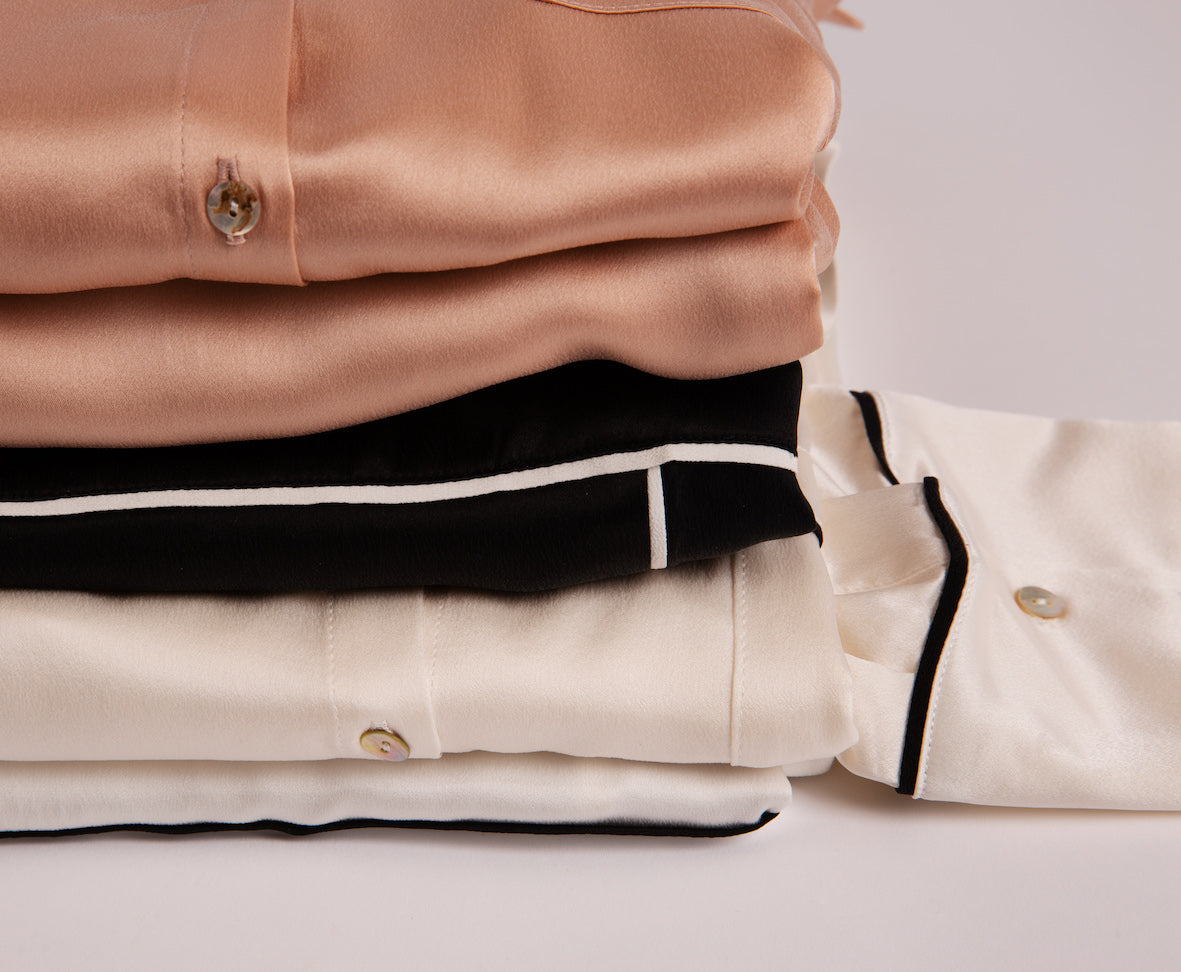
How to Keep Silk Pyjamas Soft, Shapely and Long-Lasting
Silk pyjamas reward a lighter touch. The most reliable routine is not complicated: check the label first, wash only when needed, keep friction and heat low, and support the garment while it dries and rests. Those small choices help preserve the softness, liquid drape and intended fit that make a well-made pair such a pleasure to wear.
Asceno’s care guidance is deliberately label-led because recommendations can vary with the colour, fabric type and trims. Before the first wash, read the care label on your own pyjamas and keep it as the final authority. Asceno’s Care Guide is a useful general reference, but the individual garment’s instructions take priority.

Start with the care label, not a laundry habit
Before washing, check the fibre information, care symbols, colour-specific notes and any instructions for trims, piping, buttons or contrast panels. A label that permits washing does not necessarily mean every wash method is suitable. General care-labelling guidance can help you interpret the symbols, but the label attached to your pyjamas is the practical starting point.
If the label says dry-clean only, specifies a particular cycle, or includes a warning about colour, embellishment or finish, follow it rather than adapting advice intended for another silk. When the label is missing, faded or unclear, pause before experimenting. A qualified cleaner can assess the garment more safely than guesswork, particularly for dark or strongly dyed silk, vintage pieces, unusual trims or a mark close to a seam.

Washing silk pyjamas gently
When the care label permits washing, choose the least aggressive suitable method. Hand-washing can be appropriate for some silk pyjamas, but it is not automatically safer: vigorous rubbing, twisting or a long soak can place more stress on the fibres than a carefully selected gentle machine cycle.
If the label permits machine-washing, use the stated programme and protect the pyjamas from zips, hooks and rougher garments. A laundry bag may reduce snagging, but it does not override the label or make an unsuitable cycle safe. Do not overload the drum, and keep the pyjamas separate from items likely to create friction or transfer colour.
Use the detergent and water temperature specified or permitted by the garment instructions. Avoid bleach, harsh treatments, fabric softener unless the label explicitly allows it, and improvised stain remedies. Fasten buttons or ties as directed, and turn the garment inside out only if that suits the finish. The American Cleaning Institute’s laundry guidance is a helpful general starting point, but silk-specific instructions still come first.
Remove the pyjamas promptly when the cycle ends. Never wring or twist wet silk. Instead, support the full garment and press out excess water gently, following the label’s instructions.

Drying, pressing and storing without losing the shape
Dry silk flat or as the label directs, supporting the weight of the wet garment so the shoulders, waistband and seams are not pulled out of alignment. Keep it away from radiators, tumble dryers and strong direct sunlight unless the care instructions specifically say otherwise. Heat can affect silk’s feel, colour and shape, while prolonged dampness can leave a garment smelling stale or encourage dye transfer. Give the pyjamas room to dry fully before folding or storing.
Creases are usually easier to manage when the garment is only slightly damp. If ironing is permitted, use the label’s temperature guidance, turn the pyjamas inside out where suitable, and keep the iron moving with light pressure. A clean pressing cloth can provide an extra barrier. Steaming may be gentler for some garments, but it is not universally appropriate: keep steam away from trims and printed or bonded details, and follow the label.
For a small fresh mark, lift away any excess without rubbing, then follow the care label or ask a professional cleaner. Water, heat and household stain removers can spread a mark, alter colour or set oils, make-up and perfume residue. Never press or steam a mark before it has been dealt with. Do not spray perfume or hair products directly onto silk, and allow skincare or body products to settle before dressing. These habits reduce the need for repeated washing without compromising everyday freshness.
Between wears, air the pyjamas briefly in a shaded, well-ventilated place rather than washing them automatically. Store them clean and completely dry, either folded loosely in a breathable drawer or hung from a broad, smooth hanger if the garment’s construction allows it. Avoid wire hangers, crowded rails, rough shelves, damp cupboards and prolonged direct light. For travel, fold along natural seams and give the silk space in your luggage; unpack it promptly on arrival.
If the garment is misshapen, snagged, persistently marked or noticeably changing colour, stop experimenting and use a cleaner experienced with silk.
The lasting-wear lesson is simple: follow the garment’s approved method, handle wet silk gently, keep heat and friction low, and store the pyjamas clean, dry and supported. When a label is unclear or a garment is misshapen, snagged or persistently marked, choose the label and a qualified cleaner over an experiment.
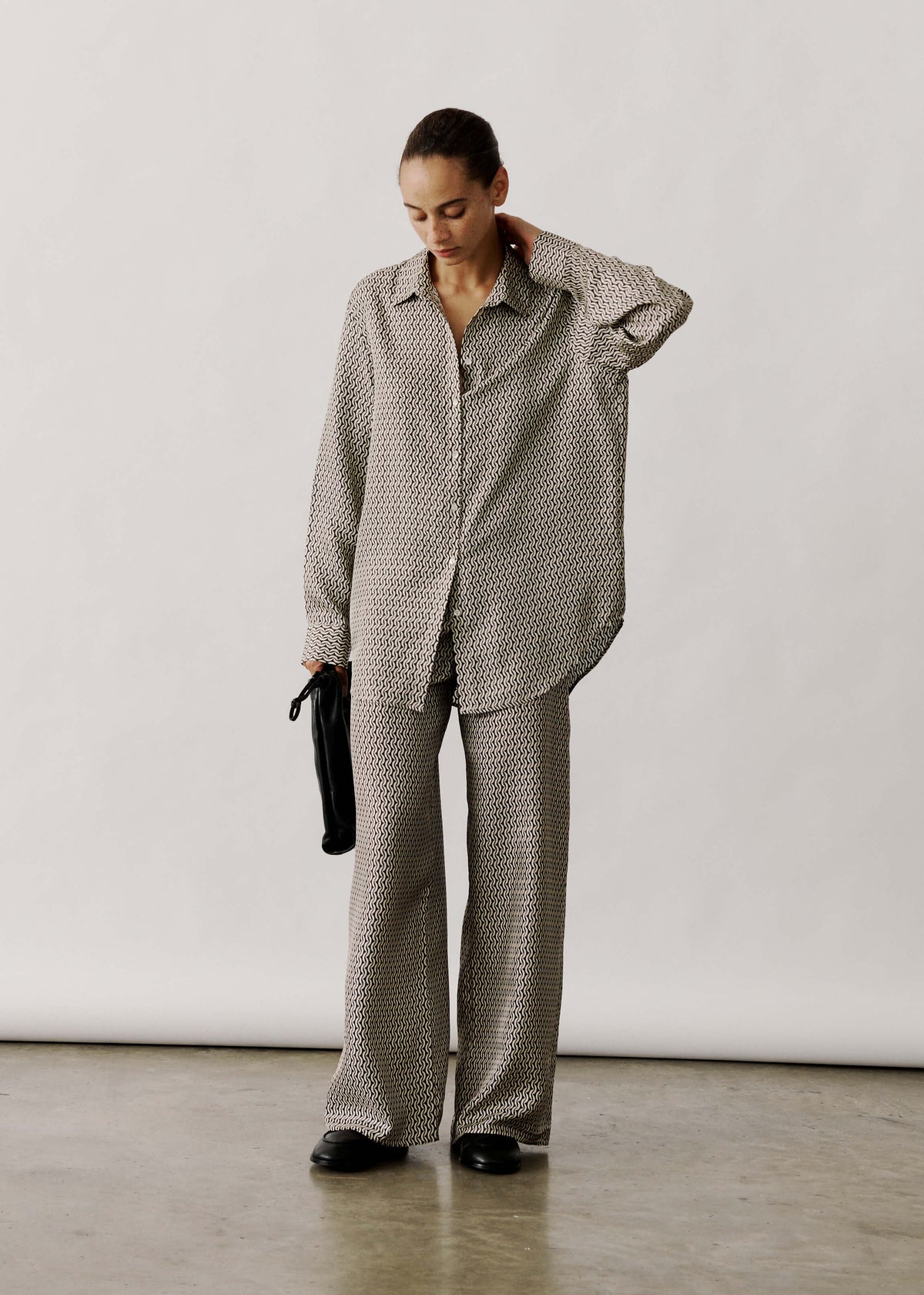
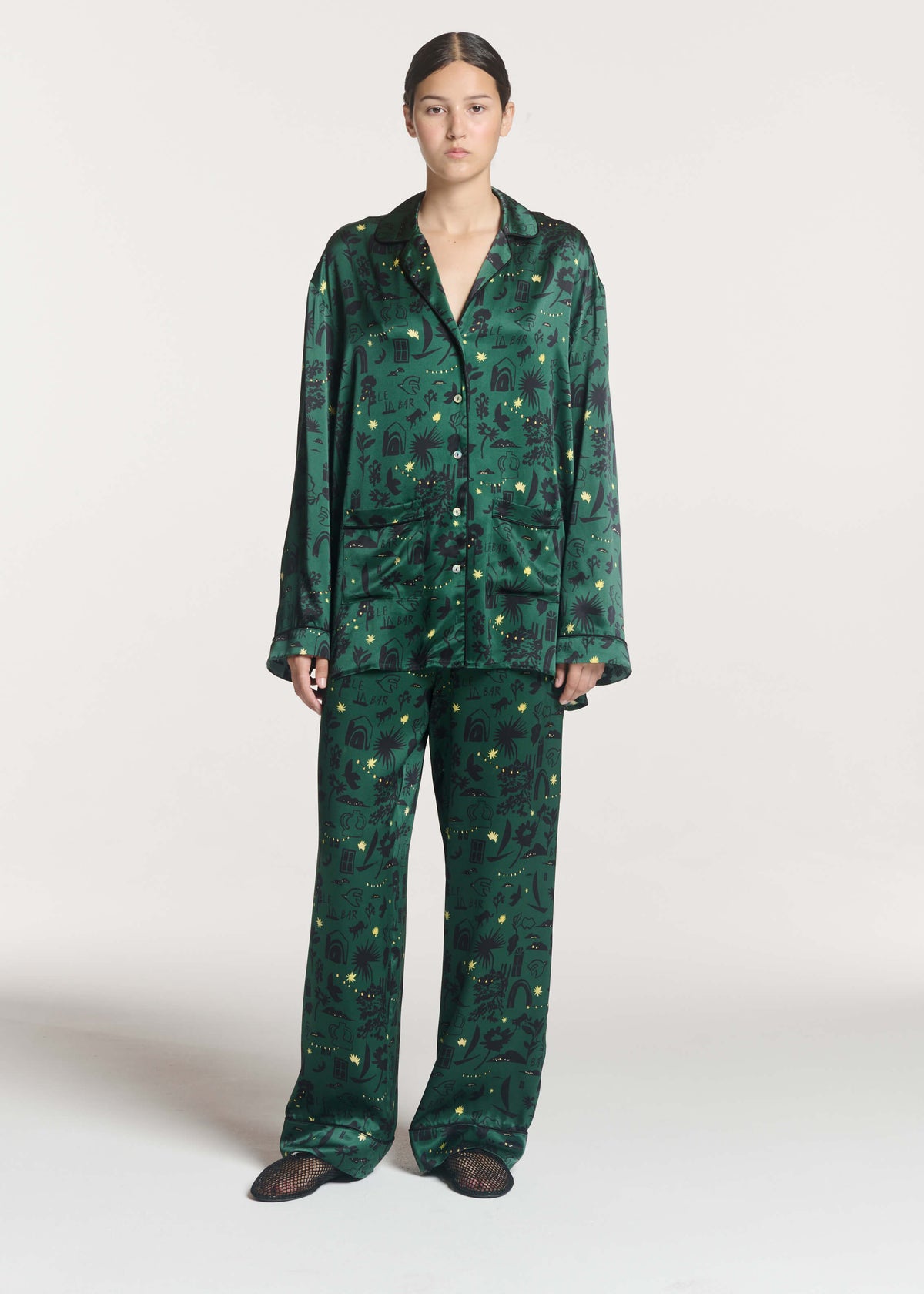
That considered approach suits Asceno’s emphasis on well-made pieces intended to be worn and enjoyed over time. Its Agave Wave Statement Pyjamas, for example, are described as made from responsibly sourced organic silk and soft sandwashed silk, with fabrics tested for hand-feel, durability and design. Thoughtful care cannot prevent every change, but it can help a favourite pair retain its softness, drape and usefulness for longer.


Leave a comment
This site is protected by hCaptcha and the hCaptcha Privacy Policy and Terms of Service apply.