
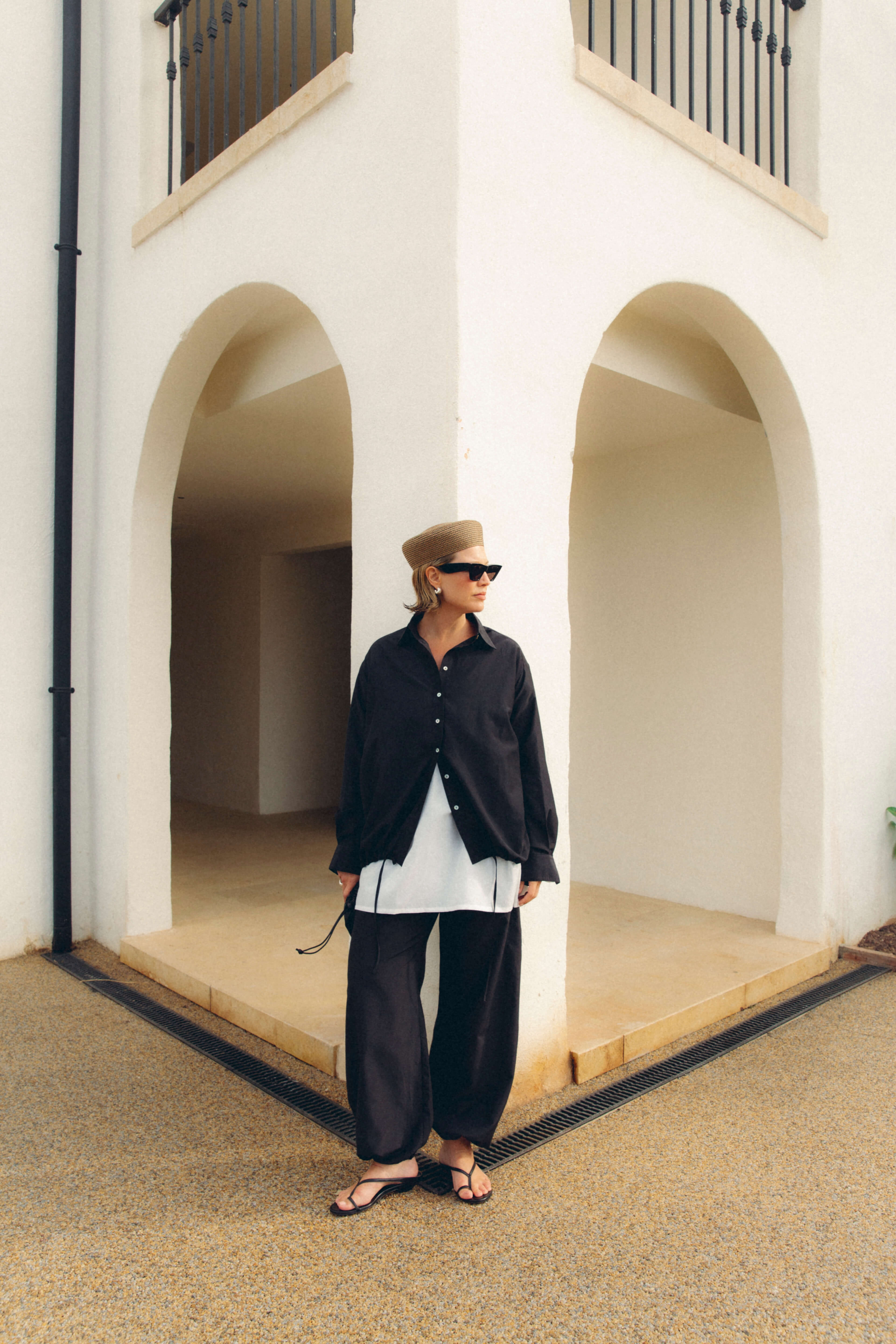


3 Seam Finishes and Linings That Let a Pyjama Top Sit Neatly Beneath Tailoring
A silk or cotton pyjama top can disturb a tailored jacket's clean line, pooling at the waist, peeking below the hem, or adding visible bulk at the shoulder. To preserve a crisp silhouette while retaining pyjama-level comfort, opt for neat seam finishes, tidy edges, and selectively applied linings.
This post outlines three practical strategies for maintaining a sleek silhouette: selecting fabrics and making pattern adjustments for seamless layering, applying low-bulk seam finishes and tidy edge treatments, and incorporating targeted linings, facings, and stabilisers. Read on for clear techniques to reduce bulk, preserve drape, and ensure a pyjama top sits neatly beneath structured tailoring.

1. Select sustainable fabrics and refine patterns for seamless layering
Begin by balancing sustainability with low-bulk performance: choose low-bulk, low-friction fabrics. Lightweight, fluid weaves with a smooth face and good drape will glide beneath tailoring rather than catch; heavy textures, deep naps, or coarse linens tend to create visible bulk at the seams. Test fabric behaviour by running your hand over the garment surface against a jacket lining to judge how easily it slips and how much friction to expect. Alter the pattern to remove long lines and excess cloth where the jacket sits: trim wearing ease at the bust and back by about 1 to 2 centimetres, narrow the side seams and shoulders, and shorten the hem so it does not extend below a jacket vent. These measures reduce bulk and prevent awkward lines before you begin finishing the garment.
To achieve a clean, low‑bulk line under a tailored jacket, minimise seam thickness and add selective stabilisation. Use narrow seam allowances, grade and trim seam stacks, and favour flat finishes such as French seams or narrow‑felled seams on edges that contact the jacket. Incorporate a light underlining or selective lining to stabilise panels and introduce slip: fuse or hand‑baste a lightweight underlining to the areas that rub against the jacket, and finish neck and armholes with bias binding to keep layers smooth and prevent shifting. Finally, make a toile in the chosen fabric and wear it under the actual jacket while sitting, reaching, and turning; pin the necessary adjustments on the body, then transfer those changes back to the pattern before finishing so the final pyjama top sits cleanly.

2. Employ low-bulk seam finishes and neat edge treatments
Reduce bulk at key seams by grading and trimming seam allowances so the inner layers measure only a few millimetres, while the outer layer remains slightly wider to maintain strength. This balances a slim internal profile with a durable exterior. On lightweight silks and viscose, use a narrow French seam or another fully enclosed seam. Stitch the seam, trim the inner allowance close to the stitching, then stitch again to encase the raw edges. The result is a smooth, minimal-thickness finish that protects delicate fabrics and prevents fraying. For medium-weight wovens and knits, overlock close to the stitching or use a narrow zigzag, trim the allowance, then add a light topstitch or understitch where needed. These steps secure the edge and help the seam lie flat, without introducing unnecessary bulk.
Bind facings and hems with lightweight bias tape or narrow turnings. Understitch the facings 2 to 3 mm from the seam line to prevent rolling and keep cut edges neat. Press seams open on a seam roll, clip or notch curves, and apply lightweight fusible stay tape at the shoulders and neckline to stabilise the fibres and set the shape. Consistent pressing and these tidy edge finishes minimise ridging under a jacket, allowing the pyjama top to lie smoothly against structured layers. Together, low-bulk finishes, enclosed seams, and careful stabilisation create an unobtrusive interior that prevents the top from showing through or distorting beneath tailored outerwear.

3. Add strategic linings, facings, and stabilisers to ensure a smooth drape
Underline only the areas of the pyjamas that would distort when worn under a jacket. Cut the underlining from the same pattern pieces, fuse or machine-stitch it to the wrong side, then trim it into the seam allowances; this gives the fabric subtle support without adding bulk. For the neckline and front opening, use narrow facings or bias facings in a soft, stable fabric such as silk organza or fine cotton lawn, and understitch them to the seam allowances so the edge sits flat against the jacket collar. Understitching prevents the facing from rolling out and stops gaping, preserving the clean line when the garment is worn with a tailored jacket.
To preserve a smooth shoulder line and prevent distortion in wear, use a few targeted techniques. Apply a lightweight woven or open-weave stabiliser to the shoulder seam and sleeve head, trim it back to the seam allowance, then grade the seams to reduce bulk and keep the sleeve and shoulder curving cleanly beneath structured shoulders. Sew a narrow stay tape, or a short row of stay-stitches, along curved edges and armholes, and, when extra recovery is needed, insert a small strip of clear elastic across the back shoulder to control bias stretch and limit distortion in movement. For the body, consider a partial or floating lining finished with fine slip-stitches at the hem and side seams so it moves independently from the outer fabric, reducing friction against tailoring fabrics. Together, these measures reduce shoulder drag, prevent pulling and bunching, and allow the outer garment to drape more fluidly over a smooth underlayer.
Small, considered choices in fabric, seam finishes, and stabilisers help a pyjama top sit slim and stable beneath structured tailoring. Trimming wearing ease, specifying narrow enclosed seams, and underlining only high-friction areas minimise bulk, prevent shifting, and preserve the garment’s drape.
In summary, use three approaches: adjust the fabric and pattern, apply low-bulk seam finishes, and add targeted linings or stabilisers to remove ridging and shoulder drag. First make a toile, a simple muslin mock-up, and move through the jacket while observing how the fabric sits and where tension gathers. Transfer those adjustments to the final garment so the pyjamas sit cleanly and the tailoring reads as intended.

Leave a comment
This site is protected by hCaptcha and the hCaptcha Privacy Policy and Terms of Service apply.