



5 Ways to Tuck a Pyjama Top Into Tailoring for a Sleek Silhouette
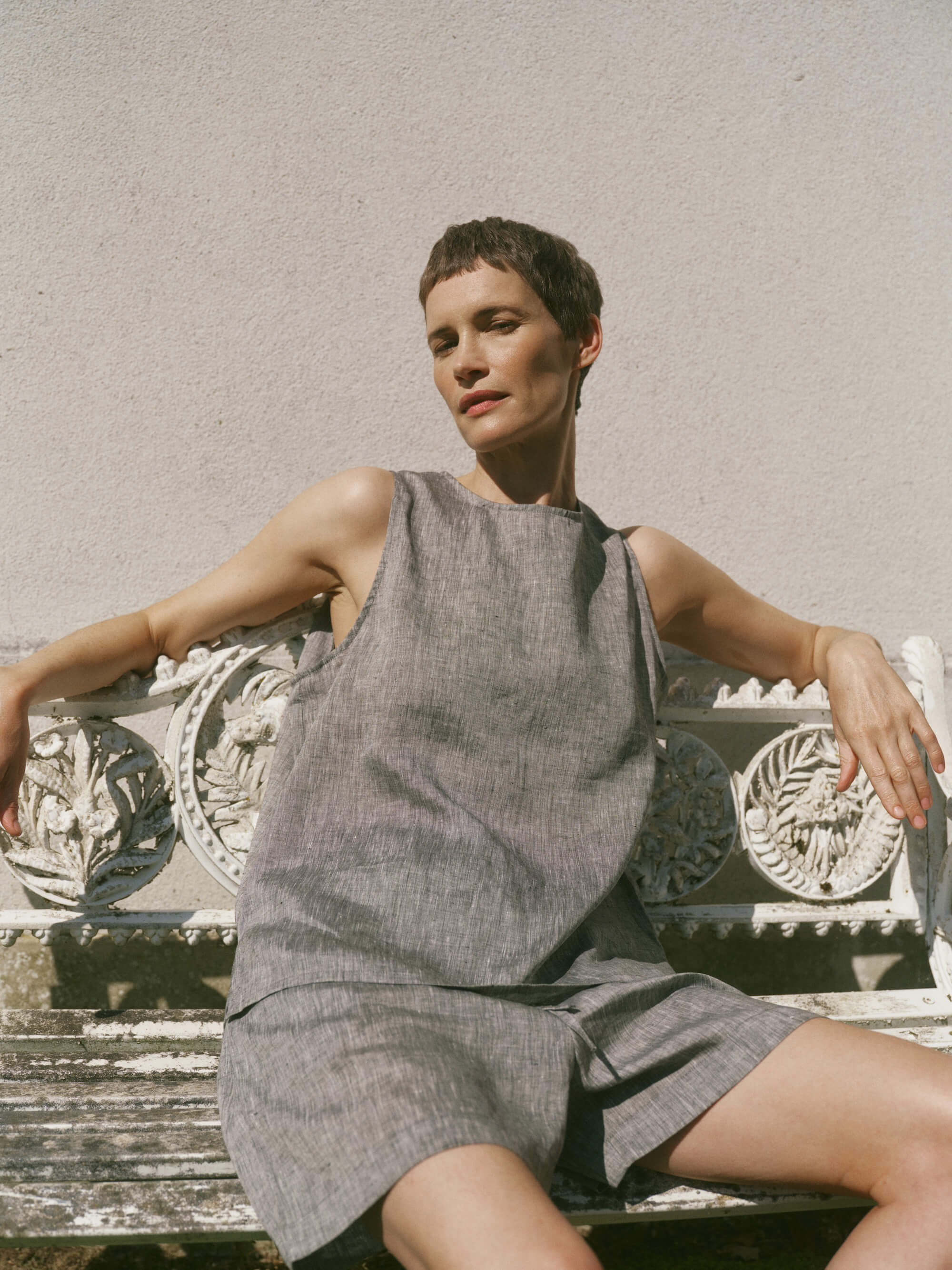
A pyjama top paired with tailored pieces can convey relaxed elegance, yet an untidy waist often reads bulky. Choose lightweight, fluid fabrics such as silk or fine cotton, and tuck or half-tuck the hem into a waistband or trousers so the fabric drapes smoothly, turning a potentially shapeless finish into a polished silhouette.
This post unpacks the choices that matter: fabric and fit; balancing proportions; full, half and front tucks; finishing touches such as belts, fastenings, and minimal accessories; and sustainable care and alterations. Continue for practical, easy-to-apply techniques that preserve tailoring, refine the waistline, and extend the life of your pyjama tops.
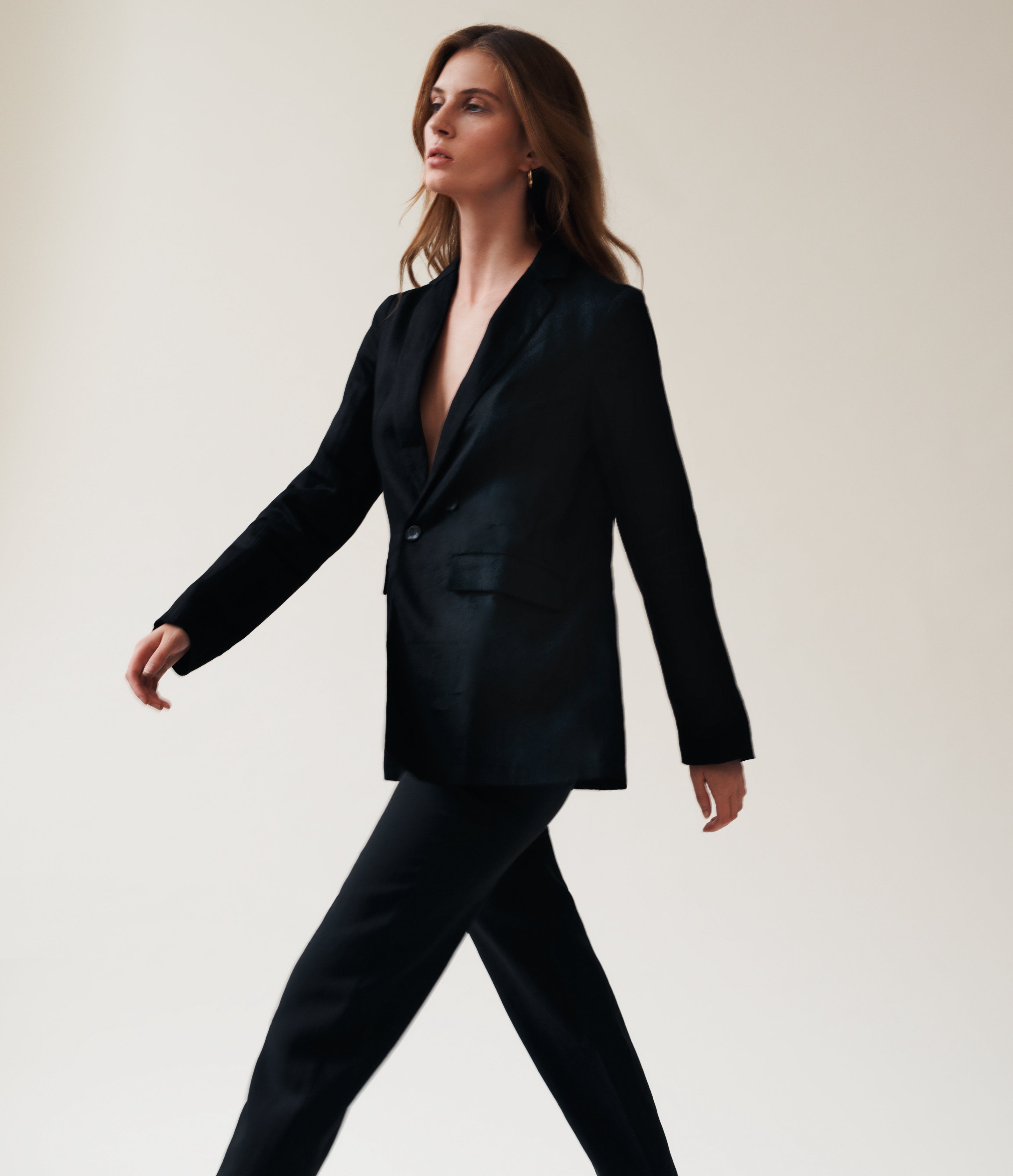
1. Choose a pyjama top by fabric, fit, and silhouette
Choose pyjamas by fabric weight and fit, aiming for a top that skims the body rather than clings or billows. Test pieces by tucking them in, walking, and sitting: lightweight silk or viscose can slip out of a tucked waistband, while a slightly heavier satin or crepe will sit more smoothly under a blazer. Hold the top up to the light to judge thickness and sheerness, try it on with the underlayer you plan to wear, and wear a neutral slip if a semi-sheer fabric reveals underwear lines.
Match the pattern, scale, and colour of your top to the jacket’s tailoring by choosing solids or vertical stripes that read as a background layer, rather than small, busy prints or horizontal motifs that interrupt the silhouette. Carry out a movement and maintenance check: raise your arms, sit, and fasten the jacket to ensure the top stays tucked and resists creasing. Favour fabrics with a subtle texture or slight grip to reduce shifting, and consider how often they will need pressing or steaming so the silhouette holds throughout the day.

2. Balance pyjamas' proportions with tailored silhouettes for a refined fit
Anchor a pyjama top with high-waisted, tailored bottoms by smoothing the hem, tucking either fully or just at the front, and raising the waistband to define the waist and lengthen the leg line; this also prevents billowing at the back. Contrast the soft pyjama fabric with a structured jacket or waistcoat that has defined shoulders and a cropped or waist-skimming length, and roll or button the sleeves to remove bulk under the tailoring. Choose the tuck to suit the silhouette: a full tuck gives the cleanest line for slim trousers, a half tuck reveals the waistband for a more relaxed feel, and a small French tuck produces subtle blousing at the centre front.
Secure slippery silks at the waistband with a small, discreet pin, or anchor the top from within by stitching a narrow loop into the trousers so the fabric lies smooth without visible folds. Thread a slim belt at the natural waist to shape the garment while preserving the pyjamas' drape. Balance scale and volume by pairing large prints or roomy cuts with slim, streamlined tailoring, and reduce sleeve bulk by rolling or fastening cuffs. If excess fabric persists, make simple alterations, such as taking in the side seams or shortening the hem, so the top sits cleanly at the waistband and the silhouette appears tidy.

3. Layer with full, half, and front tucks
A full tuck feeds the entire hem of the pyjama top evenly into the waistband, smoothing it around the hips to create a continuous waistline. This prevents fabric from billowing under a fitted jacket and allows the tailoring to read cleanly. To perform a full tuck, align the tuck with the centre-front seam of your trousers, smooth from the centre to the sides, then close your trousers or fasten a belt to keep the line neat. A half tuck anchors the look by tucking only a narrower section of the front into the waistband, leaving the back to drape for a relaxed silhouette. Paired with high-waist trousers, it helps lengthen the leg line. A small front tuck folds a tiny wedge at the very front to reduce bulk beneath close-fitting jackets. If it keeps popping out, discreetly anchor it with double-sided tape or a tiny safety pin.
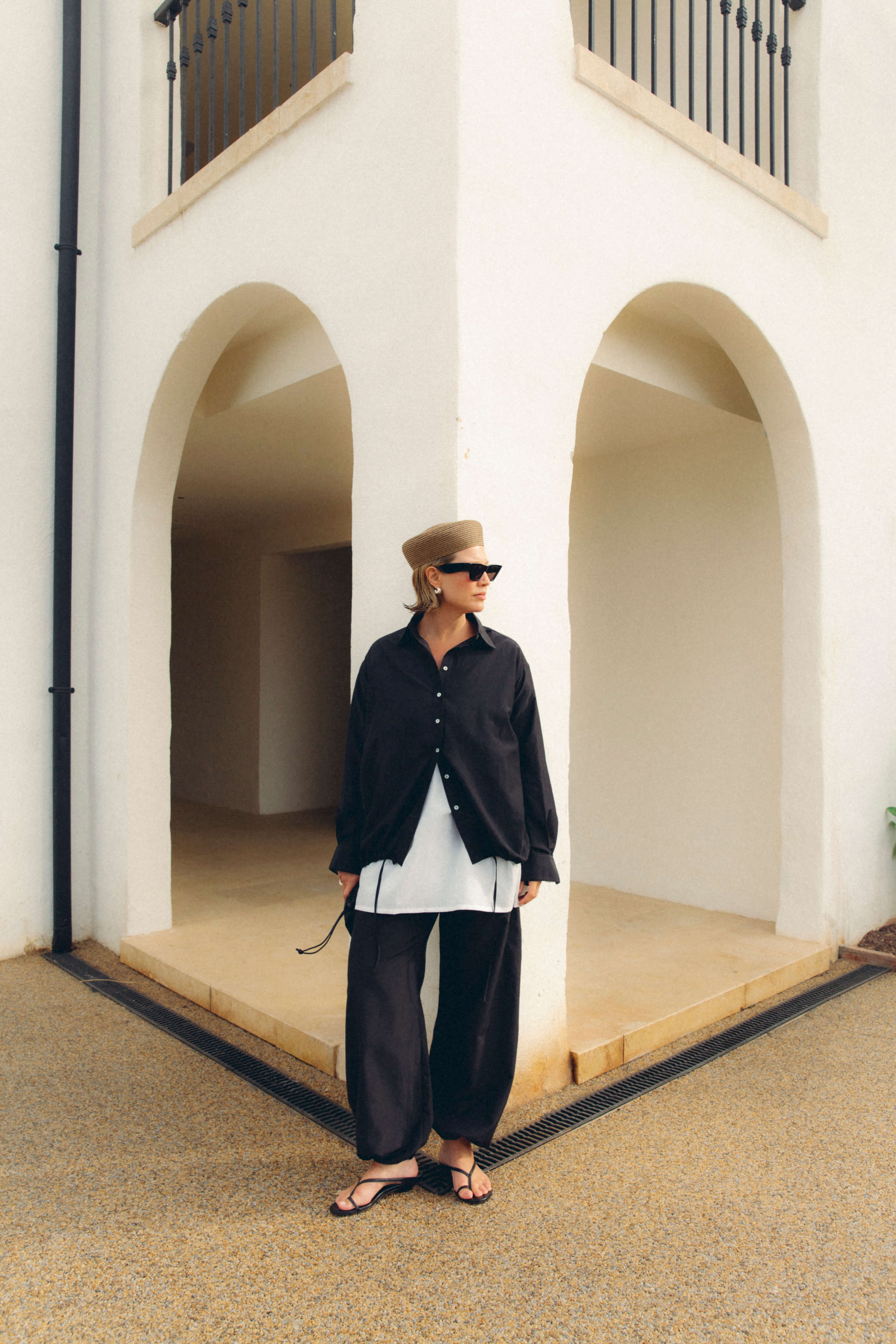
Choose lighter-weight pyjamas or finer knits when you plan to tuck under structured tailoring, as heavier fabrics tend to gather at the waist and create visible lumps. For thicker tops, fold a small pleat before tucking, or favour a half tuck or front tuck to condense volume and prevent added depth beneath a jacket. Match the tuck to the outer tailoring: use a full tuck with high-waist trousers and single-breasted jackets, a half tuck with relaxed blazers, and a front tuck with close-fitting jackets. Rely on lapels and waist seams to camouflage minor irregularities, and always test the combination by raising your arms and sitting to ensure the tucked top remains smooth.

4. Finish with belts, subtle fastenings, and restrained accessories
Match belt width and placement to the volume of the pyjama top. Thread a narrow belt through the trouser loops to anchor a neatly tucked slim top, or choose a wider belt to sit over a jacket to soften a blouson while defining the waist, fastening it centrally to preserve a clean vertical line. Fasten tailored layers at the waist rather than the hem: button the central point to hold tucked fabric flat, and leave the lower buttons undone to prevent pulling or bulging at the hips. These simple adjustments stabilise the tuck and maintain a tidy, streamlined silhouette without adding bulk.
Stabilise a tuck discreetly: secure the pyjama top with double-sided fashion tape along the tuck line, slip small, fabric-safe safety pins into seams, or use shirt stays to anchor the front without adding bulk. Always test pins and tape on an inconspicuous area first to ensure they will not harm delicate fabrics. For accessories, favour minimal pieces that support the silhouette, such as a slim belt, a narrow chain, small stud or hoop earrings, and a thin watch strap, keeping metal finishes consistent and textures mostly matte to avoid visual interruptions. Place decorative details deliberately, for example a small brooch near the shoulder to lift the eye, and limit yourself to a single focal accessory so the tucked, layered silhouette remains the primary statement.

5. How to care for and alter pyjama tops sustainably
Match the cleaning method to the fibre. Handwash delicate silks and satins in cool water with a mild, pH-neutral detergent, and turn garments inside out to protect seams and trims. Avoid heat and agitation, which cause shrinkage and dull the fabric’s sheen. Sturdier cottons and blends tolerate a gentle machine cycle; reshape them while damp to retain their form. Keep small faults out of sight by repairing them at home. Resew loose buttons, reinforce high-stress side seams with neat stitches, shorten overstretched sleeve cuffs, or add small darts at the waist to reduce billow and help a pyjama top sit neatly under a waistband. Adopt sustainable habits to extend garments’ lives: rotate wears to reduce washing, spot-clean spills immediately, mend rather than discard minor damage, use eco-friendly detergents, and line dry where possible to slow fibre breakdown and lower textile waste.
If home fixes do not achieve the desired fit, consult a tailor and request subtle shoulder and side-seam adjustments, gentle waist shaping, or a slightly shortened back hem to prevent pooling behind the waistband. Explain how the fabric behaves so the tailor uses smaller seam allowances and minimal interfacing that preserve drape, allowing the top layer to sit smoothly beneath jackets and high-waisted trousers. Refresh and store garments intelligently: steam to remove creases and revive the drape before wearing, hang silks on padded hangers, fold knits to avoid shoulder stretch, and depill with a fabric comb as needed. Keep pieces in breathable storage with lavender sachets to deter pests and moisture. Together, these measures extend the life and tuckability of pyjama tops and produce a neater silhouette under tailored clothing.
After caring for garments and arranging minor alterations, create a neat silhouette by choosing pyjamas that skim the body and by using tucks and internal anchors to control excess fabric, so seams and lines remain tidy. Heavier satins and crepes drape rather than billow, so they lie smoothly under a jacket. A full tuck maintains an uninterrupted waistline, while a narrow belt or a discreet pin keeps layers from slipping.
Treat the five headings (fabric and fit, proportion, tuck technique, finishing, and sustainable care) as a practical checklist: test combinations while moving, sitting, and fastening layers. Make small repairs or arrange discreet tailoring to preserve the garment's drape and its ability to tuck neatly. Those adjustments help pyjama tops maintain a clean silhouette, sit smoothly under other pieces, and read as intentional, refined layers rather than casual afterthoughts.

Leave a comment
This site is protected by hCaptcha and the hCaptcha Privacy Policy and Terms of Service apply.