
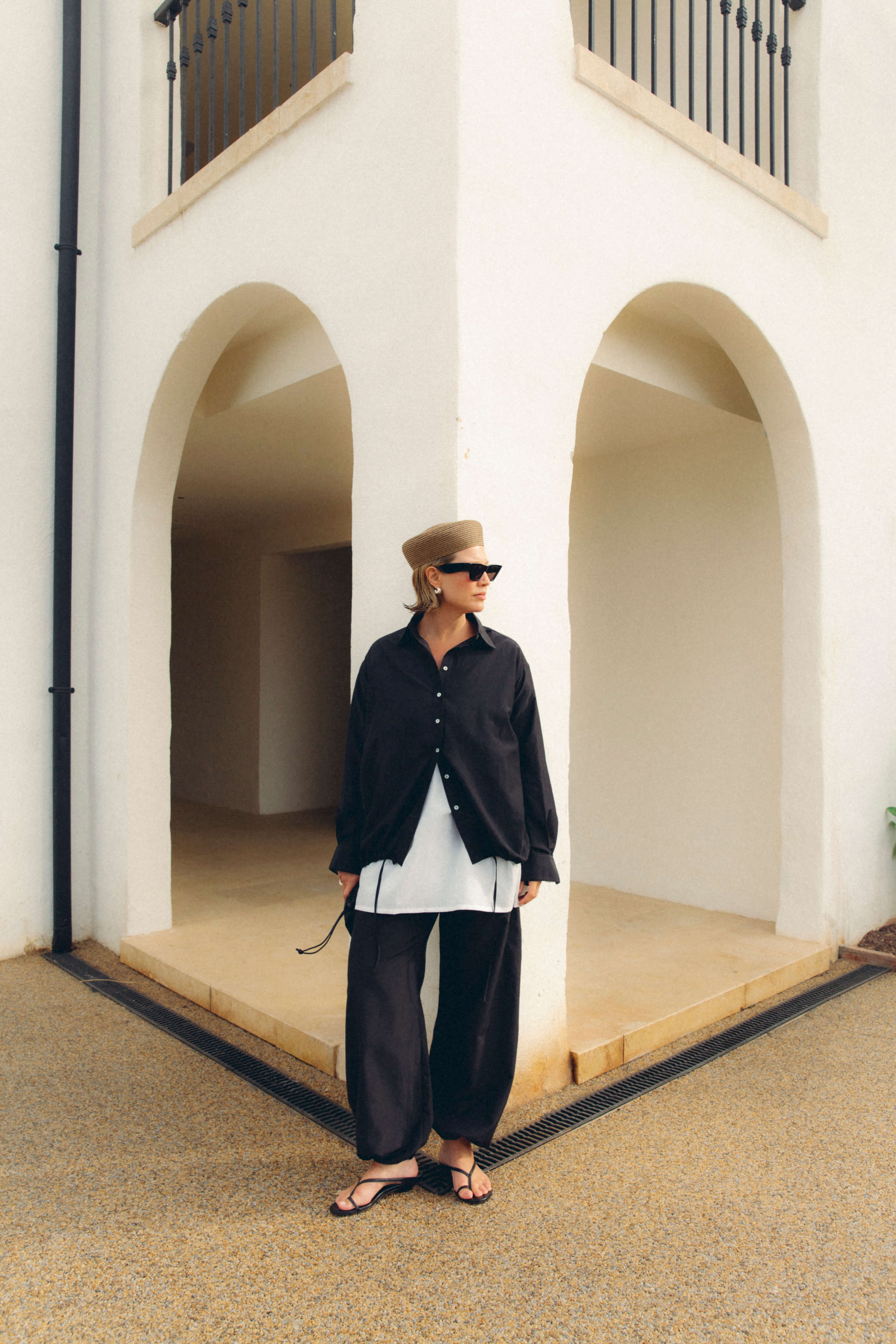

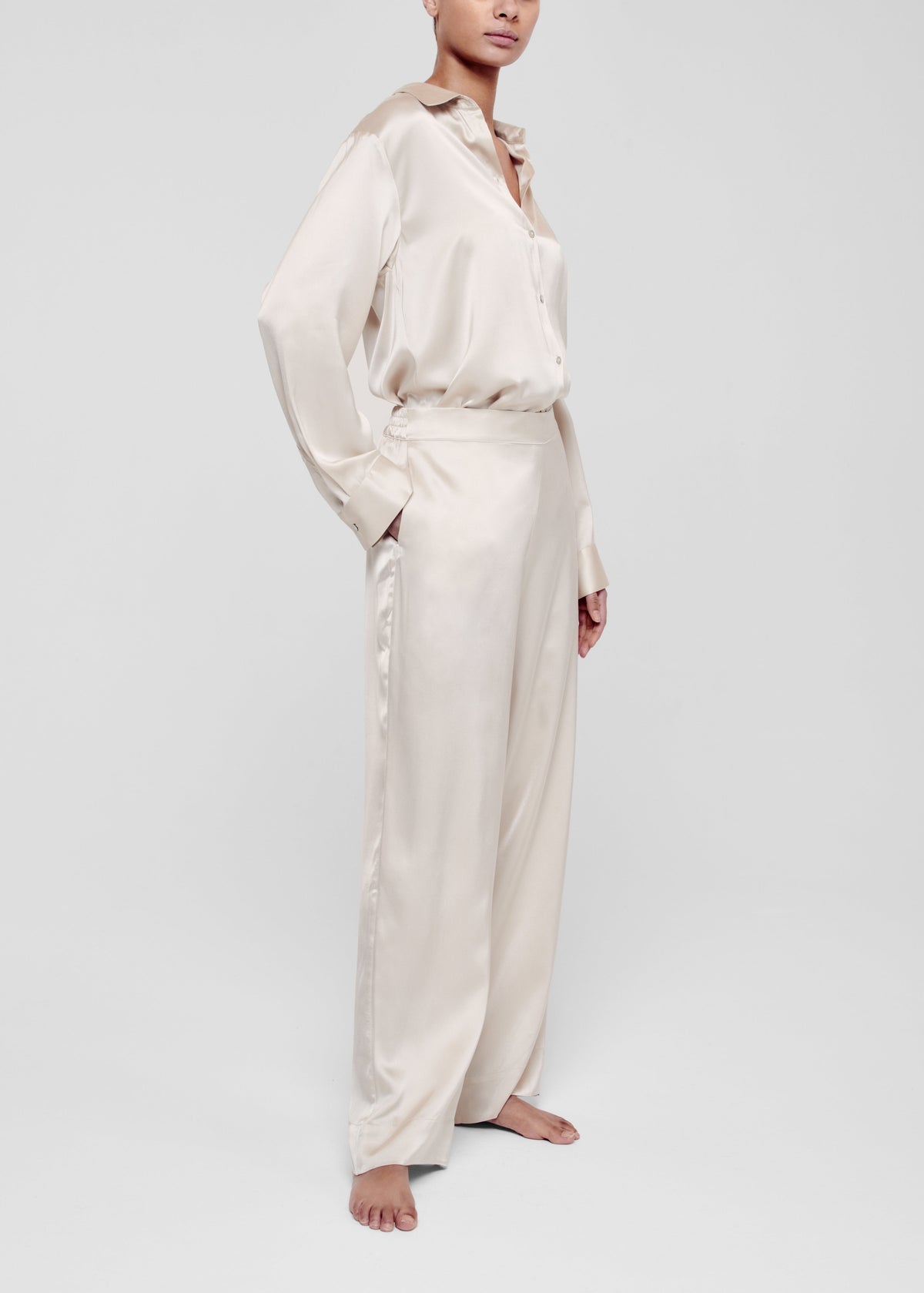
Half-tuck: Add Structure While Preserving a Pyjama Top's Relaxed Charm
Like the ease of a pyjama top but concerned it appears untidy with tailored trousers or a skirt? A neat half-tuck reduces bulk at the waist, preserves the top's soft drape, and lends immediate structure and intention to the outfit.
This post explains how to choose pyjama tops for a flattering drape and balanced proportion, where to place a tuck to control volume, and how to harmonise wide-leg trousers and skirts with proportion, accessories, and footwear. With a few considered adjustments, you can preserve the relaxed charm of pyjamas while achieving a polished, confident look.

Choose a pyjama top for flattering drape and balanced proportion
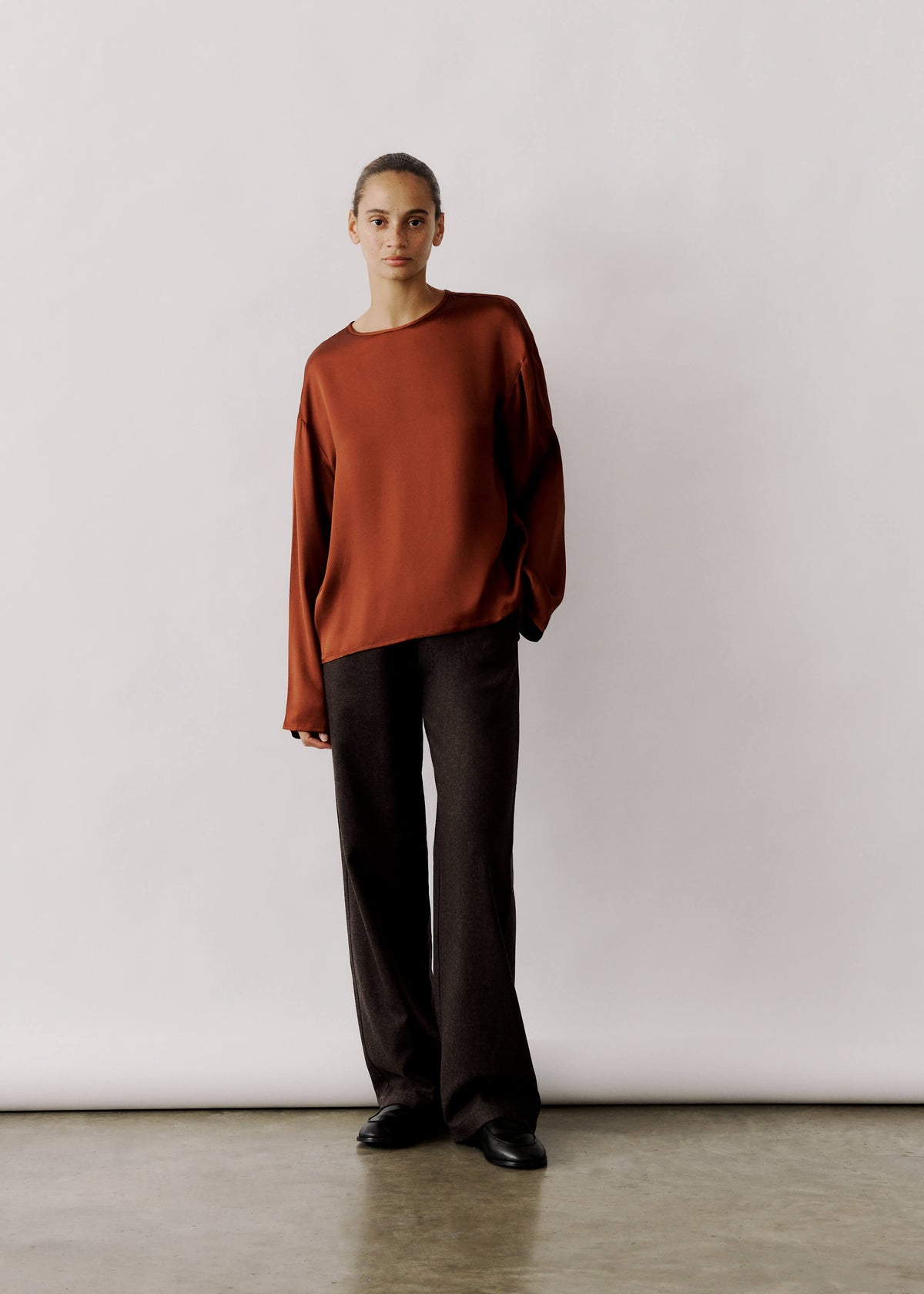
Choose a pyjama top with a fluid drape, such as silk or viscose. Lightweight fabrics slip neatly into a half-tuck and form a single soft fold, whereas stiffer cotton or flannel tends to create bulk. Notice where the hem sits relative to your waistband: a mid-hip top usually benefits from tucking roughly one third to one half of the front, while a very long top should have only the top few inches tucked to avoid over-shortening. To create a considered, effortless fold, gather a small amount of fabric at the centre or slightly off-centre, feed it into the waistband, then pull out a finger-sized loop to form a gentle pouch. Practise different placements so the fold complements your proportions rather than flattening the back.
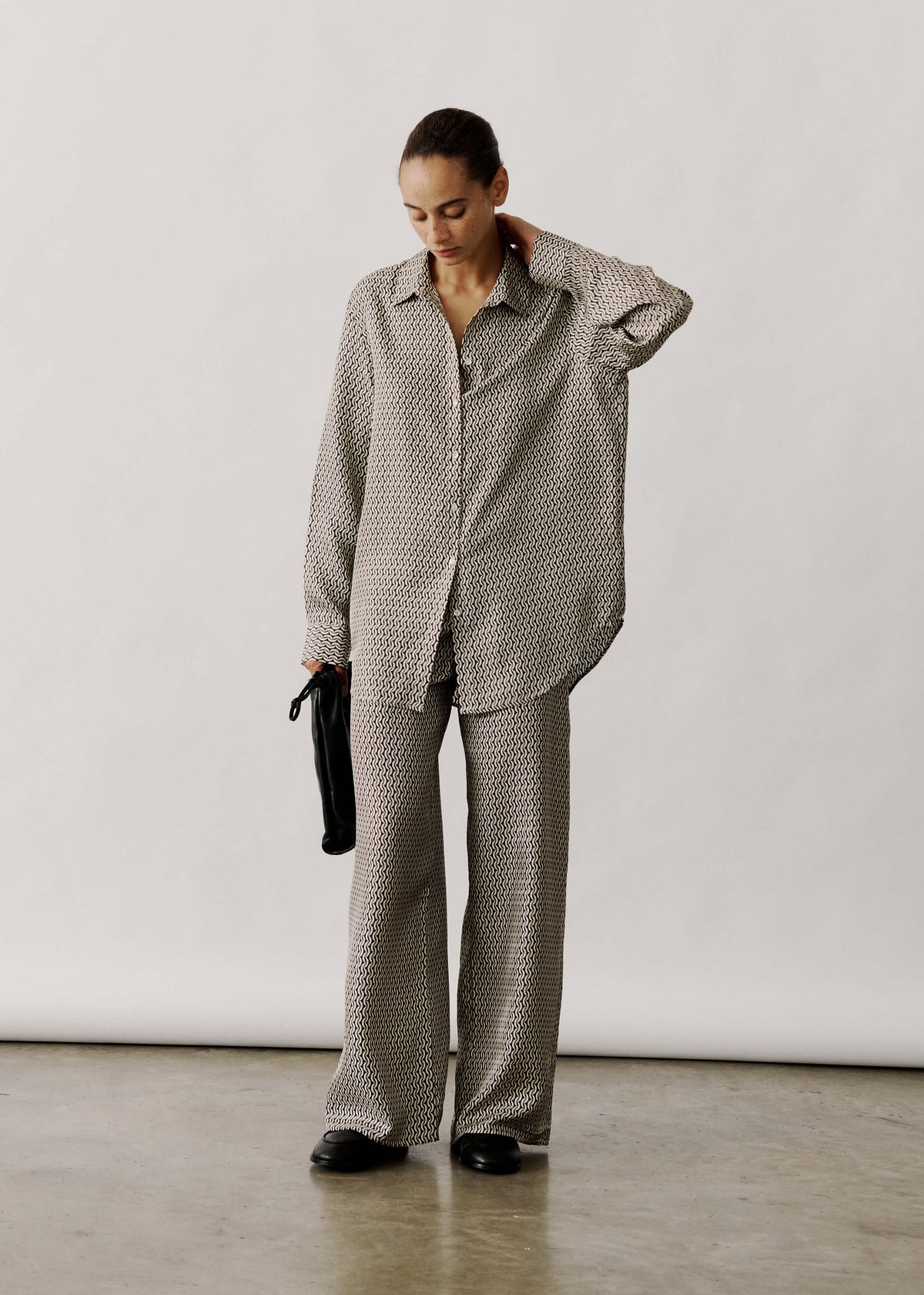
Pair a fluid pyjama top with crisp, high-waisted trousers or a structured skirt to define the waist, or tuck it into relaxed denim or wide-leg trousers to retain an easy, voluminous silhouette. For large prints, heavy embroidery, or exaggerated hems, place the tuck on a seam, placket, or side vent to preserve the pattern's flow, and leave decorative tails untucked so key design details remain visible. These small adjustments keep the top's easy, sleepwear feel, adding subtle structure without increasing bulk.
Tuck into mid-rise viscose bottoms for a polished silhouette

Master the half-tuck to sculpt volume and refine silhouette
Pinch roughly 25 to 30 per cent of the front hem and tuck it into the waistband, then smooth the remaining fabric so the fold sits flat and shortens the front without adding bulk. Drapey fibres, such as silk and modal, create a soft, slinky fold, while stiff cottons or heavily structured fabrics tend to bunch and usually require a smaller tuck or a lightweight underlayer to lie neatly. Use a smaller fraction with low-rise bottoms, increase the tucked portion with high-rise trousers or skirts to define the waist, and employ the tuck to balance leg-to-torso proportions.
Secure the tuck discreetly with a small safety pin or fashion tape, and wear a lightweight camisole to keep the top from shifting. If movement loosens the silhouette, retuck at the side seam. Check the result in a mirror or by photographing front and three-quarter views to confirm a clean waistline, even hem lengths, and balanced proportions. Avoid tucking excess fabric from a heavy pyjama top, which creates an unflattering pouf. Aim for a short, flat tuck that you can adjust easily; tailor the amount to the fabric and rise, and recheck after a few steps.
Try a silk-blend wide leg to keep tucks smooth.

Balance wide-leg trousers and skirts with considered proportions, accessories and footwear
When balancing wide-leg trousers and skirts, fold a small wedge of fabric into the waistband for a centre-front half-tuck, leaving the sides loose. This creates a clean vertical line that gently lengthens the legs. A shallower tuck yields a soft blouson, while a deeper tuck reads neater and more tailored. Secure the tuck with a few discreet stitches or a safety pin for all-day hold. Pair a slouchy pyjama top with high-waisted or mid-rise, wide-leg trousers that have a defined waistband to avoid bulk at the hip. Contrast a fluid silk or satin top with a slightly structured bottom, and reverse that logic for a cotton top. For skirts, half-tuck at the front with pencil or tailored midis to maintain a smooth silhouette, but fully tuck or add a narrow belt when wearing full, pleated, or wrap skirts to preserve their intended volume and drape.
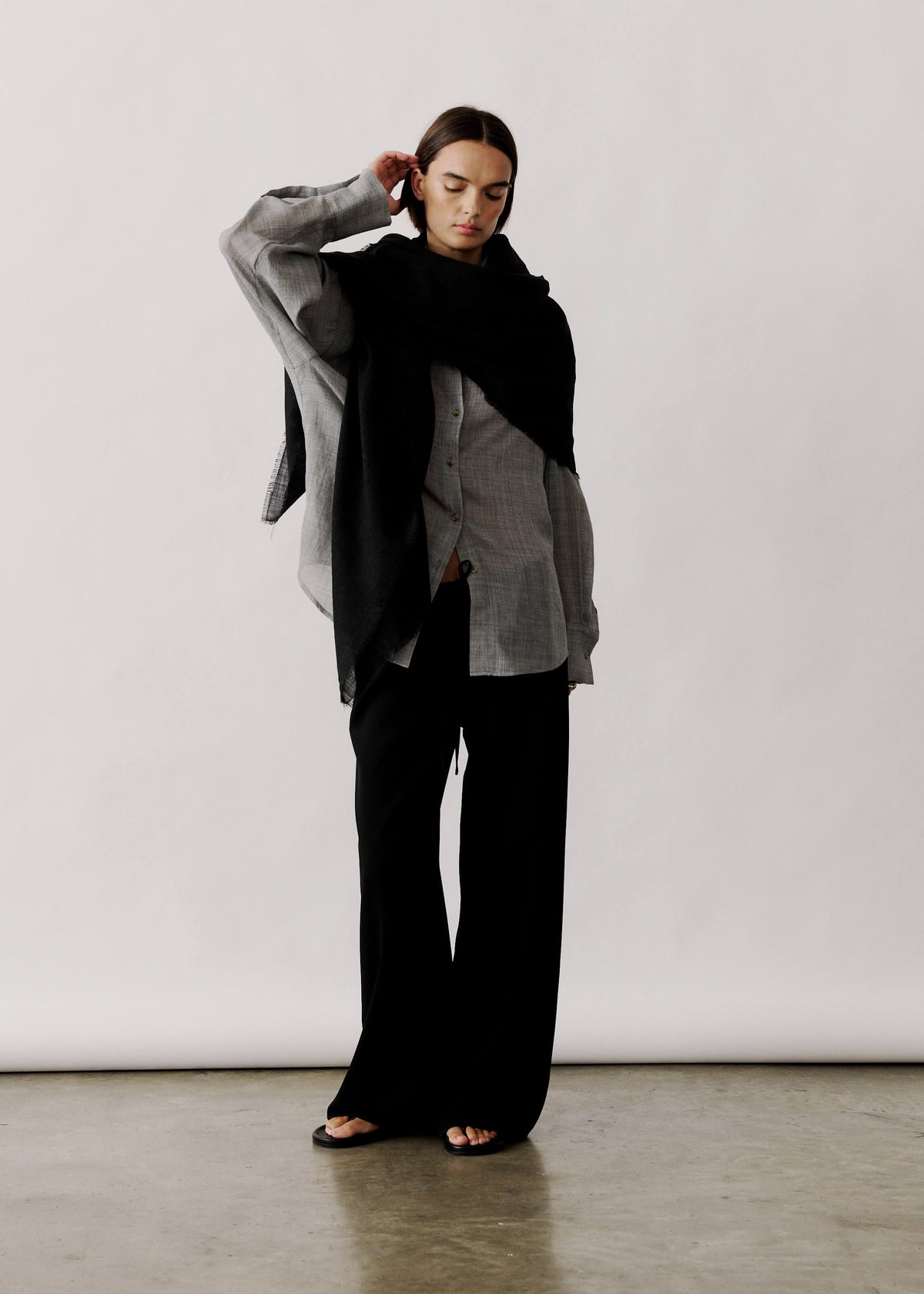
For footwear and finishing touches, reveal a hint of ankle by choosing cropped, wide-leg trousers or cuffing full-length pairs to display your footwear; this creates a longer leg line and pairs with pointed-toe flats, heeled sandals, or streamlined trainers, depending on the finish you prefer. Secure a half-tuck with a short, structured blazer, a waistcoat, or a slim belt to define the waist, and add a long pendant or a jacket with a vertical lapel to reinforce the upward line. Choose contrasting textures so a pyjama top reads deliberately relaxed, not unstyled.
In summary, folding the front of the pyjama top into the waistband preserves its relaxed charm while introducing considered structure, subtly defining the waist and reducing excess bulk. Choose a fluid fabric, vary how much you fold to suit your natural waist or preferred rise, and secure the fold with a long pin or a small piece of fashion tape. The top will drape into a soft pouch that appears deliberately styled with both tailored trousers and wide-leg bottoms.
For fabric and technique, choose silk or viscose for their favourable drape. Pinch about a quarter of the front hem into a short, flat tuck, then re-tuck or anchor the side to hold the shape as you move. These small, practical adjustments preserve proportion with trousers and skirts, showcase design details, and keep pyjamas looking polished in motion. Try a few variations and choose the tuck that flatters you most.

Leave a comment
This site is protected by hCaptcha and the hCaptcha Privacy Policy and Terms of Service apply.