
How to Balance Printed Pyjama Tops with Structured Layers
Printed pyjama tops can feel playful, but when worn beyond the bedroom they can appear unbalanced. How do you retain the relaxed silhouette while ensuring the outfit feels polished and wearable?
This guide shows how to analyse print scale, colour and drape, anchor a printed pyjama top with tailored layers, and introduce textured accessories to compose cohesive outfits. The practical pairings and subtle styling shifts demonstrate how to balance comfort with structure, allowing prints to read as intentional and considered.

How to analyse print scale, colour and drape
Begin with print scale. Small motifs read as texture from a distance and pair beautifully with a sharply tailored jacket, while larger motifs become the focal point and sit best against a simple, minimal layer to avoid visual clutter. Establish a clear colour hierarchy: select the print's dominant hue for your structured piece, a secondary shade for accessories and a neutral to anchor the outfit. Match drape to intent by pairing a fluid satin or silk pyjama top with a structured blazer to introduce shape, or balancing a boxy printed top with a soft, drapey cardigan. Move and sit in each combination to see how the fabrics behave in real life.
Bring harmony to proportion and line by countering oversized sleeves or elongated hems with cropped or nipped-in structured pieces, or by introducing a half tuck, a belt or a tailored waistcoat to control volume and maintain the silhouette when layering. Use texture to add depth: pair glossy silk pyjamas with matte, textured tailoring such as wool or cotton to reduce slipping and create considered contrast. If you introduce a second pattern, keep it at a different scale and in a muted palette so prints do not compete. Throughout, favour garments that move and check the fit from every angle to ensure the outfit reads cohesive and comfortable.
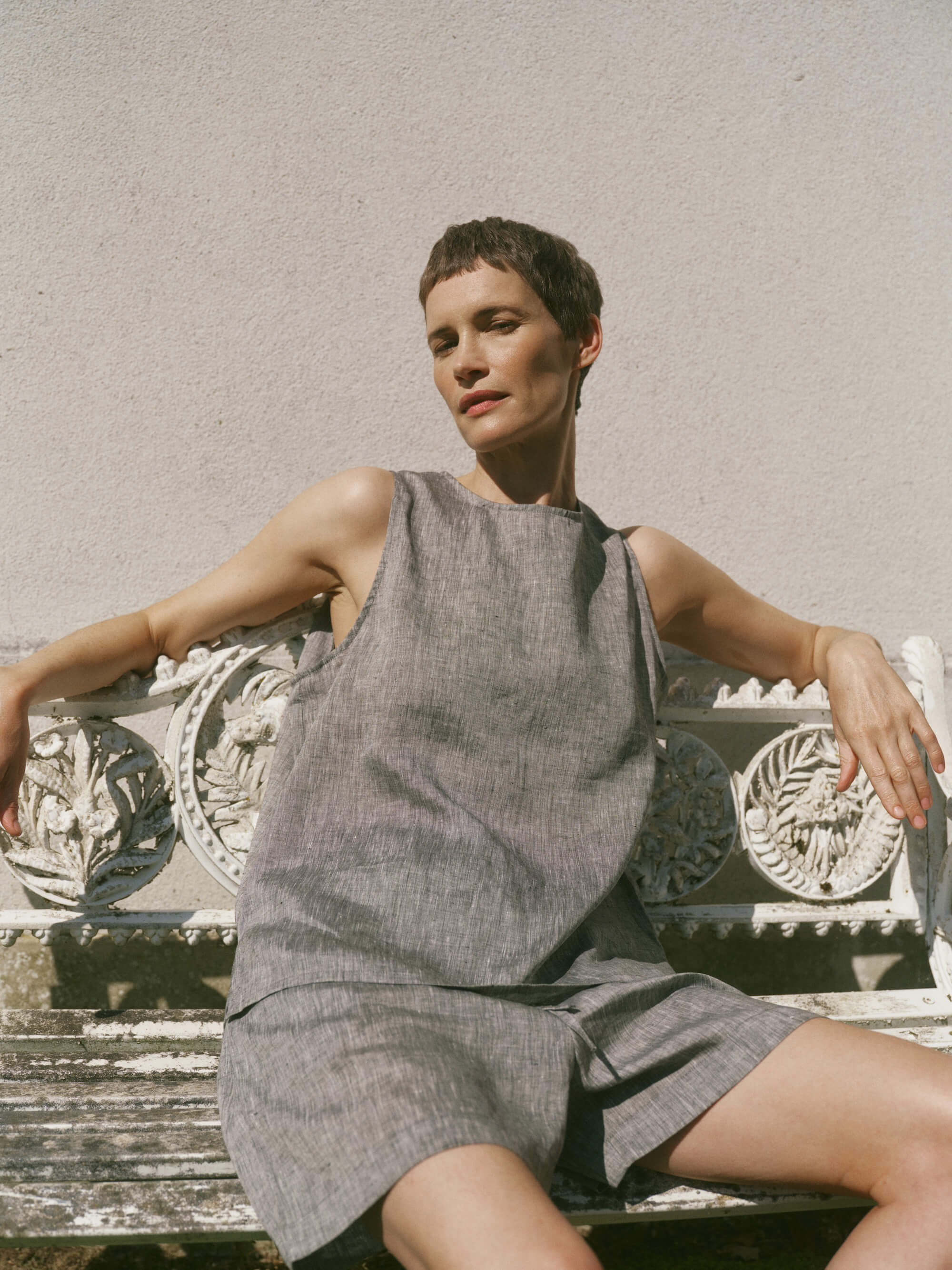
Pair silk pyjama shorts with a structured blazer.

Anchor a patterned pyjama top with tailored layers
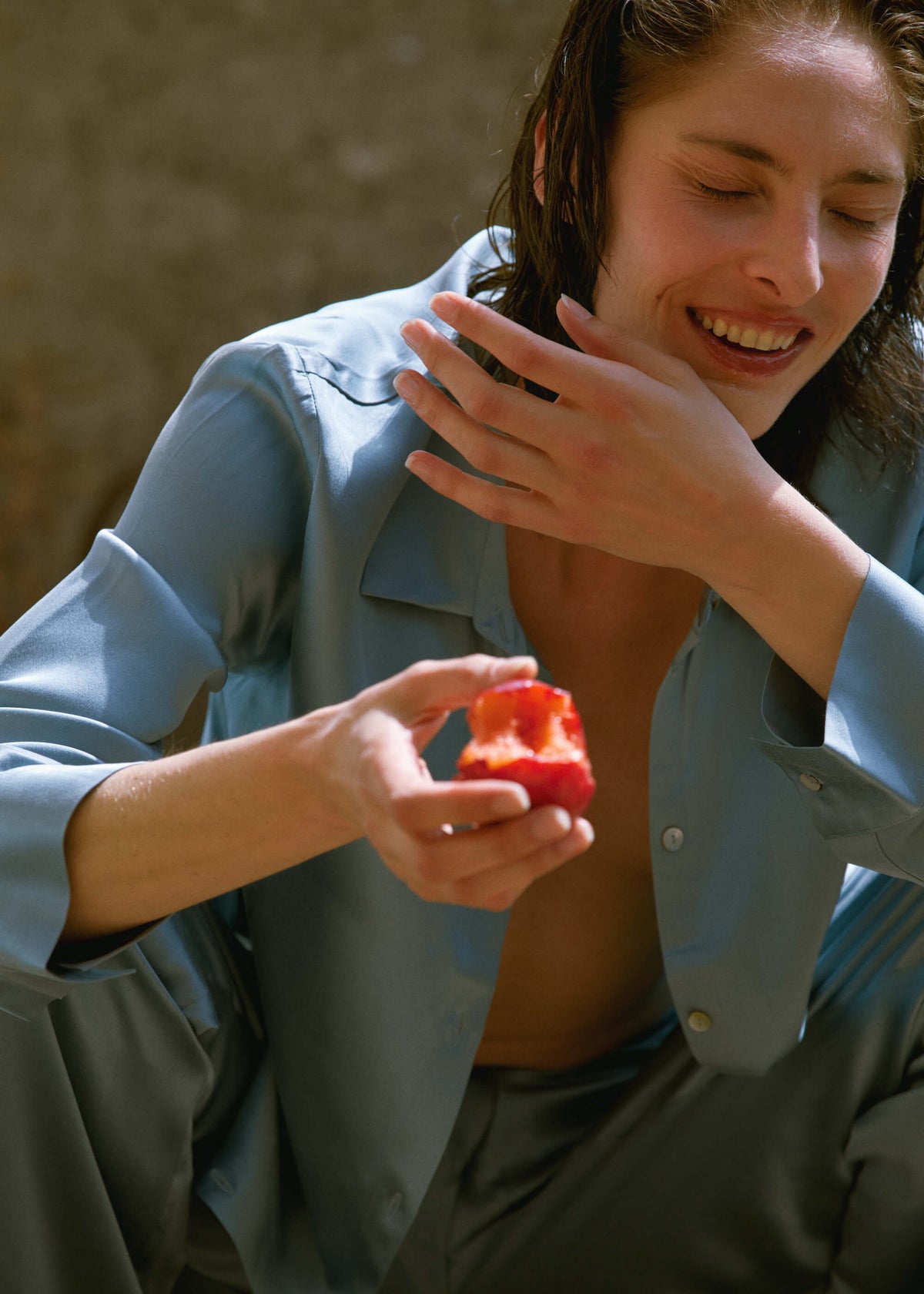
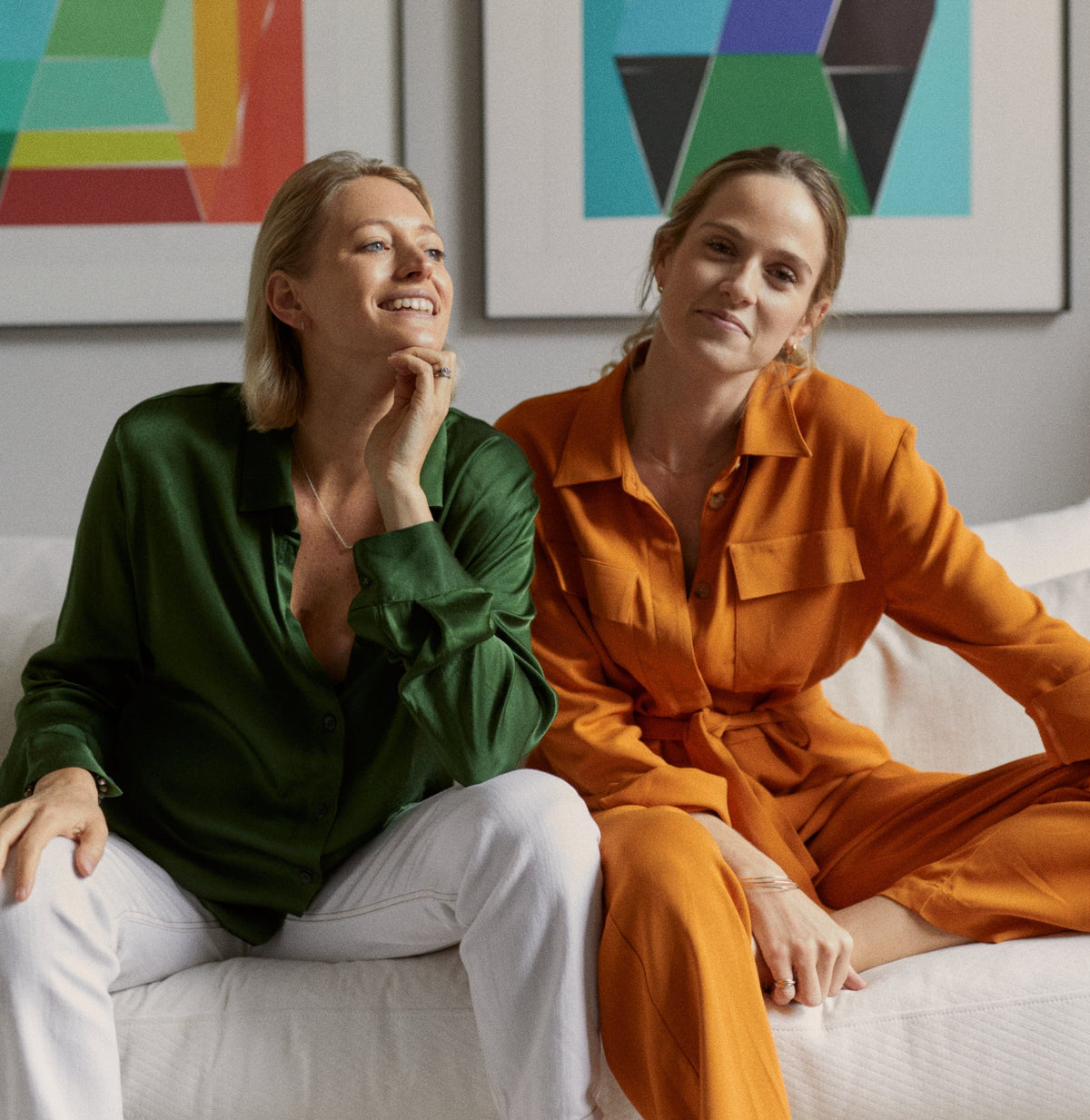
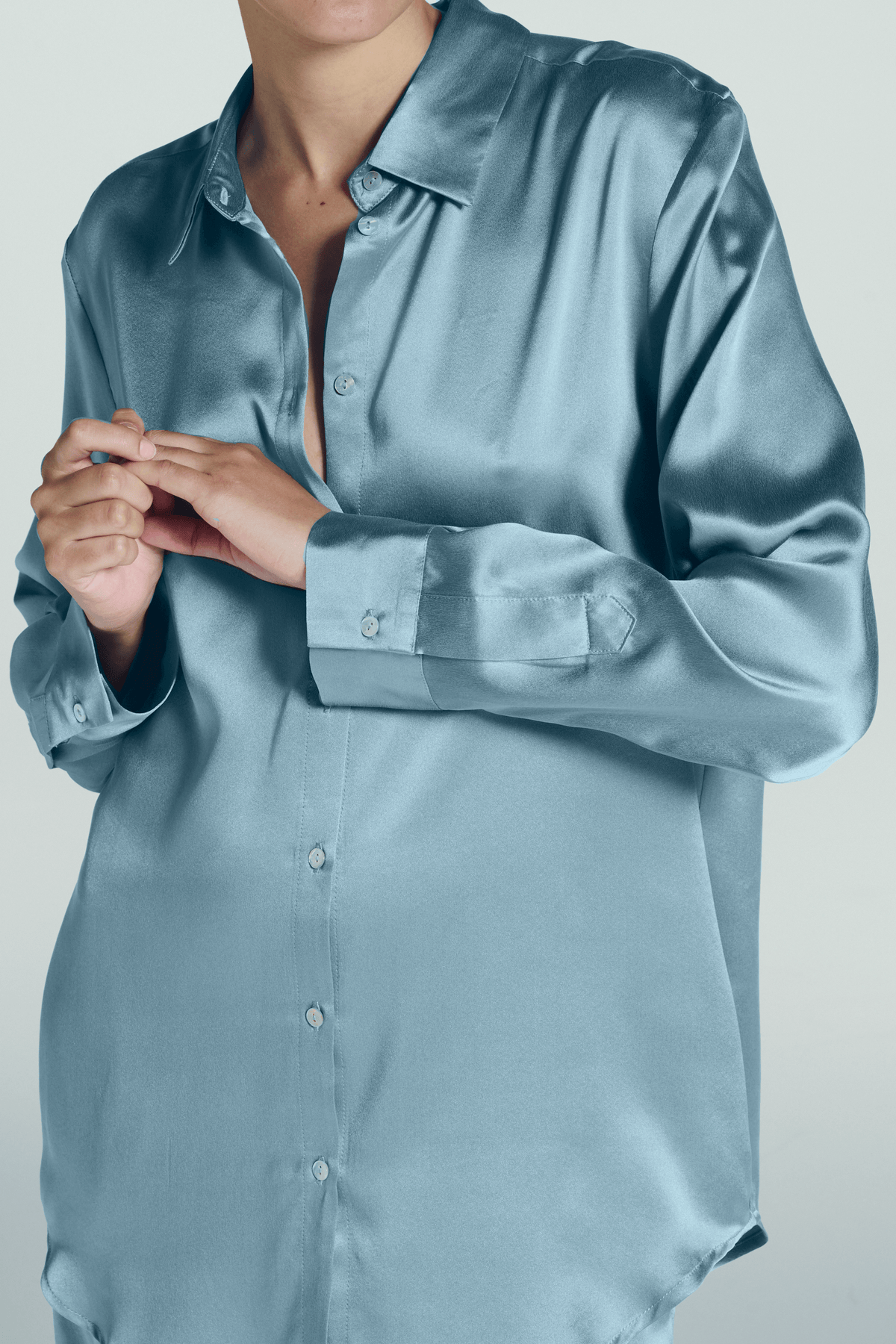
Anchor a bold printed pyjama top by choosing a structured outer layer that shares at least one colour from the print while remaining solid or subtly textured. A shared colour unifies the look without competing with the pattern. Opt for outer pieces with defined shoulders, internal lining, darts and slightly heavier fabrics that sit away from silk or viscose pyjamas, so the layer maintains its shape. Small echoes, such as matching piping or similar buttons, allow a relaxed print to read as a considered styling choice.
Balance proportion by pairing a loose, long pyjama top with high-waisted, tapered trousers, or with a fitted skirt and a cropped blazer or waistcoat to define the waist. A slim top, by contrast, benefits from a longer single-breasted coat to introduce considered volume. Practical finishing touches help the combination hold together: shorten sleeve lengths to reveal cuffs, add a thin belt to anchor the top, or ask for minor tailoring such as taking in the waist. These small adjustments preserve the top’s relaxed ease while allowing the structured layer to deliver a crisp silhouette. The result reads intentional, as construction, proportion and subtle styling echoes work together to carry nightwear-inspired pieces into everyday dressing.
Anchor prints with high-waisted flannel trousers

Layer textured accessories to create cohesive, considered depth in your look
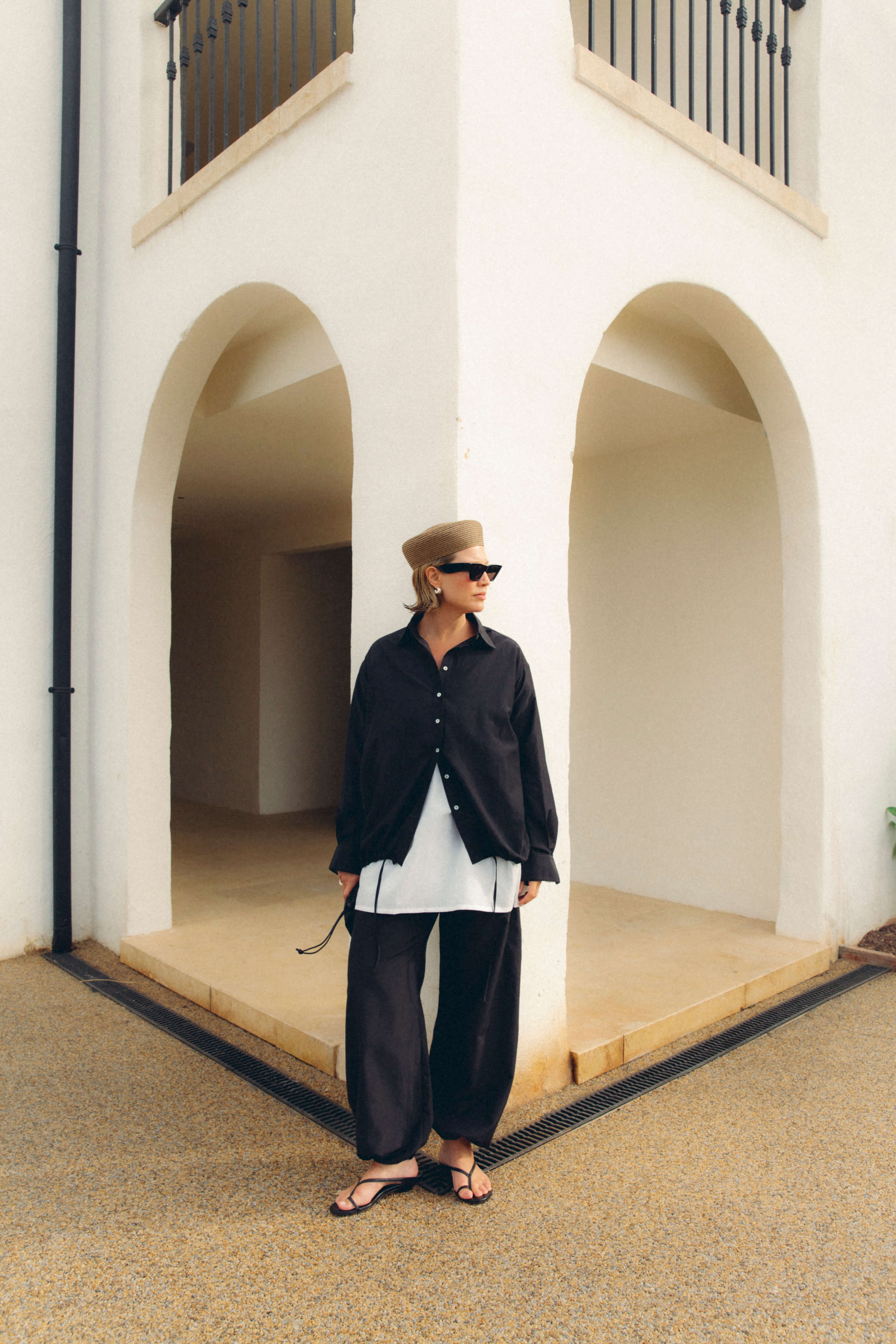
Select a single structured layer to anchor a silky printed pyjama top. A cropped blazer will define the waist when the top is tucked; a longline tailored coat elongates the silhouette when worn open over straight-leg jeans. A crisp denim jacket introduces casual structure when the sleeves are cuffed, while a fitted waistcoat centres the outfit and a boxy blazer counterbalances a billowy top. Keep proportions simple: align hem lengths so the structured piece complements the print, tuck or half-tuck cropped layers to reveal the waist, and opt for slimmer bottoms if the pyjama top reads voluminous. Limit textures to a primary fabric plus one accent to avoid visual clutter, and use a single dominant structured piece so the silhouette remains readable.
Against a silky print, contrasting textures redirect the eye and quietly alter perceived formality. A smooth leather belt defines the waist and adds subtle sheen, a boiled wool scarf brings matte warmth and visual weight, suede shoes soften the base and tone down shine, hammered metal jewellery catches the light and creates a focal point, and a woven bag introduces tactile complexity. Three ready-to-wear formulas to adapt: tuck a printed pyjama top into high-waisted trousers with a single-breasted blazer, leather belt and pointed shoes for a polished, elongated line; wear the top untucked beneath an open longline coat with slim jeans, a textured scarf and ankle boots for a relaxed, refined silhouette; or layer the top under a fitted waistcoat with cropped trousers, a woven clutch and suede loafers for a tailored, texturally rich outfit. Before assembling an outfit, check fabric compatibility by gently rubbing panels together to reveal any pilling or snagging. Add a thin lining or camisole to reduce static between silk and wool, choose accessories with smooth edges and discreet hardware to preserve delicate finishes, and follow care labels to maintain drape and longevity.
Pairing a printed pyjama top with a single, structured layer and thoughtfully chosen textures lifts a relaxed silhouette into a considered ensemble. Attend to print scale, colour hierarchy and the way the fabric drapes, then refine with subtle tailoring, adjusted proportions and textured accessories to anchor the look while preserving movement.
Use the article's headings: analyse print scale; anchor with tailored layers; layer textured accessories. These steps will help you identify the right blazer, coat or waistcoat and apply the three ready-to-wear formulas or make small tailoring adjustments so prints read as intentional. Try one formula at a time, assess fit and movement, and refine textures to suit your wardrobe. This way every outfit built around a pyjama top feels coherent and confidently wearable.
How do I choose the right structured layer for a printed pyjama top?
Pick a solid or subtly textured piece that shares at least one hue from the print, has defined shoulders and internal shaping, and uses a slightly heavier fabric so it sits away from silky pyjamas and holds its shape.
What rules should I follow for print scale, colour, and drape?
Treat small prints as texture and pair them with sharply tailored jackets, let large motifs sit against simple, minimal layers to avoid clutter, and build a colour hierarchy using the print's dominant colour for the structured layer, a secondary shade for accessories, and a neutral to anchor the outfit.
How can I balance proportion when a pyjama top feels oversized?
Control volume with cropped or nipped-in structured pieces, a half-tuck, a thin belt, or a tailored waistcoat, and pair loose tops with high-waisted tapered trousers or a fitted skirt to define the waist while checking movement and fit.
Can I introduce a second pattern with a printed pyjama top?
Yes, but keep the second pattern at a different scale and in a muted palette so the prints do not compete, and limit patterns overall to preserve a readable silhouette.
What accessory textures best anchor a silky printed pyjama top?
Use one dominant texture and one accent, for example a smooth leather belt to sharpen the waist, a boiled wool scarf for matte weight, suede shoes to soften shine, hammered metal jewellery for a focal point, and a woven bag for tactile complexity, while checking fabric compatibility and adding a thin lining if needed to prevent static or snagging.

Leave a comment
This site is protected by hCaptcha and the hCaptcha Privacy Policy and Terms of Service apply.