
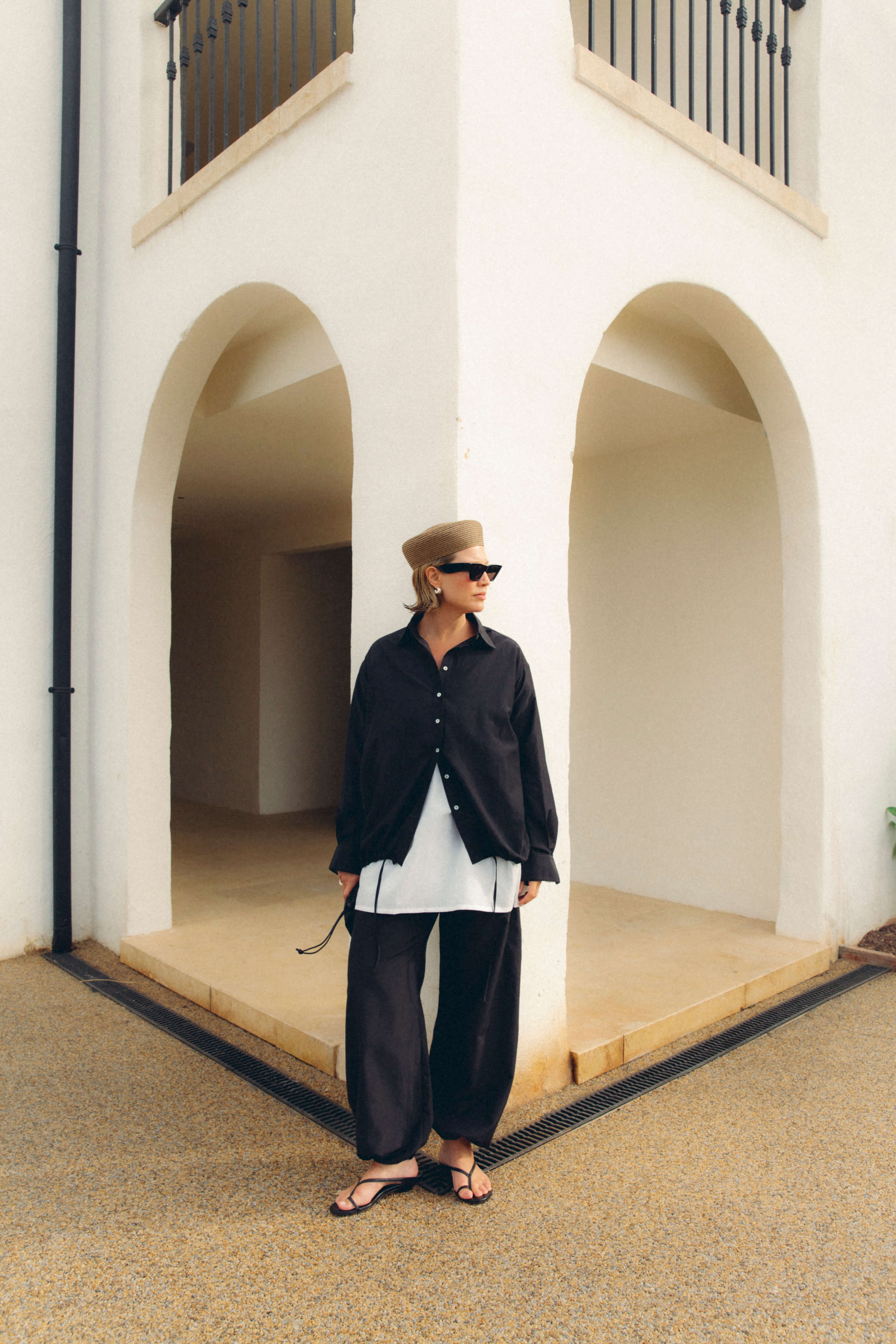

How to Choose a Blazer That Flatters a Pyjama Top
The relaxed ease of a pyjama top is undeniably appealing, yet it can appear shapeless or sit awkwardly beneath a blazer. Choosing a blazer with refined proportions and subtle structure will turn that relaxed piece into a considered, polished ensemble.
This guide explains how to assess a pyjama top's silhouette, fabric and proportions; choose a blazer with complementary structure and ease; and adjust sleeves and fastenings so the ensemble moves comfortably. Read on for practical checks and simple alterations that ensure wearing a pyjama top with a blazer looks purposeful rather than accidental.

Assess the silhouette, fabric and proportions of your pyjama top
Begin by noting the silhouette of the pyjama top, whether fitted, boxy or fluid, as each calls for a different blazer shape. For a fitted top, choose a blazer with defined shoulders and gentle waist definition; for a boxy top, favour a longer, more relaxed blazer or introduce a tuck or slim belt to refine the waistline. For a fluid top, select a softly structured blazer that adds shape without flattening the drape. Test how the fabrics behave by raising your arms: slippery silks may shift, in which case a blazer with a smooth lining and a little extra ease will help everything sit neatly. Conversely, thicker, quilted pyjama fabrics increase seam bulk, so allow additional shoulder and sleeve room to prevent pulling.
Begin by considering print scale and colour contrast. Small prints often read as texture and sit well with narrower lapels, while larger motifs benefit from simpler, elongated lines to avoid visual competition. Choose a single, complementary blazer colour to ground a busy or high-contrast top, and reserve patterned blazers for plainer pyjama tops so the contrast feels deliberate. Check where the top's hem falls in relation to your natural waist and hips, aiming for a clear relationship by allowing the blazer to skim above the top or to cover it completely, which prevents awkward overlap. Use neat adjustments such as a half tuck, a full tuck or a slim belt, and try the blazer both open and fastened to ensure you can button comfortably without pulling or forming horizontal strain lines across the chest.
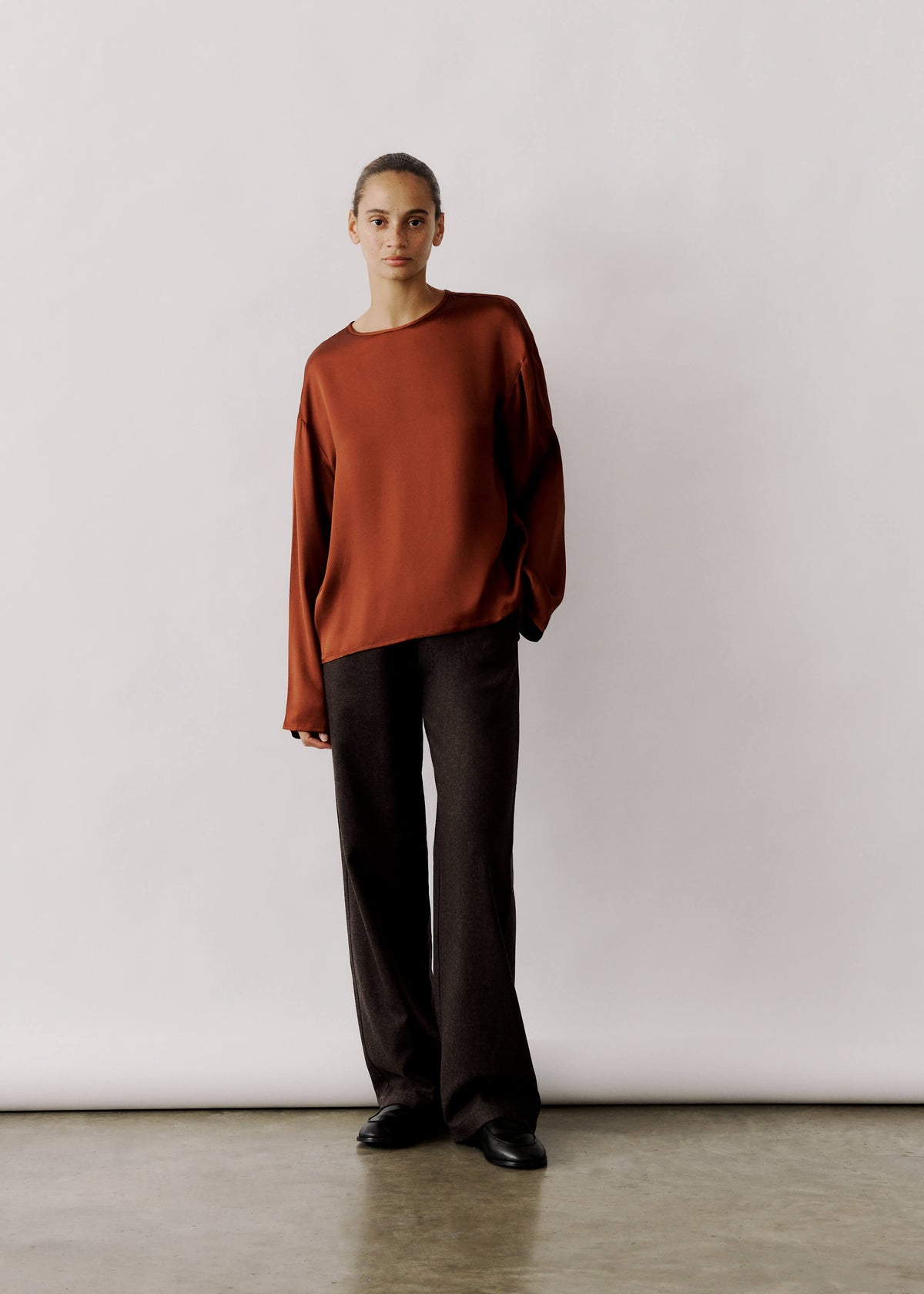
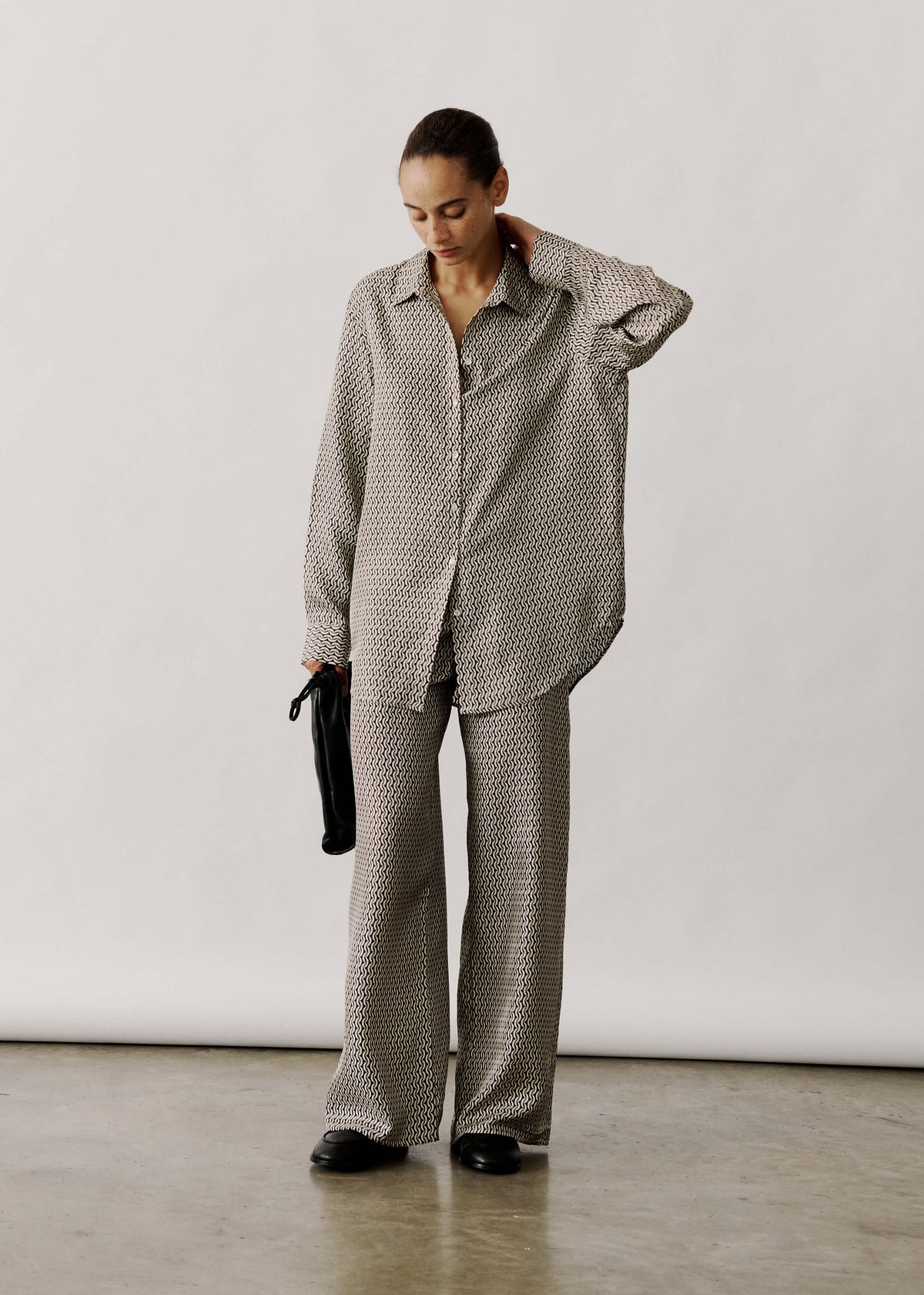
Complete the pyjama set for polished, layered tailoring.

Pair blazer structure and ease with your pyjama top
Match the blazer's structure to the pyjama top's drape. Pair a fluid, bias-cut or silk pyjama top with an unstructured blazer featuring soft shoulders and minimal padding to preserve movement. Conversely, pair a slim, tailored pyjama shirt with a structured blazer to create a deliberate contrast between relaxed fabric and defined lines. Check ease with simple movements: raise your arms forward, reach across your body and sit. If the blazer pulls at the chest, back seam or underarm, allow more ease or choose a larger size. If the shoulder seam sits past your shoulder bone, the blazer is too large for that layered look. Use lapels and closures to refine the result. A single-button blazer with a narrow lapel keeps the focus on a patterned or silky top and allows its natural drape to show. A double-breasted, heavily structured closure will flatten fluid fabrics, so try both buttoned and unbuttoned to see how the top shapes under tension.
Balance proportions by considering the relationship between lengths and hems. For cropped or tucked pyjama tops, choose waist-length or cropped blazers to keep the waist visible. For longer or tunic-style pyjama tops, opt for longer blazers or wear the blazer open to create a continuous vertical line and avoid a boxy silhouette. Pay attention to fabric pairing and small tailoring adjustments; select blazer fabrics that complement the weight of the pyjama fabric, use a smooth, lined interior to reduce friction against silk, and ask a tailor to add sleeve allowance, shorten the hem, or take in the sides so the blazer sits cleanly over the pyjama top without altering its intended shape.
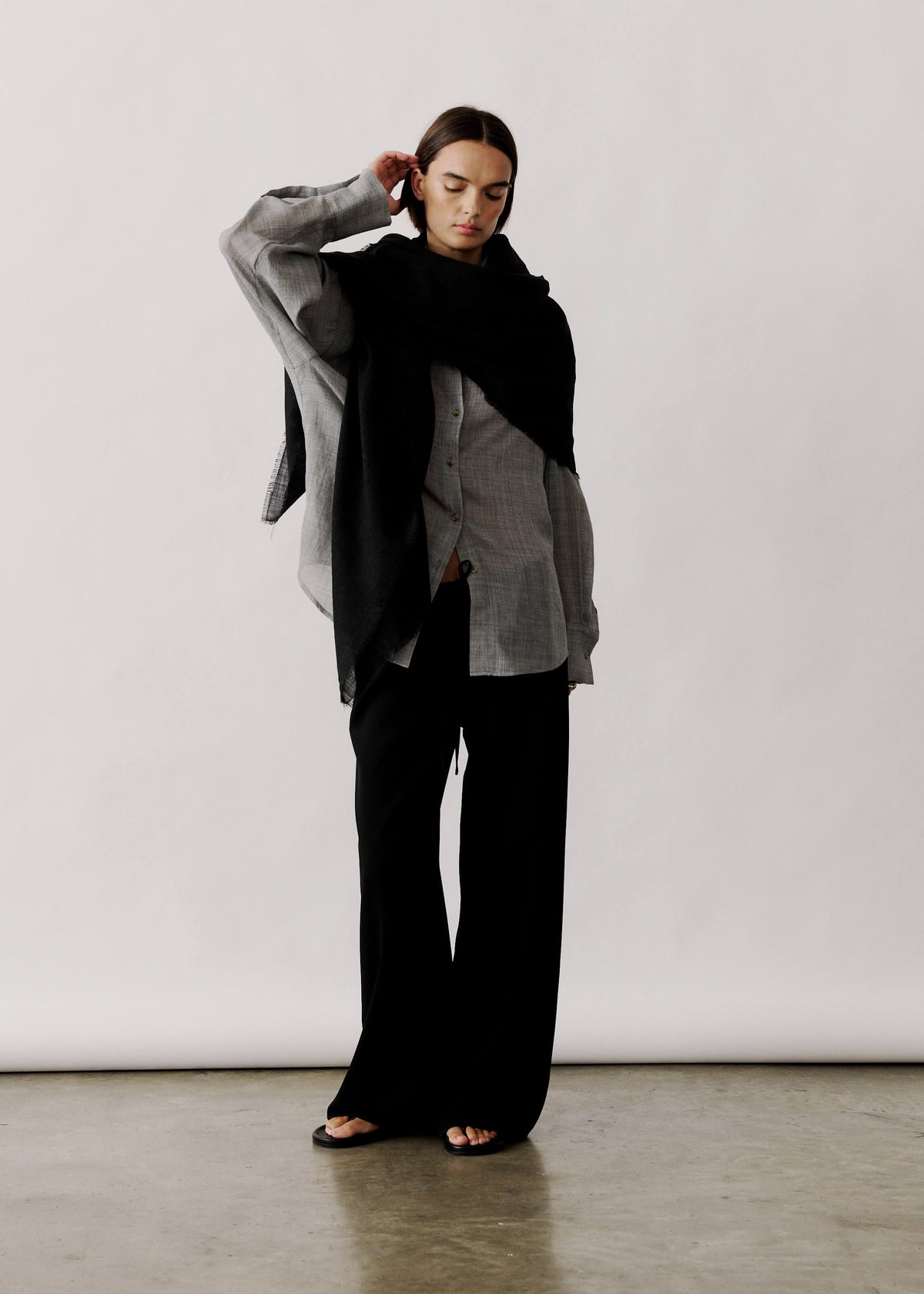
Layer a relaxed wool shirt for softer tailored contrast.

Tailor sleeves, adjust fastenings and assess ease of movement
With your pyjamas on, begin by ensuring the shoulder seam sits at the natural edge of the shoulder and neither droops beyond it nor rides up when you move. Seams that shift when you shrug or put your hands in your pockets indicate the blazer is the wrong shape for layering. To assess sleeve length, let your arms hang naturally; you should see roughly a thumb's width of pyjama cuff, or enough to reveal a contrasting trim. If sleeves ride up or drag when you reach forward, have a tailor shorten or slightly widen them, then retest while wearing the pyjamas. Fasten the blazer as you would wear it and sit, stand and reach forward; horizontal pull lines or gaps between buttons show the chest needs more room or a different cut. If you prefer the jacket open, check that the lapels fall cleanly and that the hem does not flare awkwardly over the pyjamas.
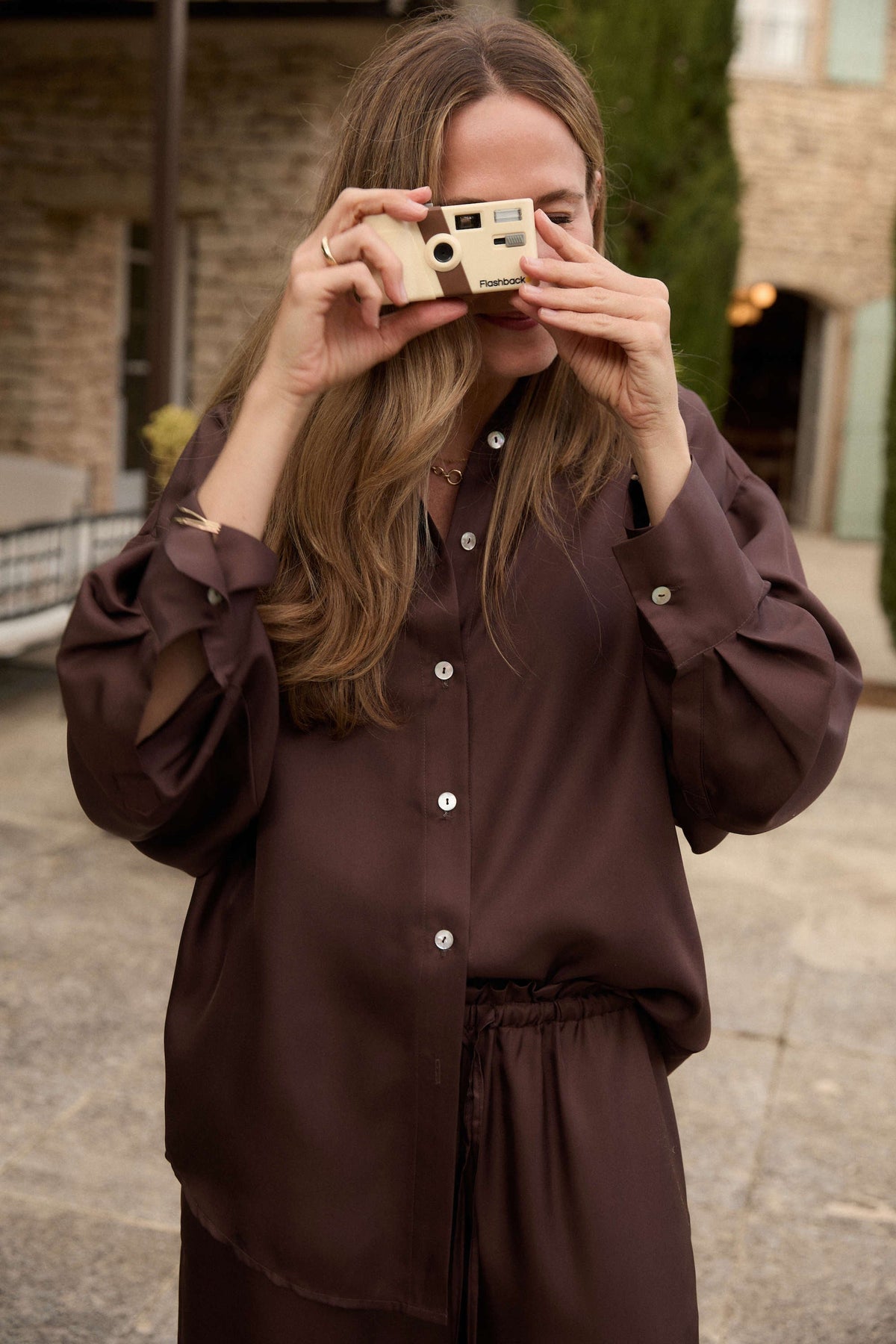
Prioritise ease across the shoulders and chest rather than a narrow waist. Silk and satin pyjamas have a soft, voluminous drape and can add subtle bulk, so a blazer that skims the body will sit more gracefully and avoid clinging. If the jacket pulls at the back when you lift your arms, or seams pucker where the pyjama top meets the blazer, try the next size up or opt for a more relaxed silhouette. Consider fabric weight and lining: lighter, unpadded shoulders and a partial lining follow the soft lines of pyjama tops, while stiff, fully lined jackets can feel restrictive and encourage bunching. Put the pyjamas on and test different blazer fabrics to note where the silk slips, clings or creates bulk, then select or alter the jacket to improve comfort and drape.
A carefully chosen blazer can lift a relaxed pyjama top into a considered outfit by echoing its silhouette, fabric and proportions with complementary structure and ease. Gentle movement checks, such as lifting the arms and fastening the lapel and closure, together with subtle tailoring adjustments, such as adding sleeve allowance or trimming the hem, reveal whether the jacket needs a touch more room or a softer line.
Return to the three guiding steps: evaluate the pyjama top, harmonise blazer structure and ease, and refine sleeves and fastening. Try the combinations on, observe where the fabric slips, clings or creates bulk, and make subtle adjustments so the pyjama top and blazer read as a deliberate, polished ensemble.
How do I assess my pyjama top to know which blazer to wear?
Map the top's silhouette as fitted, boxy, or fluid, test the fabric by raising your arms to see if silk slips or thicker fabrics add bulk, and note print scale and where the hem sits relative to your waist and hips so you can choose a complementary blazer shape and length.
What blazer structure works best with silk or fluid pyjama tops?
Choose an unstructured blazer with soft shoulders, minimal padding, and a smooth lining to preserve movement and reduce slipping; avoid heavily structured, double-breasted closures that flatten delicate drape.
How should I balance blazer length with different pyjama top lengths?
For cropped or tucked tops pick waist-length or cropped blazers to keep the waist visible, and for long or tunic-style tops choose longer blazers or wear the jacket open to create a continuous vertical line and avoid a boxy silhouette.
When should I size up or alter a blazer for layering with pyjamas?
Size up or choose a more relaxed silhouette if the jacket pulls at the chest, back seam, or underarm, if shoulder seams sit past your shoulder bone, or if seams pucker when you raise your arms; ask a tailor to add sleeve allowance, adjust the hem, or take in the sides to improve fit without losing shape.
Can I fasten the blazer when wearing a pyjama top, and how do I check comfort?
Fasten the jacket as you would wear it, then sit, stand, and reach to spot horizontal pull lines or button gaps that indicate insufficient chest ease; if sleeves ride up or lapels flare, have sleeves altered or wear the blazer open so the lapels fall cleanly.


Leave a comment
This site is protected by hCaptcha and the hCaptcha Privacy Policy and Terms of Service apply.