

How to Style an Oversized White Linen Shirt for a Polished, Relaxed Silhouette
An oversized white linen shirt can feel effortlessly chic, but on some figures it reads as shapeless rather than structured. This post outlines practical styling techniques, such as tucking, belting, and cuffing the sleeves, to transform a roomy shirt into a polished, relaxed silhouette.
Explore practical ways to balance volume with your frame, sculpt shape through tucks, tailoring, and layered pieces, and select breathable linen while adopting straightforward care. These techniques help a shirt read as intentionally composed, comfortably worn, and equally suited to relaxed weekends and more polished occasions.

How to Balance Volume and Proportion for Your Frame
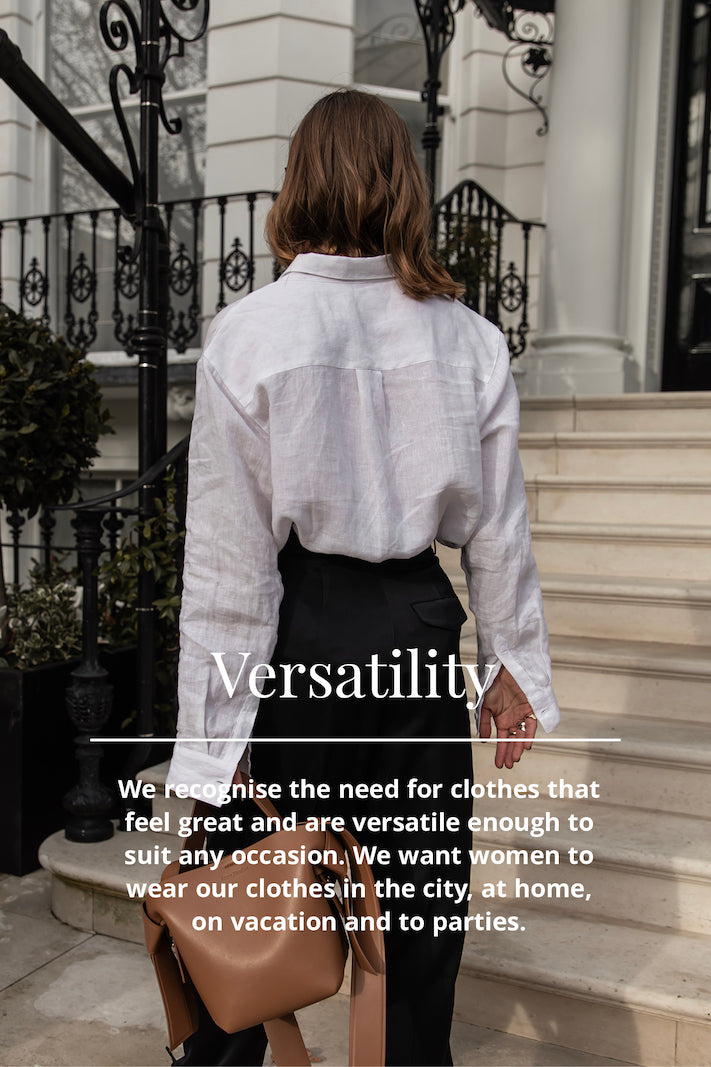
Begin by checking the shoulder fit and the way the fabric drapes. Stand naturally and note where the shoulder seam sits: when it aligns with the shoulder bone, the shoulder reads defined; when it drops past the bone, it softens the shoulder and visually broadens the upper frame. Bringing the seam in, or choosing a truer shoulder, restores structure and cleaner lines. Use tucks and hems to change perceived length. A full tuck into high-waisted trousers creates a continuous vertical line that lengthens the legs. A half or front tuck maintains relaxed ease while suggesting shape. Leaving the shirt untucked pairs best with shorter or cropped bottoms to avoid overwhelming the proportions. Anchor linen’s soft drape with a tailored lower half. Choose slim or structured bottoms, such as high-waisted trousers, straight jeans, and a pencil skirt, to contrast the top’s fluidity and produce a more refined silhouette.
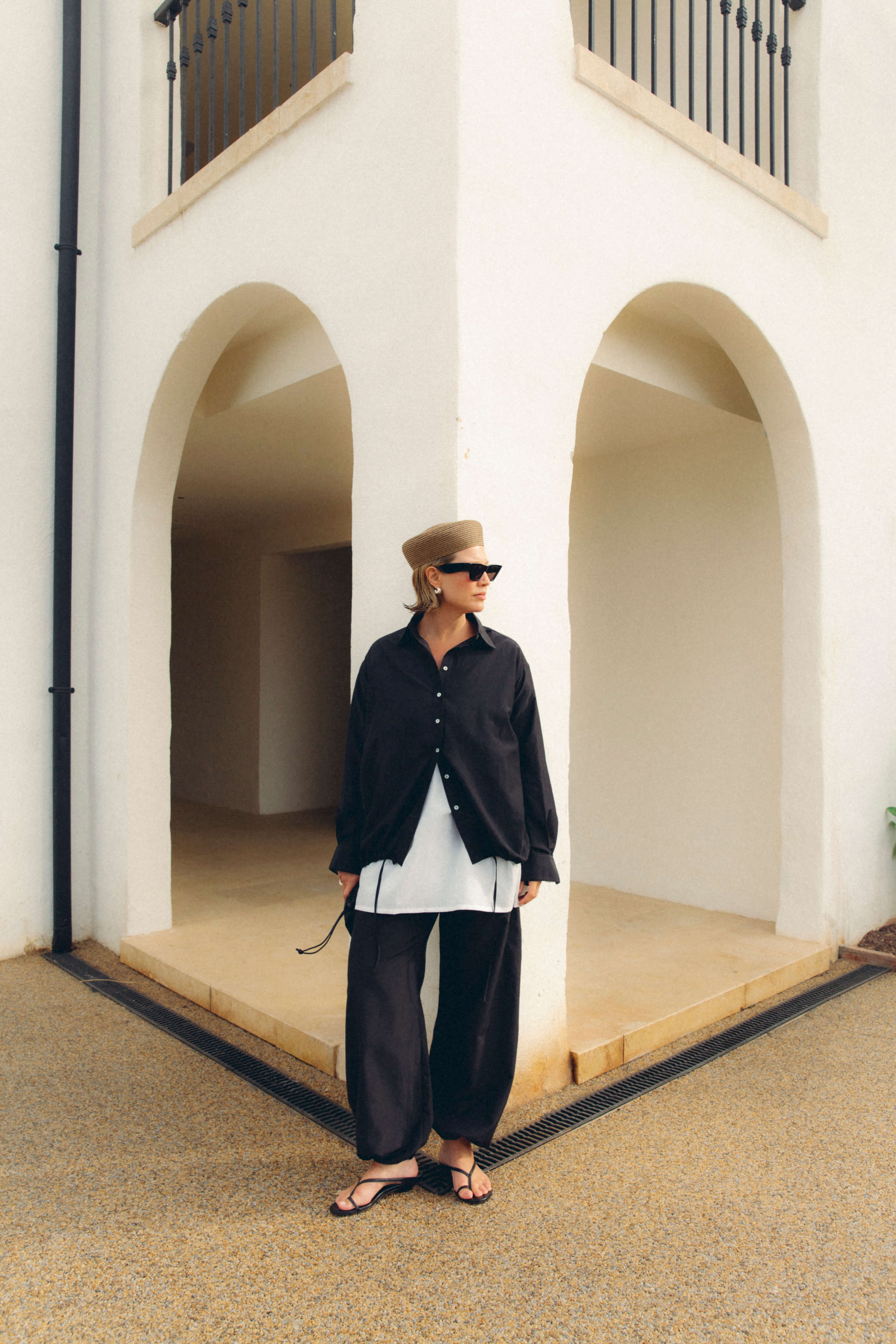
Reduce sleeve bulk by rolling the sleeves to just below the elbow to reveal the wrist and forearm, or by pressing a neat cuff to add crispness and break the sleeve's volume. Introduce a hint of waist without sacrificing ease by adding a narrow belt over the shirt, knotting the hem at the side, or using a partial front tuck to gather fabric at the midline. These small adjustments create definition and balance, transforming an oversized shape into a considered silhouette. Pair them with a structured lower half and an exposed wrist or forearm to keep the overall look relaxed, yet deliberate.
Tuck or knot this lightweight shirt for refined, relaxed structure

Sculpt a refined silhouette with tucks, tailoring, and layers
Try deliberate tucks. A single front tuck into high-waisted trousers defines the waist and elongates the leg line, while a centred French tuck softens the silhouette; try both in the mirror to judge how much shape you prefer. Reduce bulk at the shoulders and along the sleeves by rolling the cuff into a neat band or folding a double cuff to reveal the forearm, and pin a small tuck at the shoulder seam to bring the sleeve cap forward without committing to permanent tailoring. Pair these shaping moves with lightweight layers beneath or structured pieces over the shirt to anchor volume and sharpen proportions. These subtle adjustments preserve linen’s natural movement while clarifying proportion, so the shirt reads as intentionally relaxed rather than simply oversized.
Use quick-fitting tricks such as discreet safety pins or hand-basted stitches to secure side tucks, thread a thin belt through a loosened half tuck to anchor the fabric, or tie a low knot and flatten it to shorten the length without adding bulk. Layer a fitted camisole, a fine-knit roll neck, or a waistcoat beneath, or add a structured blazer or cropped jacket on top, to balance volume and create cleaner lines. For a polished, longer-term result, consider modest side-seam take-ins, added waist darts, or a shortened hem to preserve the linen's natural drape while improving proportion.
Choose lightweight linen for effortless, structured everyday wear.

How to choose breathable linen and master effortless care
Select fabrics with a high linen content to maximise natural breathability. Consider weave density and weight: lightweight linens drape into a relaxed silhouette, midweight options retain structure for a neater finish, and visible slubs reveal authentic flax character. Flax fibres wick moisture and permit airflow, so shirts dry quickly and stay comfortable rather than clammy. Opt for a plain, slightly open weave to balance ventilation with opacity.
Pre-wash garments before altering or styling them to remove any finishes that might affect the fit. Launder gently in cool to warm water, reshape while damp, and hang or line dry to prevent excess shrinkage and preserve the intended silhouette. Press the collar and front placket when the fabric is slightly damp; use steam or moderate heat to relax the fibres, then leave the body and sleeves lightly rumpled to retain an effortless polish. Treat stains promptly with a mild detergent or a short soak. Store shirts folded or in a breathable cover to avoid shoulder stretching, and rotate wear to reduce visible wear patterns. Mend small holes and loose buttons promptly to extend the garment’s life.
An oversized white linen shirt reads as deliberately relaxed when you balance volume with proportion, introduce subtle shaping, and care for the fabric to preserve its natural drape. Small, visible adjustments refine a roomy shirt's form: position the shoulder seam on the shoulder bone to anchor the shape, tuck it into high-waisted trousers to elongate the leg line, roll the sleeves to reveal the forearm, and pre-wash and reshape while damp to maintain the linen's fall.
Return to the essential principles: balance volume with your frame, sculpt shape with tucks, tailoring, and layers, and select breathable linen that requires only simple care. Use these headings as a starting point for small experiments. Make one adjustment at a time, observe how it alters proportion and ease, and you will soon develop a reliable, intentional way to wear an oversized linen shirt that feels relaxed yet refined.


Leave a comment
This site is protected by hCaptcha and the hCaptcha Privacy Policy and Terms of Service apply.