


Article: How to Style Silk Pyjamas for Daytime Events Without Looking Like Sleepwear
How to Style Silk Pyjamas for Daytime Events Without Looking Like Sleepwear
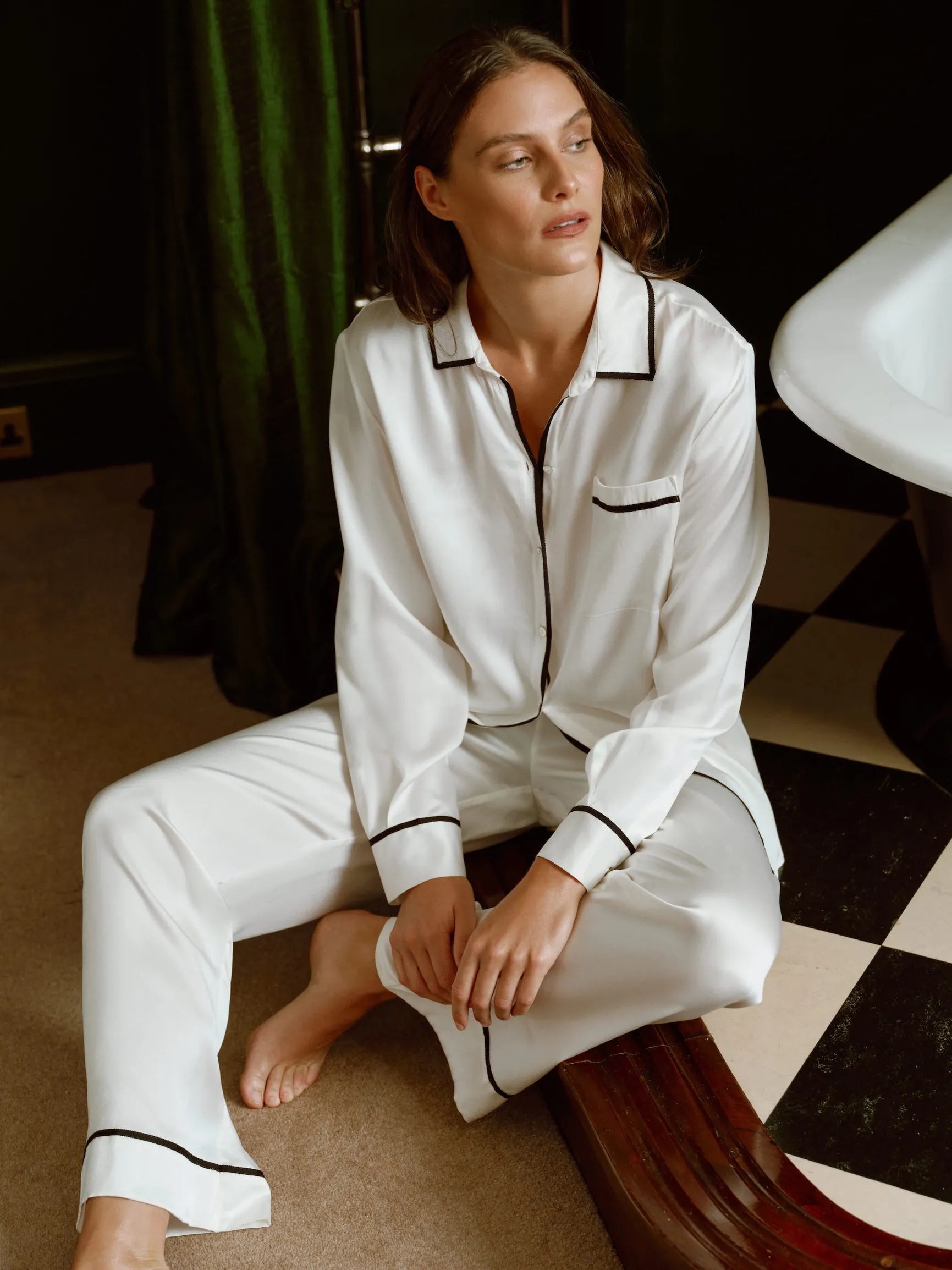
Silk pyjamas possess an effortless chic, yet when worn during the day they can read as sleepwear rather than considered attire. How can you preserve the fabric's fluid, luxurious drape while creating an intentional, polished look for daytime occasions?
Select a flattering silhouette with a precise fit. Introduce structure through a tailored jacket or neat layering piece, add considered accessories and polished footwear, and refine the look with subtle tailoring so the outfit reads as intentional rather than bedtime wear. This post outlines practical adjustments to help you wear silk pyjamas to daytime gatherings with clarity, comfort and quiet confidence.

How to choose pyjamas with a flattering silhouette and fit
Begin in the changing room with a simple fit checklist: shoulder seams sitting on the bone, sleeves finishing at the wrist bend or at a purposeful three-quarter length, no gaping across the bust when fastened, a comfortable rise without sagging, and trouser hems grazing at or just above the ankle. Use proportions to create intent by pairing a slightly boxy pyjama top with high-waisted, tapered trousers to define the waist, or by choosing a cropped top with full-length, wide-leg trousers to elongate the lower body. When pieces still read as nightwear, employ minimal tailoring such as taking in side seams for a nipped-in waist, shortening trouser length to reveal the ankle, or adding small darts to the back of the top. These considered adjustments transform loose silk into garments that read as deliberately tailored rather than accidental.
Introduce a little structure to balance silk's natural drape: add a lightweight tailored jacket, secure the top with a slim belt, or half-tuck the shirt into the trousers to define the waist. Observe how the fabric behaves on your body. If it clings, opt for a slightly looser cut or a lined piece to smooth the silhouette; if it skims cleanly, favour subtle tailoring such as tapered cuffs or stitched pleats to suggest fine craftsmanship. Taken together, considered proportions, small alterations and a gentle touch of structure will allow a silk set to read as daytime wear without losing its elegant drape.
Anchor silk sets with a tailored straight-leg trouser.

Elevate your look with layered pieces, considered accessories and refined footwear
Define the silhouette by tucking a loose silk pyjama top into high-waisted tailored trousers, or cinch it with a narrow belt to create a defined waist and prevent billowing. Hem trousers to the ankle to reveal footwear and avoid a nightwear impression. Pair with a structured blazer, a longline coat or a cropped leather jacket to contrast silk's fluidity with firmer, polished fabrics. The resulting play of textures signals considered dressing and keeps the silk looking elevated within a composed ensemble.
Anchor the look with considered accessories: a small, structured bag, a leather belt cinched over the top, or a neatly tied silk scarf at the neck to interrupt the pyjama silhouette. Choose footwear to set the mood: loafers, low heels, ankle boots or neat trainers will each change the tone; pointed toes and slender heels elevate, while chunky soles ground the outfit. Press or steam silk to smooth creases, roll or cuff sleeves with care, and, if necessary, fasten the top discreetly with a small safety pin. Coordinate pattern scale and colour with outer layers so the ensemble reads as a composed outfit rather than sleepwear.
Anchor silk with tailored wool trousers for elevated polish.

How to tailor and finish pyjamas into polished daytime wardrobe pieces
To transform sleepwear into considered daywear, begin by reshaping the silhouette: take in side seams, introduce vertical darts, taper the pyjama trousers or adjust the waist so the proportions read as daytime rather than nightwear. Try on alterations with the shoes and top you plan to wear to set the hem and rise precisely. Introduce subtle structure where it matters by fusing a lightweight interfacing into collars and cuffs, reducing a shawl collar to a smaller shirt collar, and replacing elasticated cuffs with tailored ones to create crisp lines that read as separates. Remove obvious sleepwear cues such as visible drawstrings, exposed elastics and prominent piping, and opt for a neat waistband, concealed elastic and low-sheen, well-spaced fastenings to distance the garment from lounge associations. Finish seams with French seams or neat overlocking, press with a protective cloth, and for lightweight silk consider adding a bodice lining to prevent transparency so the fabric hangs smoothly.
Introduce subtle tailoring that feels intentional: shorten sleeves to three-quarter length, add small sleeve heads or soft shoulder pads, and insert a waist stay so the top sits neatly. Introduce movement with a back vent or discreet side splits, and gently taper trouser legs to lift them out of a pyjama silhouette while preserving ease. Make one alteration at a time and photograph each fitting, comparing before and after to judge which changes best translate the piece for daytime wear.
Silk pyjamas can read as elegant daywear when a precise fit, discreet tailoring and structured layers establish balanced proportions and crisp lines. Subtle alterations, such as taking in side seams, shortening trouser hems to reveal the ankle, and introducing a tailored jacket or a slim belt, provide the visual cues that move silk from nightwear into considered daywear.
Begin with silhouette and fit, then elevate the look with thoughtful layers, accessories and footwear, finishing with subtle tailoring so each element reinforces a composed silhouette. Make adjustments one at a time and photograph fittings to compare before and after, so you can determine which changes create the most purposeful, wearable result.
What silhouette and fit should I choose so silk pyjamas read as daytime wear?
Start with a precise fit: shoulder seams on the bone, sleeves at the wrist or a deliberate three-quarter length, no bust gaping, and trousers breaking at or just above the ankle; use proportions such as a slightly boxy top with high-waisted, tapered trousers or a cropped top with wide-leg trousers to create intent.
How can I add structure to balance silk's drape and avoid a sleepwear look?
Layer a lightweight tailored jacket or longline coat, secure the top with a narrow belt or half tuck, and add subtle tailoring like fused interfacing in collars and cuffs, small shoulder pads, or a waist stay to create crisp lines that read as separates.
What accessories and footwear will elevate a silk pyjama set for daytime events?
Anchor the outfit with a small structured bag, a leather belt worn over the top, or a neatly tied silk scarf, and choose footwear to set the tone—loafers, low heels, ankle boots, or clean trainers—so pointy toes and heels elevate while chunky soles ground the look.
Should I alter my silk pyjamas, and which changes make the biggest difference?
Yes; minor alterations such as taking in side seams, adding vertical darts, shortening trouser hems to expose the ankle, and tapering leg width transform loose silk into deliberate daywear—try changes with the shoes and top you plan to wear and photograph fittings to compare.
How do I remove obvious sleepwear cues when styling silk pyjamas for daytime?
Replace visible drawstrings, exposed elastics, and prominent piping with a neat waistband, concealed elastic, and low-sheen, well-spaced fastenings, coordinate pattern scale and colour with outer layers, and press or steam the silk so it hangs smoothly.

Leave a comment
This site is protected by hCaptcha and the hCaptcha Privacy Policy and Terms of Service apply.