

Article: How to achieve the ideal fit and length for white linen trousers
How to achieve the ideal fit and length for white linen trousers
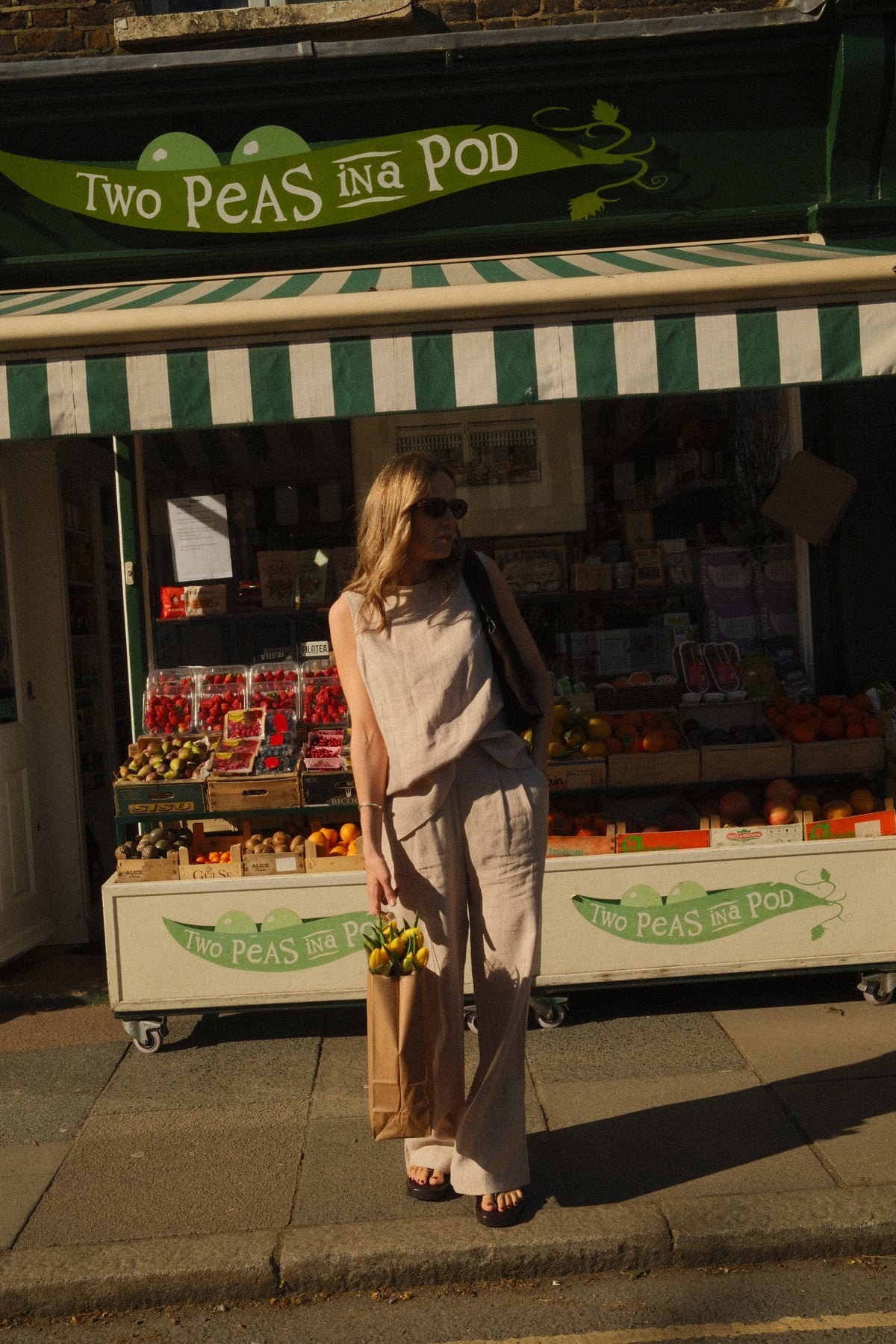
White linen trousers can read effortlessly chic one day and shapeless the next if the fit or length is slightly wrong. Minor variations in cut or hem change proportions, cause the fabric to bunch or puddle at the ankle, and diminish the impact of your footwear.
This guide shows how to select cuts that flatter your silhouette, tailor length and hems to create balanced proportions, and adapt fit and length for different occasions and footwear. Practical measurements and clear, step-by-step tips will help you refine the fit, so your linen trousers read as intentionally tailored and effortlessly elegant.

Select a cut to flatter your natural silhouette
Begin by mapping your proportions to determine whether your hips, shoulders, or waist define your silhouette, then choose cuts that restore balance. A straight leg keeps proportions neutral, a wide leg counterbalances fuller hips, and a tapered leg streamlines a boxier frame. Consider the rise: a high waist raises the perceived hip line and elongates the leg, a mid rise sits neutrally, and a low rise visually shortens the torso. Try trousers with the tops you intend to wear to observe how each rise alters posture and the waistline, and select the visual effect that complements your proportions rather than chasing labels.
Choose hem length according to the shoes you will wear most: ankle-skimming hems suit flats and trainers, slightly longer hems create a classic break with low heels, and cropped lengths pair with sandals. Test hems while walking and sitting, watching the linen drape, noting whether the hem puckers or flutters, and whether the intended line holds through movement. Check the fit by sitting to spot pulling across the crotch, squatting to ensure the seat does not gape, and walking to confirm an even drape through the thigh and a waistband that sits comfortably without digging in. If alterations are needed, hem for length, take in the waist for a cleaner line, or taper the leg to reduce bulk. Bring three representative outfits and the shoes you plan to wear, so the tailor can adjust the trousers to match how you will actually wear them.

Tailor hems and lengths to achieve balanced proportions
Begin hemming while wearing the shoes you will most often pair with the trousers. With your feet planted, pin the hem and walk to ensure the back does not drag and the movement feels natural. Baste the hem and repeat the check before final stitching; the baste reveals the garment’s true fall in real wear. Leave three to five centimetres of extra fabric for future re-hems or cuffing, a simple measure that extends the life of the piece. Press the hem with a warm iron, minimising bulk in the seam allowances to preserve linen’s natural drape and avoid a stiff silhouette.
Compare cropped hems that skim the ankle, full-length hems with a slight single break, and turned-up cuffs to observe how each alters the leg line and visual weight. Consider how the rise changes proportions: a higher rise lifts the visual waist and makes the legs appear longer, while a lower rise shortens the perceived leg line, so coordinate hem length with the waistband position. Test each finish with flats, sandals, trainers, and heels, since shoe profile changes the break and shifts how length reads. For an elongated silhouette, maintain colour continuity from trouser to shoe; to emphasise a cropped look, introduce contrast at the hem.

Tailor fit and length to suit the occasion and footwear
Refine the silhouette and rise by testing high-rise, mid-rise, and low-rise trousers with a lightweight top tucked in; each tuck alters the torso line. High-rise tucks elongate the body for smarter occasions, while mid- and low-rise styles sit lower on the hip for a more relaxed look. Inspect the seat and crotch for horizontal pulling lines, because diagonal stress lines reveal that the rise or hip width needs alteration. When you visit the tailor, have them set the waist first, then adjust the rise if the trousers pull when you sit. Test movement by sitting, standing, walking briskly, climbing a few steps, and crossing your legs to confirm comfort at the crotch, knee, and hem. Allow modest ease in the thigh and rise so the fabric does not bag after wear. Ask for temporary basting during intermediate fittings, and leave about 1 to 2 centimetres at the hem for final adjustments after a wash, as linen relaxes and loosens slightly.
Match the hem to the footwear using a standing shoe test. Mark the hem while wearing the shoes you plan to wear, then aim for a hem that clears the ankle bone for sandals, summer flats, and other open styles, allows a slight break over loafers or smart flats, or crops to mid-ankle for trainers and casual looks. When hemming, sit and walk a few steps to confirm the trouser-to-shoe relationship in motion. Ask your tailor to taper from the knee for a sleeker silhouette, or to add fullness at the hem for a wide-leg drape. To prevent transparency in white linen, consider a full or partial lining or a slightly heavier weave. Balance proportions with chunkier or sleeker shoes, a belt, half-tucks, or a cropped jacket, and test these styling choices with your intended footwear during fittings.
Achieving a polished fit in white linen trousers hinges on the cut, rise, and hem; these elements determine how proportions, movement, and footwear register as deliberate. Test the fit by walking, sitting, and wearing the shoes you would normally pair with them. Use targeted tailoring to refine the waist, adjust the seat, and fine-tune the hem length in small increments until the silhouette sits smoothly and flatters your proportions.
Revisit guidance on cuts and proportions, hemming techniques, and occasion-specific adjustments when trying on or altering trousers, so they fit the life you lead. Treat fittings as practical experiments: bring representative outfits and shoes, ask for basted trials, and finalise hems only after laundering, allowing the linen to hang and move as intended.

Leave a comment
This site is protected by hCaptcha and the hCaptcha Privacy Policy and Terms of Service apply.