
How to Choose Silk Trousers That Drape Beautifully and Flatter Every Silhouette
The effortless polish of silk trousers is undeniable, yet many styles cling, billow, or cut across the wrong place. With so many labels promising fluidity, finding a pair that truly drapes can feel elusive.
This post explains how to assess silk quality: fibre weight, weave, and finish; which cuts flatter different silhouettes; and the care and styling techniques that preserve a graceful drape. Read on for practical checks and simple adjustments to help you choose silk trousers that hang well, flatter a range of silhouettes, and remain wearable.

How to Assess Silk Quality to Maximise Drape
Begin by identifying the fibre and finish. Filament silk fibres lie parallel, producing a smooth, glossy face and a slinky drape, while spun or wild silks show slubs, small irregularities in the yarn, and a textured surface that adds body. Assess weight by feel rather than price: fold a length in half and watch how quickly and tightly the fold forms to gauge how the fabric will hang. Finally, note the weave: charmeuse and satin yield a glossy, flowing fall, whereas crepe weaves scatter the light and sit with a softer, more textured finish.
Carry out three quick drape tests on a fabric sample: pinch a square between thumb and forefinger and let it hang to observe the fall; twist a narrow strip and note how swiftly it recovers; scrunch and release to assess crease memory. Fluid silks form fine, continuous folds, smooth out with gentle smoothing, and contour the body without bunching. Stiffer finishes create angular folds and return more slowly. When assessing a finished trouser, examine how the fabric is supported: check the lining, interfacing, waistband construction, and seam placement, since these all alter the natural fall. For consistent movement and a flattering drape, favour garments with bias-cut panels, generous seam allowances, and linings matched to the weight of the outer fabric.
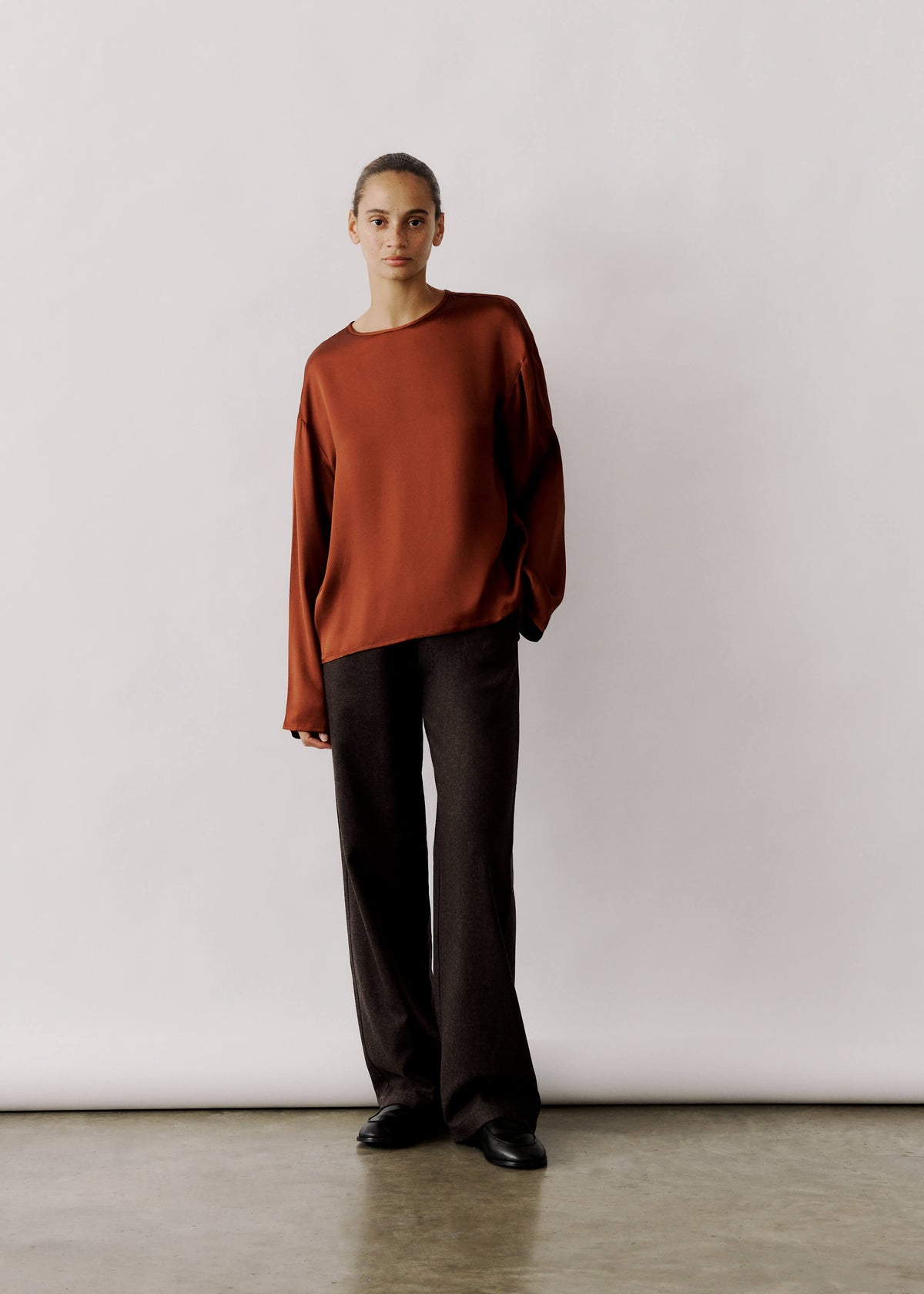
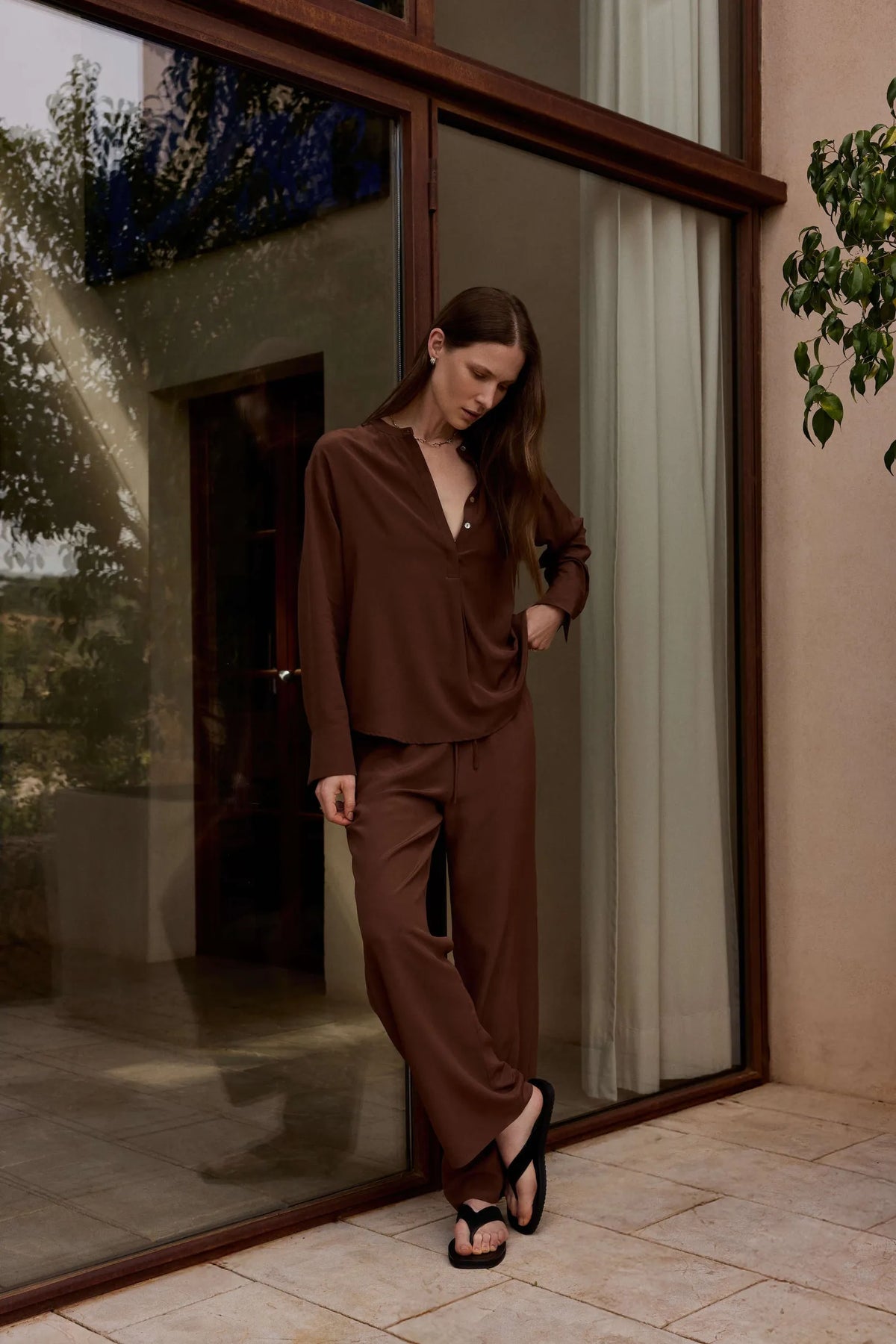
Try a silk-crepe trouser for fluid, flattering fall

Choose cuts that flatter every silhouette
Start by experimenting with rise and waistband shape. A higher rise visually lengthens the leg and defines the waist, while mid and low rises balance a longer torso. Try different heights and observe where the fabric rests when you stand and when you sit to avoid gaping or pulling. Choose leg shape to manage volume and movement: a bias cut or wide leg skims and flows because the grain lets silk follow curves, whereas straight or tapered legs concentrate the fall and reduce bulk at the ankle. Test each shape in motion by walking, sitting, and bending to see how pleats, folds, and creases form. Add small details, such as a shallow pleat or a centre-front crease, to introduce verticality without excess fabric.
When choosing a hem, consider how it relates to your shoes. Ankle-grazing hems expose footwear and can shorten the silhouette, whereas full-length trousers that just break at the shoe tend to elongate the leg. Select a finish that complements your height and typical footwear, and leave a tailoring allowance rather than committing to a permanent hem. Bring a simple checklist to the fitting: sit to check that the rise remains smooth, ensure the leg hangs without tugging across the thigh, and ask your tailor to narrow the calf or shorten the hem if needed. Test the trousers in motion: walk, sit, and step to confirm the cut maintains an even, graceful drape.
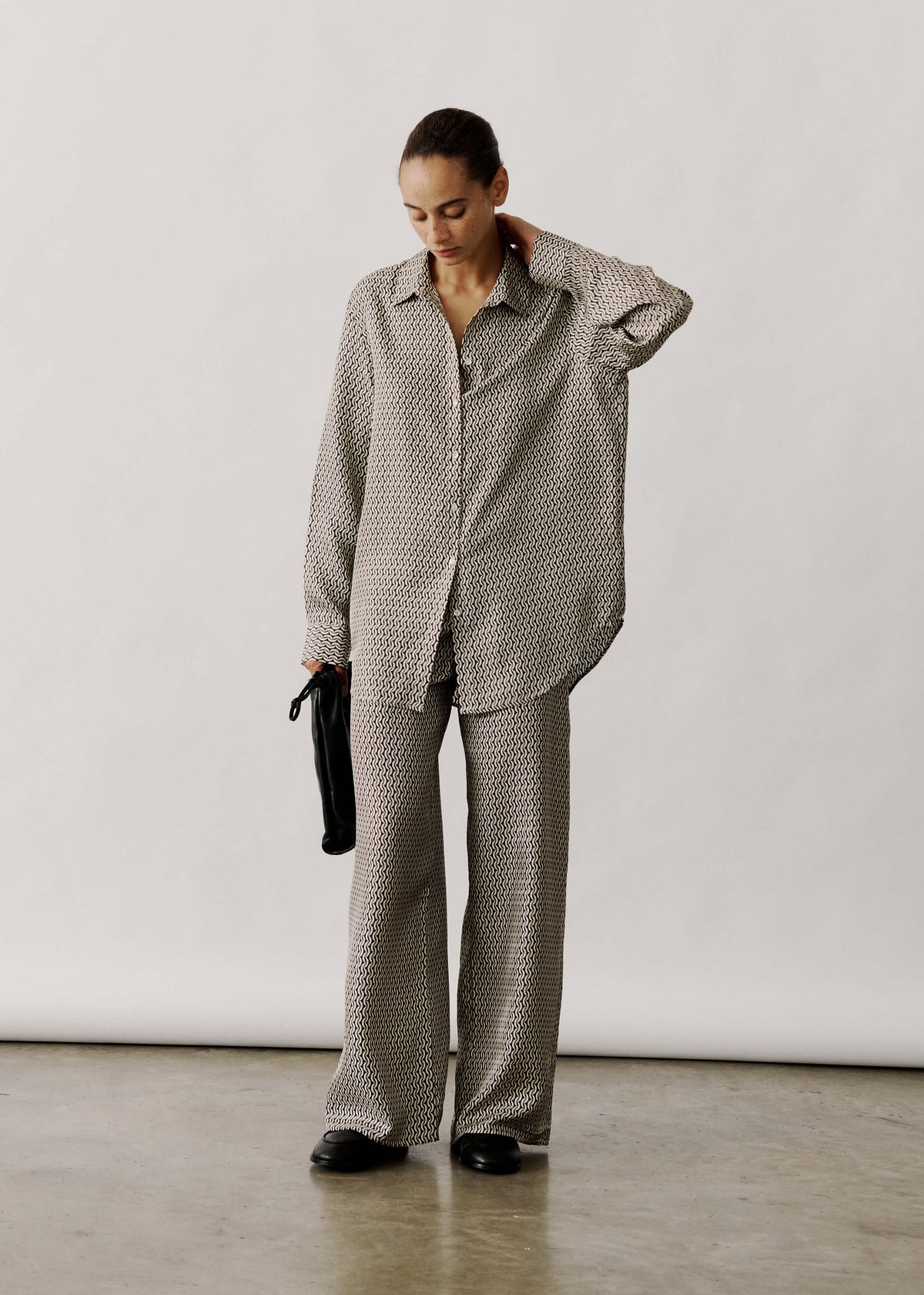
Choose silk straight legs for easy graceful drape.

How to care for, style, and adapt silk trousers for every occasion
To prepare for styling and care, begin by confirming the fabric's weave and weight, since these determine drape and durability. Silks such as charmeuse and crepe de Chine, and a higher momme weight, produce a smoother fall. Make a two-inch fold from the waistband: if the fabric forms long, soft folds, it will drape gracefully; if it snaps into sharp creases, it will not. Fit and cut matter more than size alone. Consider the rise, waistband placement, and leg silhouette. A high waist lengthens the leg, tapered legs minimise hip volume, and bias-cut or wide-leg trousers create continuous lines. Sit, walk, and raise your arms when trying them on to reveal pulling, gaping, or folding that will resist simple tailoring. Inspect seams, linings, and the waistband finish. Clean construction reduces tension points and helps the silk retain its intended shape.
Styling Anchor silk trousers with a structured top, a belt, or a fitted knit, or embrace full fluidity with a silky blouse. Use tuck-ins, half-tucks, or cropped jackets to define the waist. Choose heels or pointed flats to lengthen the silhouette, or chunky soles to ground wide legs. Care and longevity Preserve fibre integrity by hand washing in cold water, or by using a gentle machine cycle inside a mesh laundry bag with a pH-neutral detergent. Never use bleach, and avoid tumble drying. Remove excess water by rolling the garment in a towel, reshape while damp, and dry away from direct sunlight. Relax creases with a steamer, or iron at low heat through a pressing cloth, because heat and alkaline agents weaken silk proteins and accelerate wear. For practical longevity, add a lightweight lining to improve opacity and reduce friction. Ask a tailor to add small hem weights or a blind hem to help the trousers hang, and to reinforce stress points. Mend snags promptly, and consider re-dyeing faded colour to extend the garment’s serviceable life.
Choosing silk trousers that drape begins with assessing fibre, weave, and weight, because these determine the way the fabric folds, recovers, and follows the body. Check finishes with a gentle pinch and hang test to judge the fabric’s hand and sheen. Inspect construction: linings, stitched waistbands, and seam finishes indicate how the trousers will hold their shape and fall. Finally, try the rise and leg shape in motion: walk, sit, and bend, and note the trousers’ behaviour during everyday movement.
Choose cuts, hems and silhouettes that lengthen or balance your frame, and opt for charmeuse or crepe weaves; their woven structure produces a fluid drape that falls smoothly from shoulder to hem. Preserve that drape with gentle care: wash by hand or on a delicate cycle, reshape and lay flat to dry, and steam through a cloth rather than ironing directly. Minor tailoring, such as taking in a waist, shortening a hem, or adjusting a rise, restores proportion and keeps the garment elegant and wearable.
FAQ
What fabric features indicate silk will drape well?
Filament silk with a smooth face, weaves such as charmeuse, satin, or crepe de chine, and a higher momme weight typically give the most fluid fall; test by folding a length to see how quickly and tightly the fold forms and by pinching a strip to watch for fine continuous folds and quick recovery from creasing.
How should I choose the cut and rise to flatter my silhouette?
A higher rise lengthens the leg and defines the waist, while mid or low rises balance a longer torso; bias-cut or wide legs skim curves for continuous lines, and straight or tapered legs reduce ankle bulk, so try trousers while walking and sitting to spot gaping, pulling, or unwanted folding.
Why does construction like lining and waistband matter for drape?
Linings, interfacing, waistband construction, and seam placement alter how the fabric is supported and can create pull points or smooth movement, so favour garments with matched-weight linings, bias panels or generous seam allowances, and clean construction to preserve the intended fall.
How should I care for silk trousers to keep their graceful fall?
Hand wash cold or use a gentle machine cycle in a mesh bag with a pH-neutral detergent, never use bleach, and avoid tumble drying; remove excess water by rolling in a towel, reshape while damp and dry out of direct sunlight, then relax creases with a steamer or a low-heat iron through a pressing cloth, and consider a lightweight lining or small weights to reduce friction and prolong wear.


Leave a comment
This site is protected by hCaptcha and the hCaptcha Privacy Policy and Terms of Service apply.