



Protect Your Garments' Finish and Shape: Storage Tips to Minimise Creases and Wear
Few things are more disheartening than opening a suitcase or wardrobe to find a favourite coat with flattened shoulders, a silk blouse marked by permanent creases, or knitwear that has lost its loft. How you store garments determines whether they retain their finish, silhouette, and drape or suffer irreversible wear.
Small rituals such as reshaping shoulders, choosing breathable covers, and rotating garments prevent deep creasing, fabric stress, and pest damage. Continue reading for clear, practical steps to prepare garments, select protective materials, and establish a gentle routine that preserves fit and finish.

How to Prepare Garments to Preserve Their Finish and Silhouette
Clean and mend garments before storing them. Body oils and perspiration accelerate fibre breakdown and attract pests, and small tears or loose buttons can develop into larger stress points if left unrepaired. Fully fasten zips and buttons, turn garments with delicate finishes inside out, and store embellished pieces separately to avoid abrasion. These measures reduce unseen damage and mean garments are ready to wear again without additional restoration. Place natural pest deterrents, such as cedar or lavender, in breathable sachets, and refresh them periodically to maintain their effectiveness.
Support each garment appropriately. Hang coats and structured dresses on softly padded hangers with shoulder supports to distribute weight and preserve shoulder lines. Fold heavy knits flat to prevent shoulder stretching. Pad collars, sleeves, and crowns with acid-free tissue, and interleave tissue between folds to soften creases and minimise long-term compression of fibres. Store pieces in breathable containers such as cotton garment bags or archival boxes to allow airflow. Avoid airtight plastics, which can trap moisture and cause finishes to off-gas, increasing the risk of mildew and colour change.
Use breathable cotton pouches to protect stored garments.

Choose breathable storage and protective materials to preserve delicate fabrics
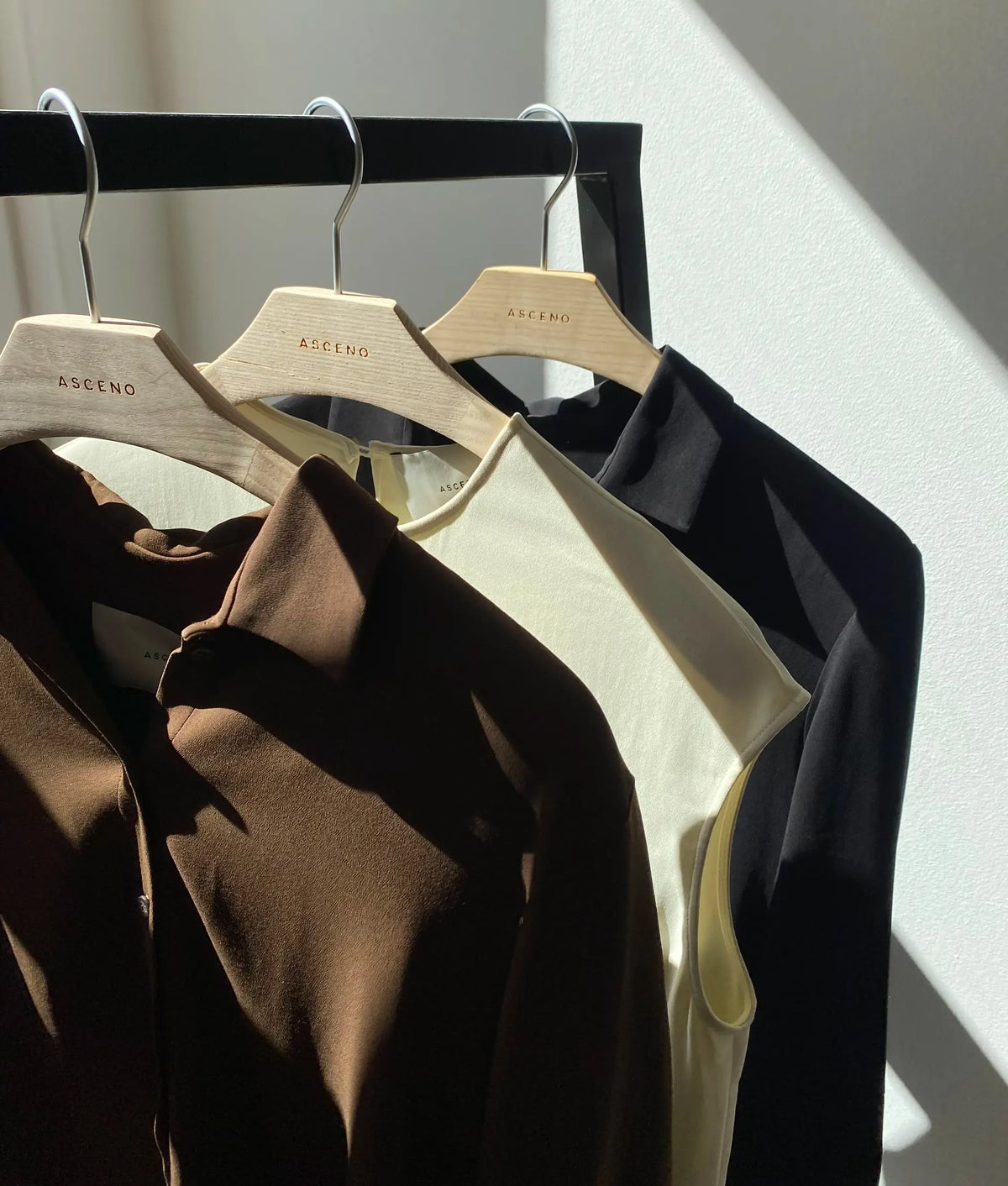
Choose breathable covers and ventilated containers, such as cotton muslin garment bags, canvas storage, or ventilated boxes. Allowing air to circulate reduces trapped humidity, lowers the risk of mould, and helps prevent finishes from softening and metal trims from corroding. Pad and interleave garments with acid-free tissue, using unbuffered tissue for protein fibres like silk and wool, since buffered papers can cause alkaline-related yellowing. This also spreads contact pressure so folds do not form sharp creases. For very delicate pieces, roll them or pad folds rather than folding sharply. Support shape with wide, contoured padded hangers, soft shoulder inserts, or unvarnished wooden shoe trees, which absorb moisture and help maintain form. If you use cedar or other aromatic woods, test them on a hidden area first, as natural oils can transfer to some finishes.
Avoid storing cushion-filled or finished items long-term in impermeable plastics or vacuum bags. Compression and trapped moisture will flatten the loft, hasten deterioration of surface finishes, and encourage persistent odours. If dust protection is required, place the item inside a ventilated box and cover it with a breathable layer, and separate stacked pieces with acid-free tissue to prevent abrasion and colour migration. Secure fastenings to preserve a garment's shape, and include replaceable desiccants or humidity indicators so you can monitor and manage moisture levels.
Add a breathable silk layer to your wardrobe.

Rotate, inspect, and deter pests to preserve fabric and reduce creases
As part of regular rotation and inspection routines, neutralise odours and remove food residues by laundering or dry-cleaning, and mend any loose seams. Oils and sweat oxidise and attract pests, while weak stitching creates stress points that accelerate fabric breakdown. Match the storage method to the fabric and construction: hang structured coats on wide, padded hangers to preserve shoulder shape, store heavy knits flat to avoid stretching, and roll soft, non-creasing pieces with acid-free tissue to prevent permanent fold lines. Use internal supports and separators to maintain form and protect finishes; pad sleeves and collars, insert shoe trees or scrunched paper into bags and shoes, and place tissue between delicate items to stop abrasion and colour transfer.
Store garments in breathable containers or cloth covers, and keep storage areas clean and well ventilated, since trapped moisture fosters mould and weakens finishes. Use natural repellents, such as cedar or lavender sachets, to deter insects, and place desiccant packs where appropriate—desiccants absorb moisture and lower the humidity that attracts pests. Rotate and inspect items regularly, lifting and refolding areas that usually bear weight to ease creases and to spot early signs of insect damage, mould, or finish deterioration.
In summary, how you store garments dictates whether they retain their finish and silhouette or develop irreversible wear. A few considered steps protect fit, texture, and detailing: clean and mend items before storage; support shaped areas with padded hangers or rolled tissue; cover pieces with breathable cotton; and rotate and inspect garments regularly to minimise creasing, fibre stress, and pest damage.
Apply the practical measures above: clean and prepare garments, choose breathable fabrics and supportive storage, and establish a routine of rotation and regular checks. These practices preserve a garment's original shape, reduce the need for repairs, and keep pieces ready to wear.
What should I do before storing garments?
Clean and mend garments to remove body oils, sweat, and food residues that accelerate fibre breakdown and attract pests; fasten zips and buttons, turn delicate finishes inside out, and store embellished items separately, and place natural pest deterrents in breathable sachets, refreshing them periodically.
How should I support different garment types to preserve their shape?
Use wide, contoured, softly padded hangers and shoulder supports for coats and structured dresses, fold heavy knits flat to avoid shoulder stretching, roll soft non-creasing items or pad folds with acid-free tissue, and pad collars, sleeves, and crowns to maintain shape.
Why should I avoid impermeable plastics and vacuum-sealing for finished or cushion-filled items?
Airtight plastics and vacuum-sealing trap moisture, compress loft, accelerate finish failure, encourage persistent odours, and can trap off-gassing that harms trims, so opt for breathable garment bags, ventilated boxes, and interleave pieces with acid-free tissue instead.
When and how should I use natural repellents and humidity control in storage?
Place cedar, lavender, or similar repellents in breathable sachets inside storage and refresh them periodically, test aromatic woods on a hidden area first because oils can transfer, and include replaceable desiccant packs or humidity indicators where appropriate to reduce moisture that attracts insects.
How often should I rotate and inspect stored garments, and what should I look for?
Rotate and inspect items regularly, lift and refold areas that usually bear weight to reduce creases, and check for early signs of insect damage, mould, odours, or finish deterioration so you can address problems before they become irreversible.



Leave a comment
This site is protected by hCaptcha and the hCaptcha Privacy Policy and Terms of Service apply.