


How to choose silk pyjamas that are kind to sensitive skin
Silk pyjamas evoke soothing luxury, but for sensitive skin they can cause redness, itching, or breakouts. Whether silk soothes or irritates depends on the fibre, the finishes applied, the weave, and on the garment’s fit and how it is cared for.
This guide explains how to perform a gentle patch test for sensitivity, evaluate weave quality, verify responsible sourcing, and select a relaxed cut to minimise friction. With a few targeted checks and simple care routines, you can choose silk pyjamas that soothe the skin and last longer.

How to test silk for skin allergies and sensitivity
Before buying silk, perform a simple patch test. Cut a small swatch, secure it to clean, dry skin with hypoallergenic tape, and wear it during normal activity for 24 to 48 hours. Check the area for redness, itching, swelling, or blistering, and note how quickly any symptoms appear. Launder the swatch first using a fragrance-free, hypoallergenic detergent to remove finishing agents and sericin, then repeat the patch test. If irritation falls markedly after washing, residues or finishing chemicals are the more likely cause rather than the silk fibre itself. Test dyed fabrics separately from natural-coloured silk, because dyes and colour-fixing agents frequently trigger reactions. Where possible, request small dyed swatches that carry independent safety certification. Record your observations — how long it took for symptoms to appear, their severity, and whether washing changed them — and discuss any visible reaction with a clinician to determine whether formal patch testing is necessary.
Besides chemical and dye-related reactions, mechanical irritation occurs when seams, labels, or loose fibres rub the skin and provoke redness or itching. To check a garment, fold the fabric over and gently rub the seams and trims against the areas the pyjamas will contact, for example the inner wrist, behind the ear, or the nape of the neck, and note any immediate or delayed irritation. Choose degummed mulberry silk and fabrics with a tight, smooth weave; these shed fewer fibres and contain less sericin, both of which reduce friction. Select pieces with covered seams and soft, discreet labels, and wash new garments before wearing to remove loose fibres. If you suspect a true protein allergy to silk, seek assessment from a clinician for specialised testing rather than relying solely on at-home checks.
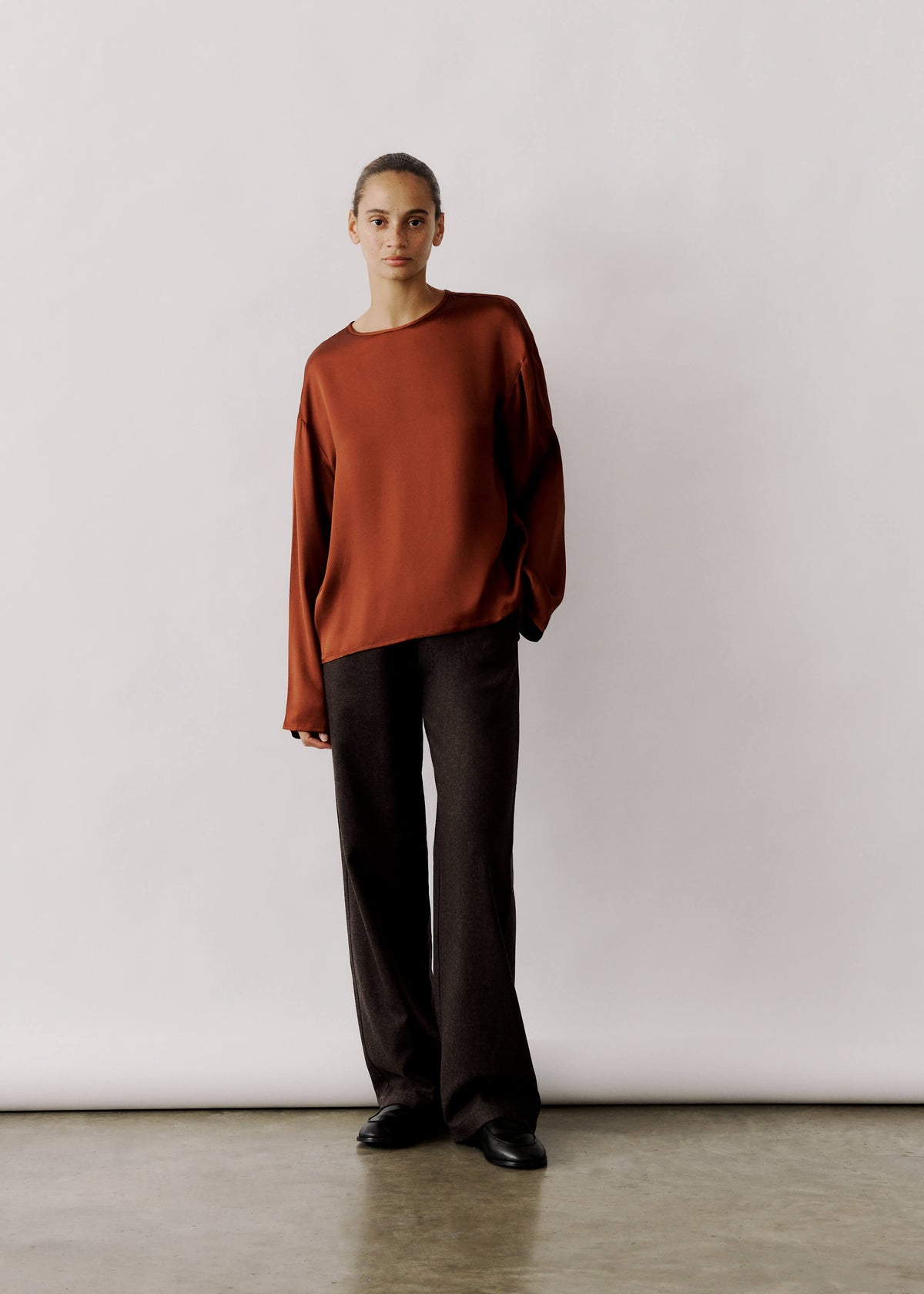
Select a smooth, sandwashed silk for gentler skin contact.

Choose a high-quality weave and responsibly sourced silk
Use momme as a practical measure of silk weight and weave density; higher momme usually indicates a tighter weave that resists tearing, reduces transparency, and sheds fewer fibres. Compare momme values when judging durability, opacity, and suitability for sensitive skin. Opt for long-filament mulberry silk rather than spun silk, because long filaments form a smoother, continuous fibre that glides over the skin rather than snagging or leaving tiny fibres that can irritate. Match the weave to your sensitivity: charmeuse and satin weaves give a very smooth face that reduces friction and irritation, while crepe de chine and plain weaves favour breathability. Test fabrics by stroking them to assess surface smoothness and drag, then hold them up to the light to check weave tightness and opacity.
Seek fabrics processed with low-chemical methods and clear traceability. Look for certifications such as OEKO-TEX Standard 100 or other recognised responsible silk standards, and ask suppliers about dyes and finishing processes if you have chemical sensitivities. Inspect construction details that affect skin contact and longevity. Examine seams, stitch density, and inner finishes for roughness, and avoid loose weaves and poorly finished edges that can pill, shed, or rub against sensitive areas. Compare momme, filament type, weave, certifications, and construction to build practical, testable criteria. Momme, the measure of silk weight (typically 6 to 25 for apparel), generally indicates that a higher number corresponds to a heavier, more durable fabric with a richer drape. Taken together, these factors help you choose pyjamas that are less likely to aggravate sensitive skin.
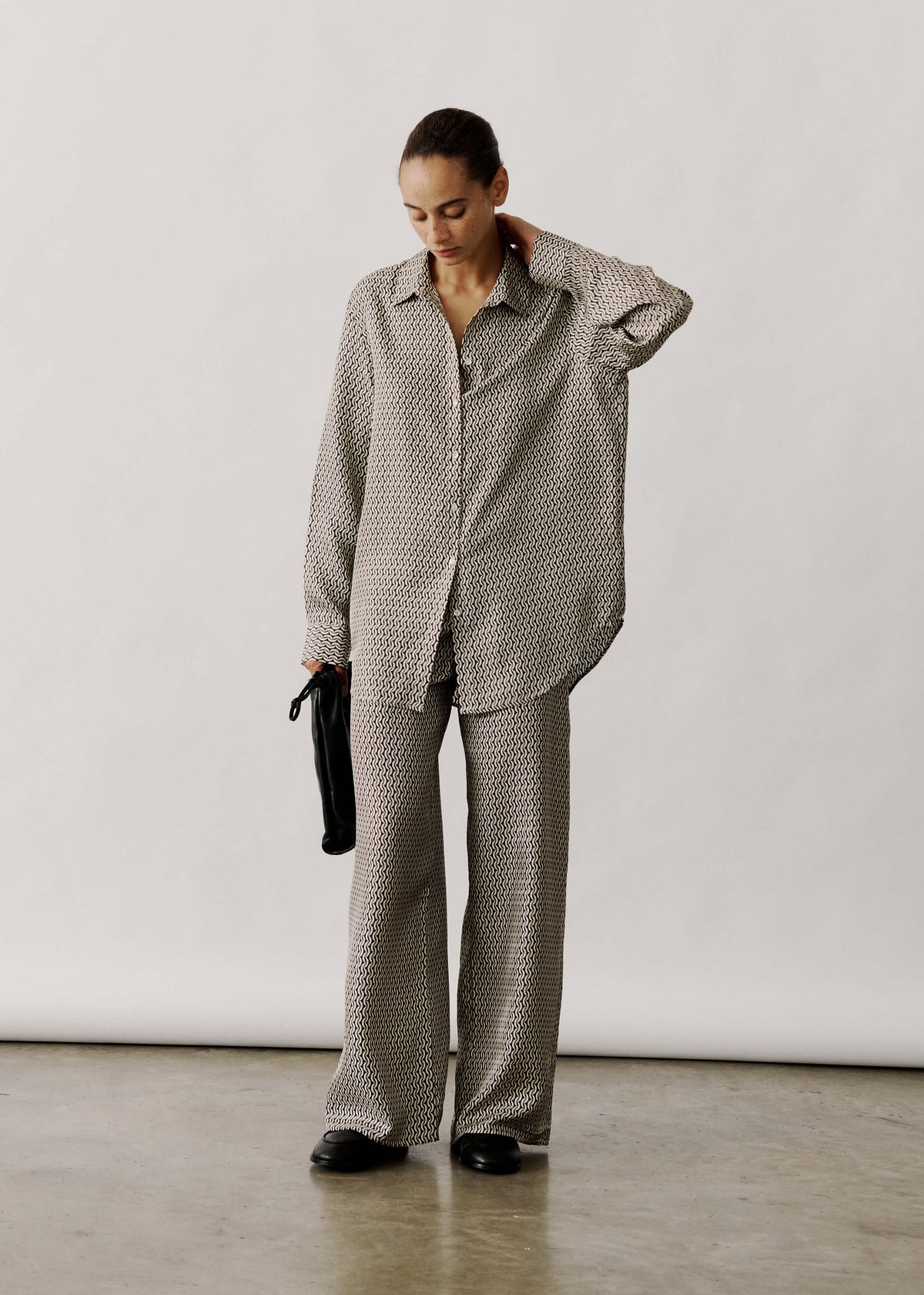
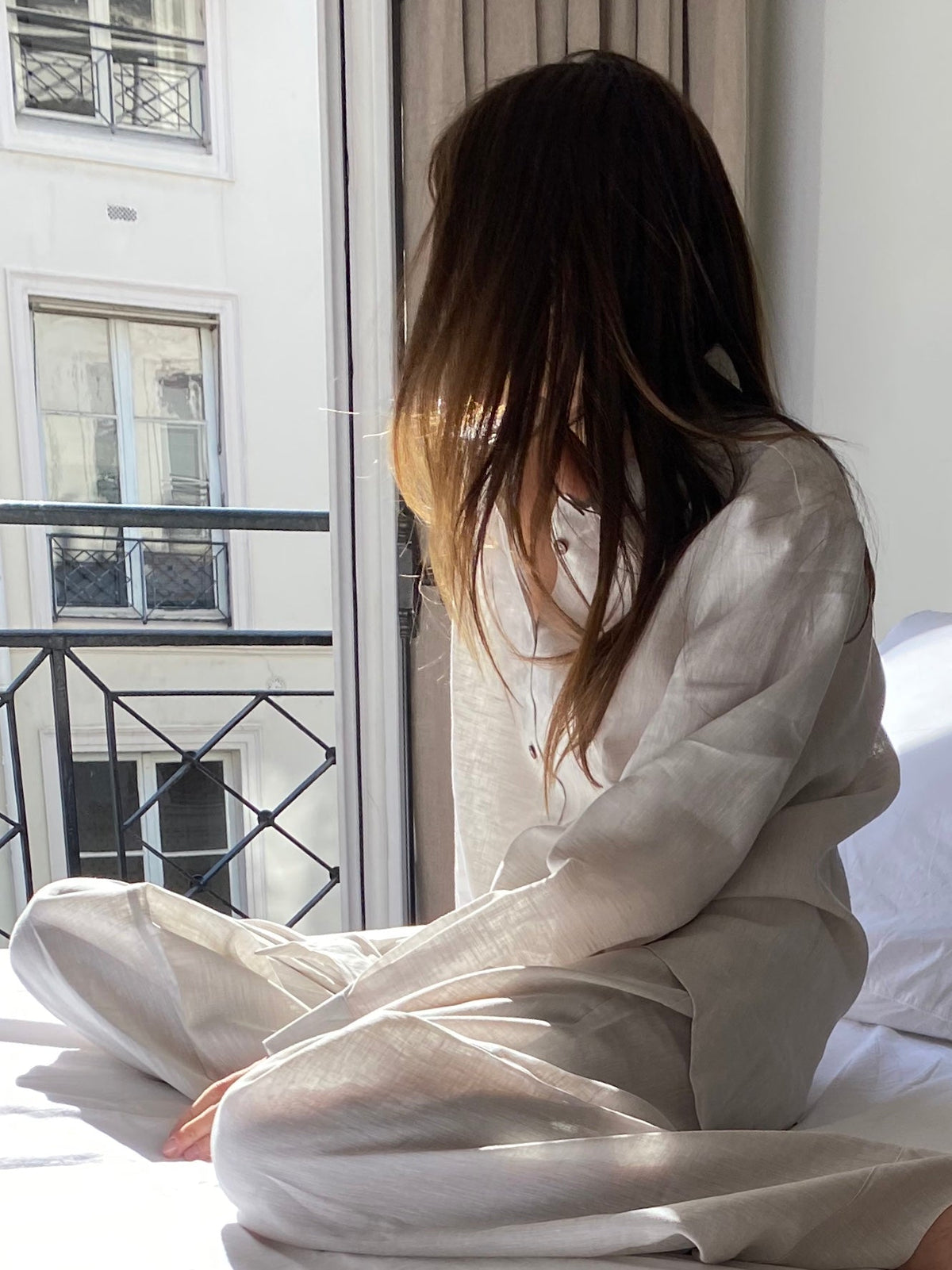
Opt for breathable crepe trousers to reduce skin friction.

Opt for a relaxed fit and embrace gentle care routines
Choose a roomier silhouette that minimises contact and friction. Slip a flat hand between the fabric and your skin at the shoulder and waistband; if the garment leaves red marks or rubs when you move, size up or select a looser cut. Loose sleeves and wide trouser legs maximise airflow and moisture evaporation, reducing skin maceration and irritation, so favour shapes that sit away from the body rather than cling to it. Pre-wash new pyjamas in a mild, fragrance-free detergent, then wear them against your forearm or inner elbow for a few hours as a patch test before sleeping in them.
Wash by hand, or use a delicate machine cycle in cool water. Place items in a mesh bag to reduce agitation, and avoid fabric softeners and bleach, which can coat and weaken natural fibres. Rinse thoroughly, reshape while damp, and air dry out of direct sunlight to preserve the fibre smoothness and finish. Minimise in-bed abrasion by removing jewellery before sleep, choosing pyjamas without rough trims or exposed fastenings, rotating sets to spread wear, and repairing small snags or loose seams promptly. These steps help keep the fabric surface smooth and reduce repeated friction that can contribute to skin sensitivity.
Silk pyjamas can be gentler on sensitive skin when you choose pieces made from high-quality fibres, a dense, even weave, minimal chemical finishing, and a relaxed fit. To evaluate a garment, launder a swatch and patch-test it against your skin, favour long-filament mulberry silk and higher momme weights (momme measures fabric weight and generally indicates greater substance and durability), and inspect seams and labels for synthetic fibres or heavy finishes that may cause irritation.
Inspect the garment for tight, smooth weaves, neatly covered seams, and signs of low-chemical processing, such as Oeko‑Tex or GOTS certification. A dense weave and covered seams reduce friction and abrasion against the skin, while lower-chemical finishing means fewer residues that can trigger reactions. With these checks and gentle laundering, pyjamas will resist wear, minimise residue-related irritation, and help keep sleep a restorative, irritation-free space.


Leave a comment
This site is protected by hCaptcha and the hCaptcha Privacy Policy and Terms of Service apply.