
10 Elegant Ways to Wear White Linen Trousers for Day, Evening, and Holiday
White linen trousers convey effortless ease, yet styling them without slipping into shapelessness or an overly casual feel can be tricky. For breathable daytime outfits, smart workwear, or elevated evening and holiday ensembles, the right cut, fabric weight, and complementary pairings make all the difference.
In ten concise sections, you'll learn to choose the right linen weight and weave, select flattering silhouettes, tailor length and fit, and combine colours and textures for any occasion. Find clear outfit suggestions for daytime, the office, evenings, and holidays, plus practical packing and care tips to help your linen last longer and retain its appearance.

1. Choose white linen to maximise breathability and timeless versatility
Flax fibres wick moisture, conduct heat away, and dry quickly, so white linen trousers feel cooler and more comfortable in warm or humid conditions. To maximise that breathability, opt for relaxed, straight, or wide-leg cuts, allow a little extra ease in the fit, or choose cropped hems to increase ventilation and to showcase summer footwear. Hold the fabric up to bright light to test sheerness; if it shows through, add a lightweight lining, wear nude-toned undergarments, or select slightly longer tops to avoid visible outlines. Pair linen with crisp cotton shirts, lightweight knits, or a tailored jacket — these combinations complement the fabric's soft, textured character and let you move effortlessly from relaxed daytime looks to smarter evening outfits.
Pre-wash linen to soften the fibres and minimise shrinkage. When packing, roll trousers rather than folding to prevent deep creases and save space. To refresh at home, hang and press gently, or lightly steam while the fabric is still slightly damp to ease lines without flattening the weave. If you prefer less maintenance and a softer drape, choose a linen blend. Balance linen's relaxed texture with a touch of structure, finishing outfits with neat tailoring or restrained accessories to refine the silhouette for holiday or evening wear.
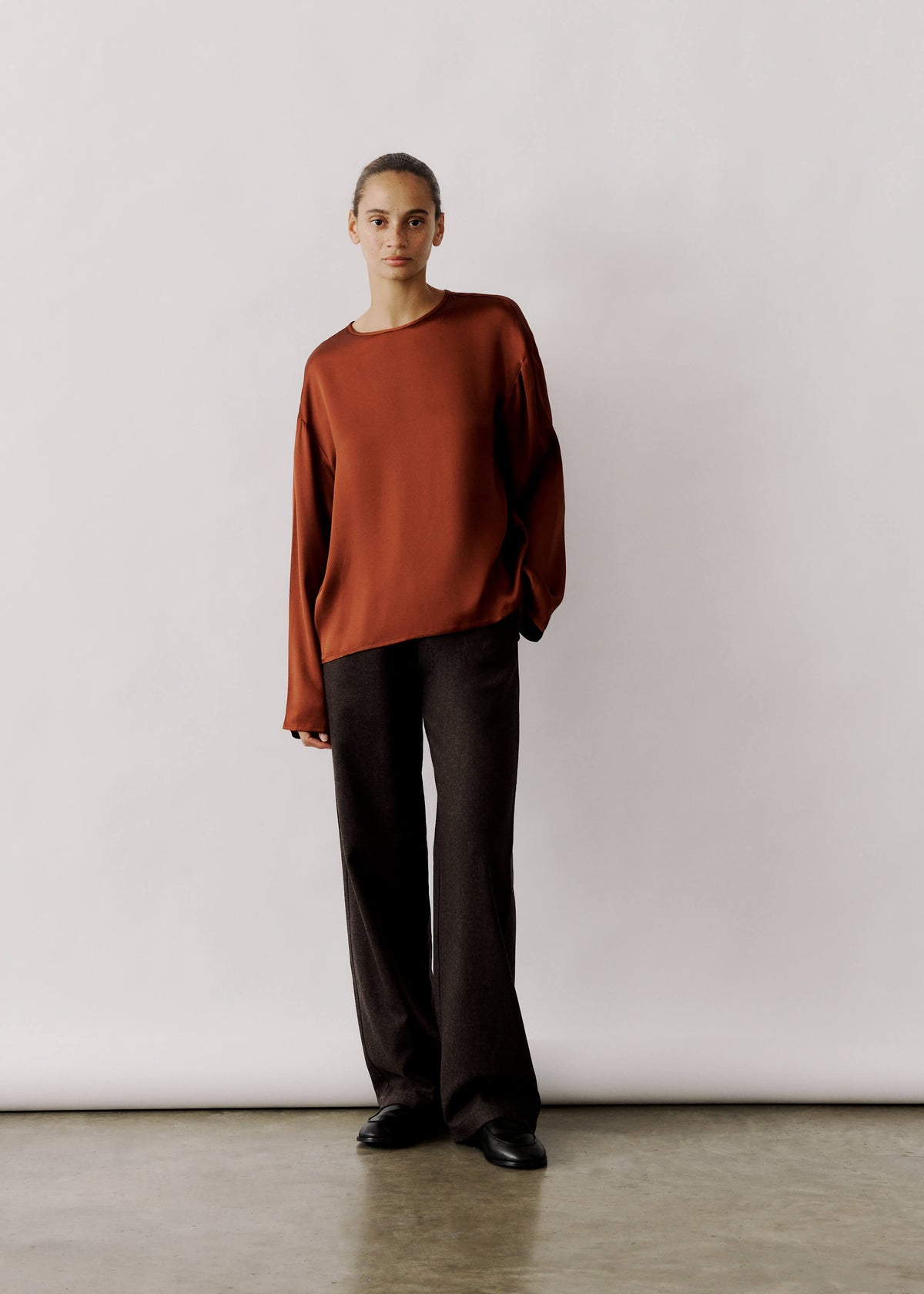
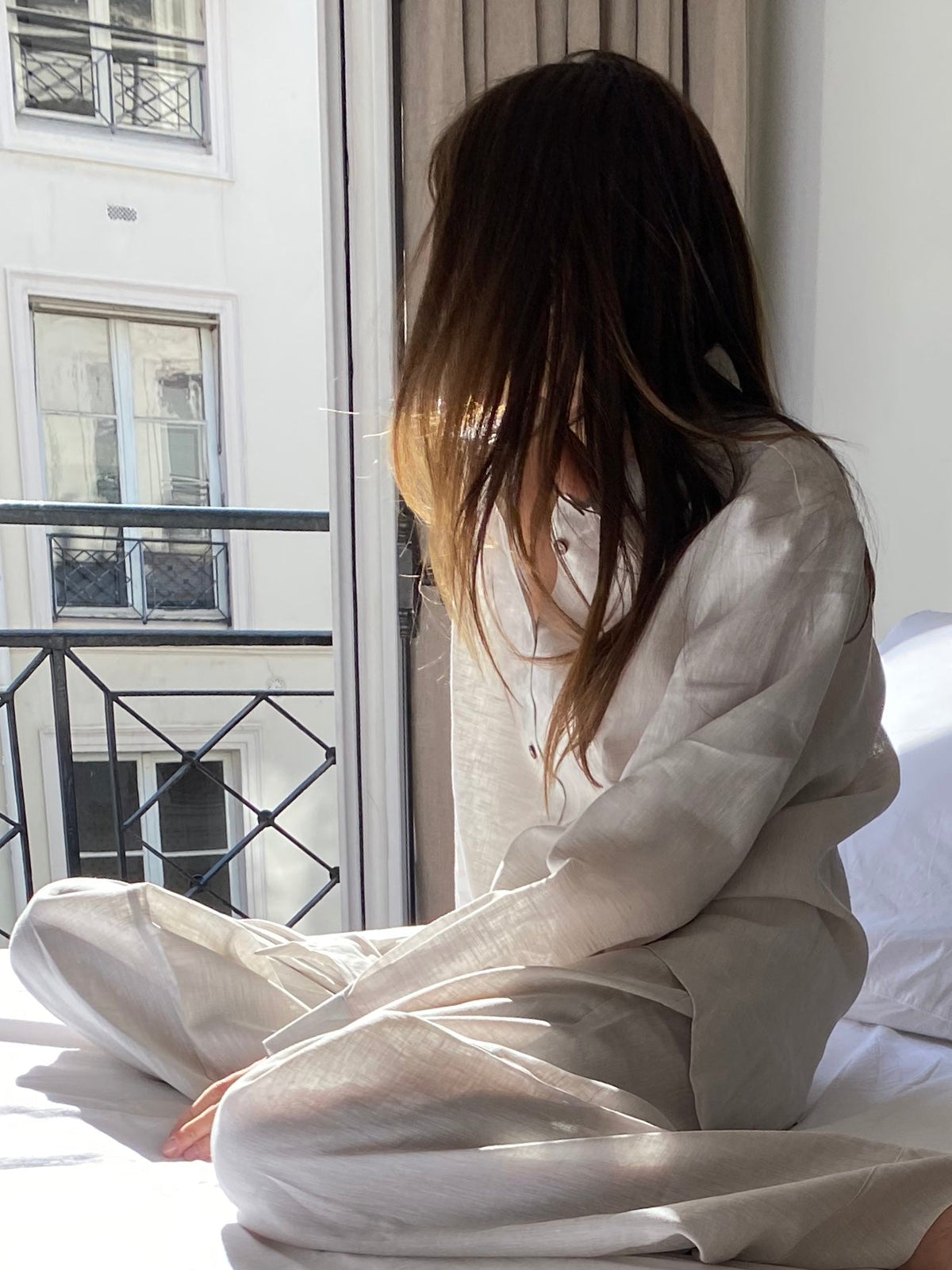
Pick relaxed wide-leg trousers for breathable summer ease.

2. Select the right linen weight and weave
Choose linen weight by function. Lightweight linen (about 120–160 g/m²) is highly breathable and can be slightly sheer, making it ideal for hot holidays or for layered daywear. Midweight linen (around 170–240 g/m²) strikes the best balance of drape, opacity, and structure, and suits everyday trousers and pieces with tailored details. Heavyweight linen (250 g/m² and above) sits firmer, resists extreme creasing, and lends itself to sharper, more structured silhouettes. Check the fabric label to confirm whether a garment will need lining, or whether it will hold pleats and cuffs. These physical properties will help you match trousers to daytime, evening, or holiday use.
Examine the weave and fibre content to understand a linen's texture and behaviour. A tight plain weave lies smooth and shows few irregularities; slub or irregular weaves introduce visible texture that helps camouflage small creases. Dobby and basket weaves add body and a subtle pattern. Blends with cotton or viscose increase drape and reduce creasing while retaining breathability, whereas 100 per cent linen maximises coolness and reveals the fabric's characteristic textured surface, so always check the fibre mix. Test fabrics in person or from swatches: scrunch a sample to see how quickly it recovers, hold it up to the light to assess opacity, and let a length hang from the hip to judge drape and fall. For travel pieces and garments with pleats or cuffs, favour midweight or blended linens; choose heavier weaves for a sharper, more tailored finish. For very lightweight trousers, plan linings, and follow gentler wash and drying routines for finer weaves to preserve shape and hand.
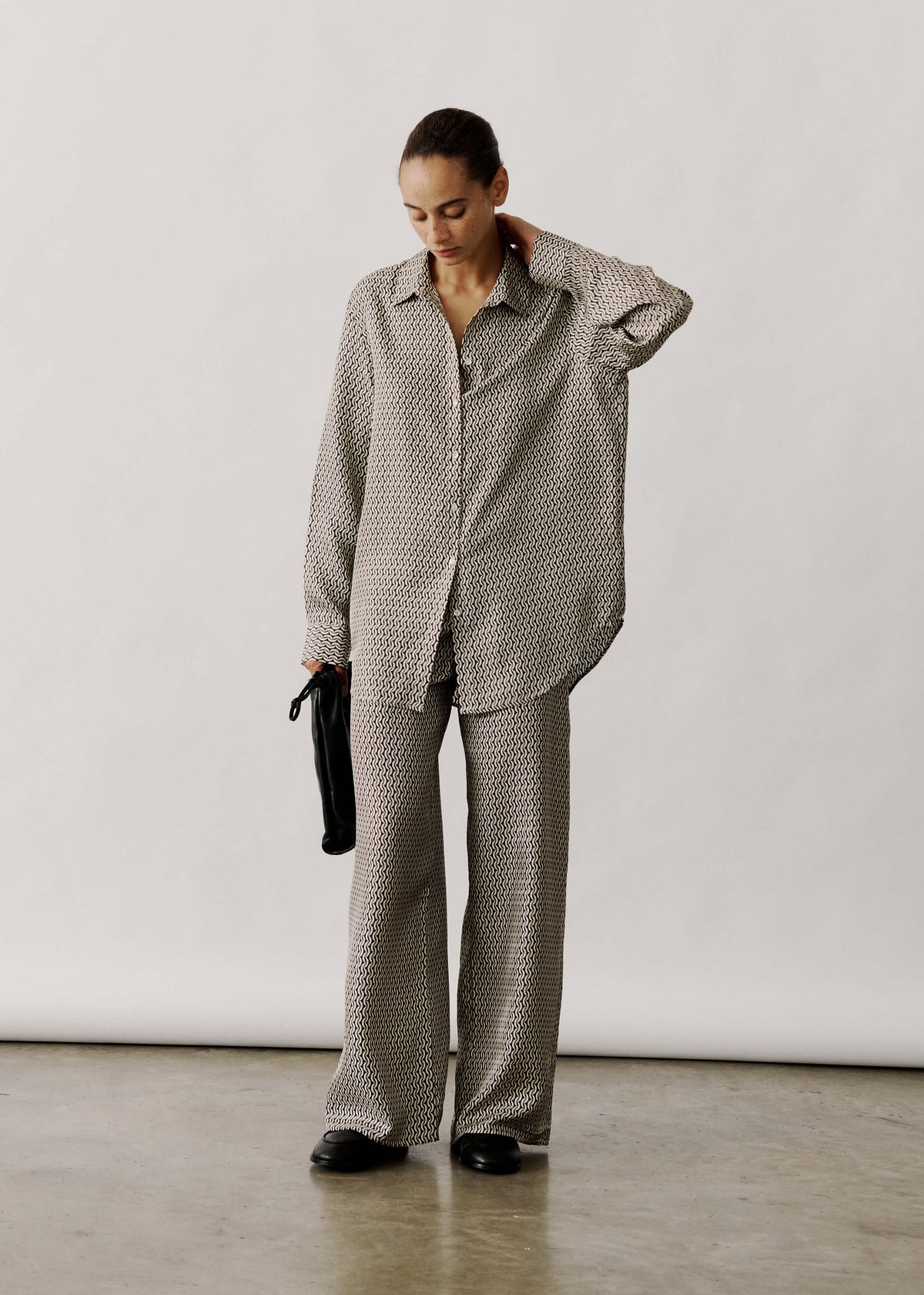
Opt for breathable lightweight trousers for travel ease

3. Choose a silhouette that flatters your proportions
Begin by mapping your proportions: measure the waist, high hip, and full hip, then stand before a full-length mirror to note where your body naturally narrows. Choose rise and waist placement deliberately. A high rise lengthens the leg, a mid rise sits at the natural waist for balance, and a low rise shortens the leg line. How you tuck—full tuck, half-tuck, or adding a belt—alters perceived proportions; small changes at the waist often shift the look more effectively than changing the entire trouser shape. Finally, match leg shape to movement and purpose: straight or softly tapered legs create a lean, versatile silhouette for day and evening, while wide legs and pleats introduce volume and a relaxed holiday look.
Select a length with your height and footwear in mind. Full-length trousers that graze the top of the foot create a lengthened silhouette, ankle-skimming hems feel contemporary, and cropped lengths showcase sandals or trainers on holiday. Try trousers on with the shoes you plan to wear so the final silhouette reads as intended in motion. Consider fabric behaviour: heavier, structured linen holds a straighter line and flatters tailored shapes, while softer linen drapes and skims the body; test each option by walking and when seated to see how the cloth settles. Refine the fit with minimal alterations, such as hemming, taking in the waist, or adding a pressed crease, to improve proportion and wearability without altering the garment's essential design.
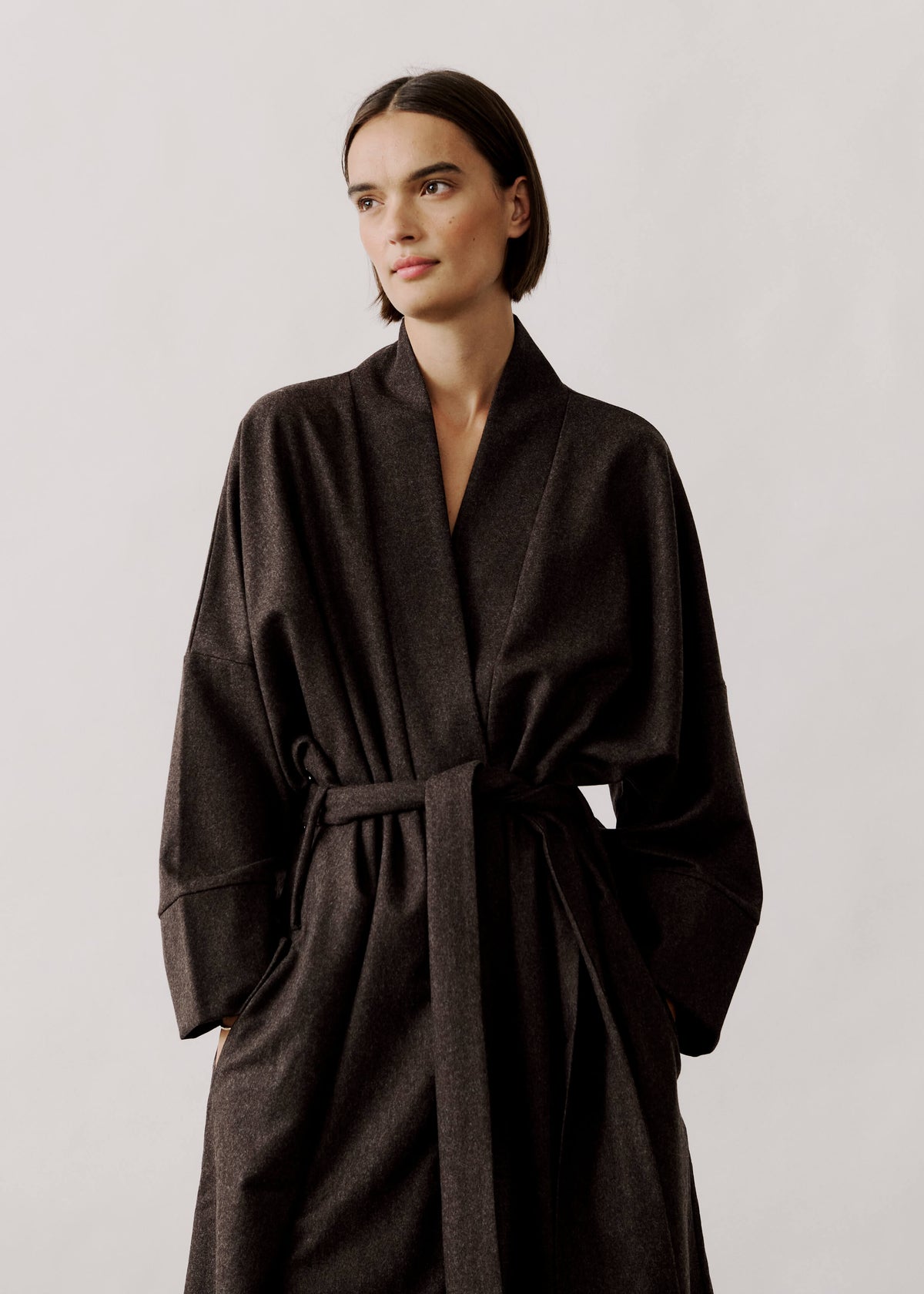
Opt for a mid-rise straight leg for effortless polish.

4. Tailor length and sizing for an impeccable fit
Decide the final trouser length with the shoes and occasion in mind. Fit the trousers in the footwear chosen for the outfit: aim for a cropped ankle for daytime and holiday looks, a slight break for heels and eveningwear, and a floor-skimming hem only if you will regularly wear heels, since length alters perceived leg proportions and formality. Get measured both standing and seated, wearing your intended shoes and undergarments, and walk and sit during the fitting to reveal any pulling or riding up. Ask the tailor to adjust the hem and waist based on movement rather than static measurements, and account for linen's behaviour by pre-washing or steaming before major alterations; request modest seam allowances so the fabric can relax without limiting future options.
Prioritise adjustments to the rise and crotch rather than focusing only on the waist and hem. The rise determines how trousers sit at the hip and through the crotch, so altering it, taking in the seat, or reshaping the waistband will cure gaping, reduce bagging, and ease tightness when you sit, balancing comfort and proportion more effectively than raw waist measurements. Tailor to the intended silhouette: taper narrow legs slightly for a cleaner line, preserve fullness or add a wider hem for wide-leg styles, and retain subtle details that maintain movement. Choose blind hems or small vents to preserve drape and ease of movement, and avoid over-altering in ways that change the trousers' character.
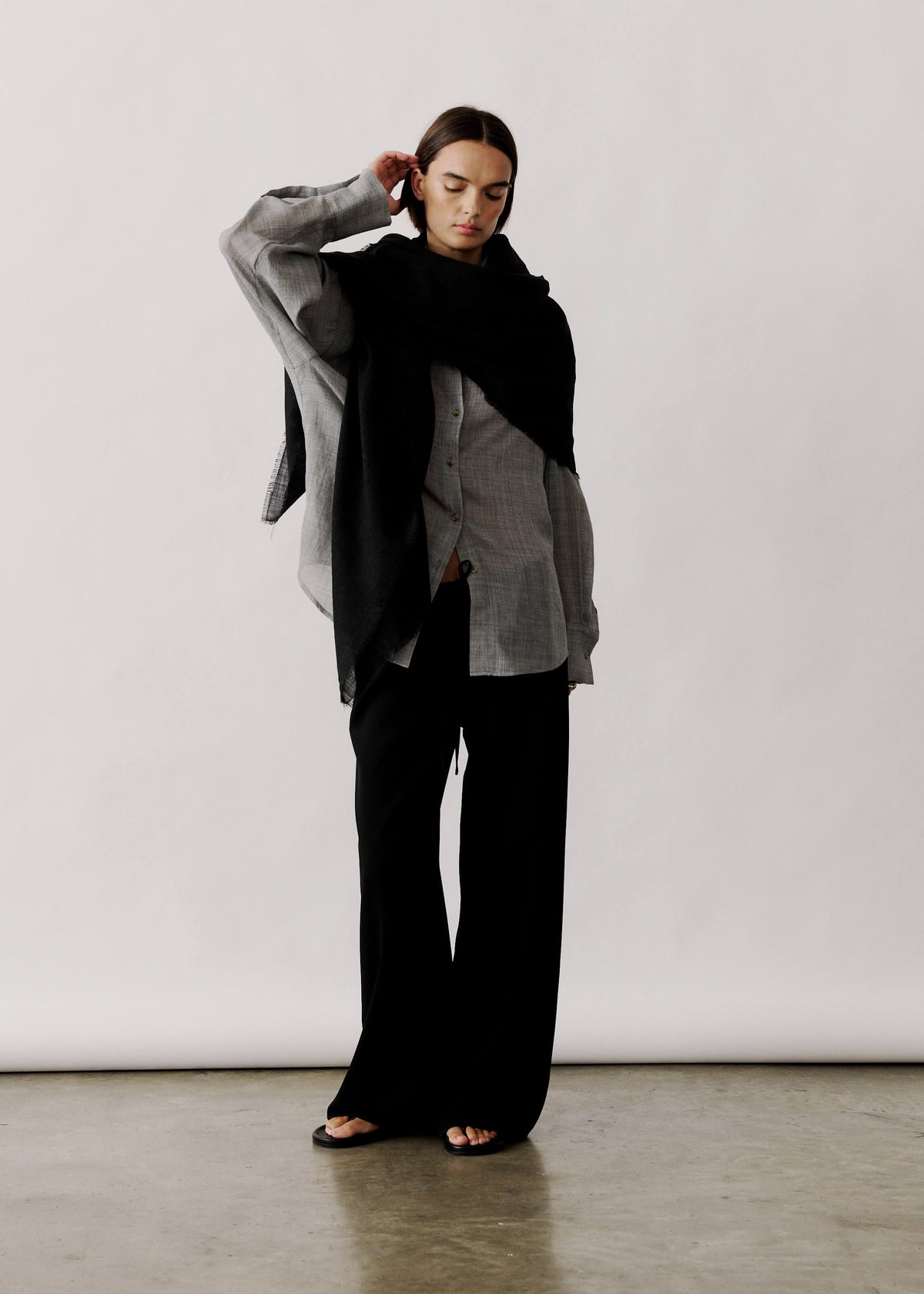
Choose linen wide-legs for relaxed, breathable tailoring.

5. Pair complementary colours and textures
Anchor the outfit with a single, strong colour: navy, camel, or olive. These tones mute the brightness of white linen trousers and create a focused silhouette. Pair the trousers with a navy blazer for structure, a camel knit to warm the palette, or an olive utility jacket for a relaxed, grounded look, and keep accessories in the same colour family for cohesion. Change perceived formality by mixing textures: crisp linen with silk or satin elevates the look for evening; paired with slubby cotton or a lightweight knit it reads daytime; paired with a textured resort shirt it becomes effortless for holiday wear. Work a tonal palette of off-white, cream, and beige to lengthen the line, vary textures to avoid flatness, and limit the scheme to three tones so the outfit feels deliberate rather than washed out.
Introduce small-scale patterns and colour accents close to the face, such as a fine-striped top, a subtle floral shirt, or a patterned silk scarf, to add interest without overwhelming the trousers. Choose prints that echo a colour from the outfit to unify the look, and avoid oversized motifs that compete with a clean trouser line. For evening, introduce metallic accents and structured leather touches — a polished belt or metallic clutch will elevate the outfit. For holiday ease, opt for woven sandals and a slouchy tote. Balance proportions deliberately: pair wide-leg linen with a fitted top or cropped jacket, and combine slim trousers with a softly draped blouse to keep the silhouette intentional.
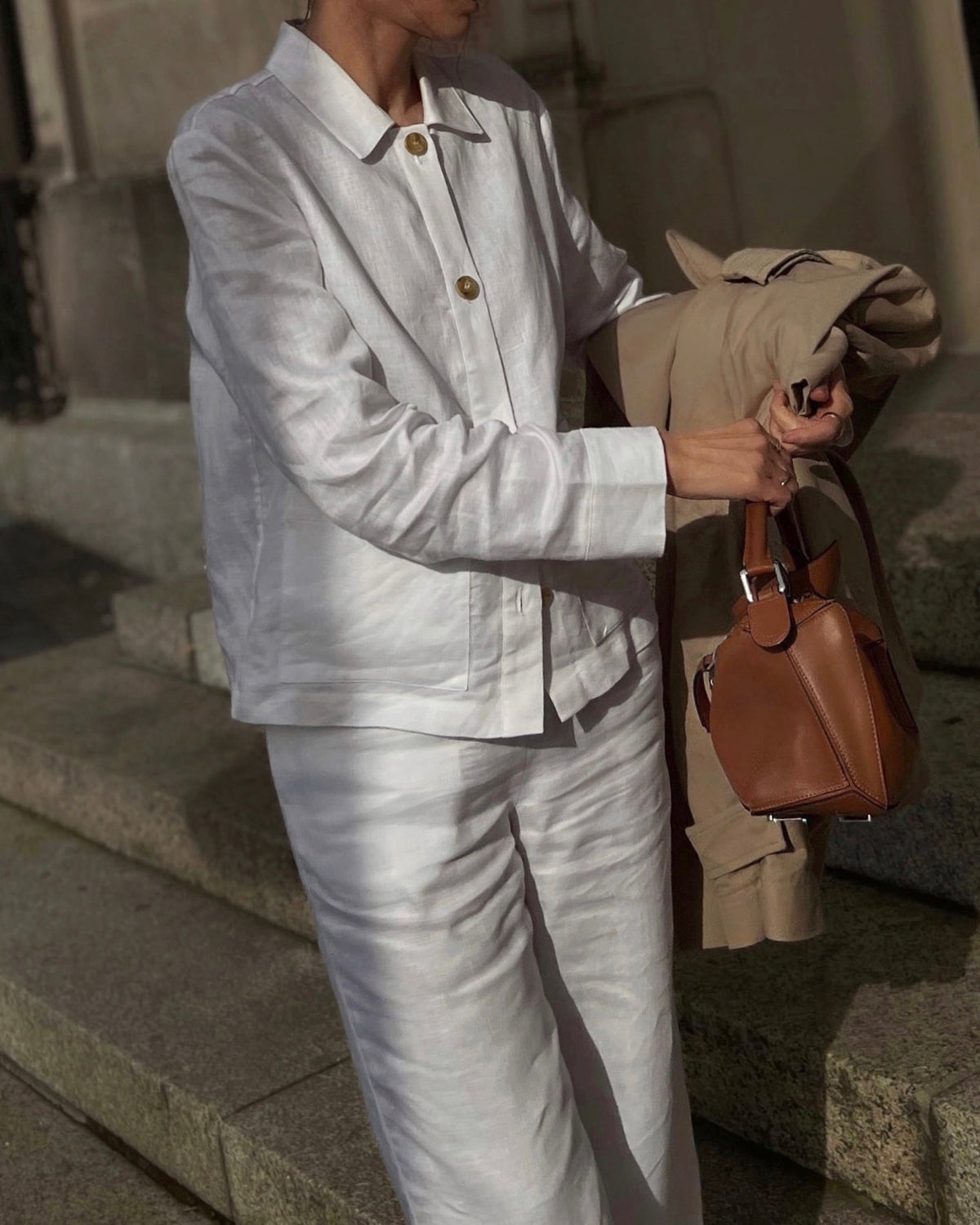
Introduce a silk shirt to elevate linen for evening.

6. Style white linen trousers for relaxed daytime elegance
Keep the silhouette relaxed yet defined: pair wide-leg or straight white linen trousers with a fitted tee, camisole, or a shirt tucked at the front, and cuff the hems to ankle length to reveal flat sandals or low-profile trainers. Add depth without heavy colour through contrasting fabrics, such as crisp white linen against textured cotton, soft silk, or a woven straw bag, and favour pastels, beige, and muted greens for a calm, holiday-ready palette. Choose footwear that reads casual but considered, such as flat sandals, espadrilles, or minimalist trainers, and ensure the strap and sole widths sit in proportion to the trousers' leg volume. Finish with pared-back accessories: a narrow belt, a lightweight scarf, an open cotton shirt, and minimal jewellery or sunglasses to lift the look while keeping an easygoing mood.
Embrace linen's natural texture: soft creasing is part of its character. Wear light-coloured undergarments to minimise show-through, and reshape trousers while damp to preserve their intended drape and comfortable fit. Choose accessories that define without weighing the outfit: a simple belt, a delicate scarf, or minimal jewellery to keep the look intentional with little effort. These practical steps help daytime and holiday ensembles remain relaxed, polished, and easy to wear.
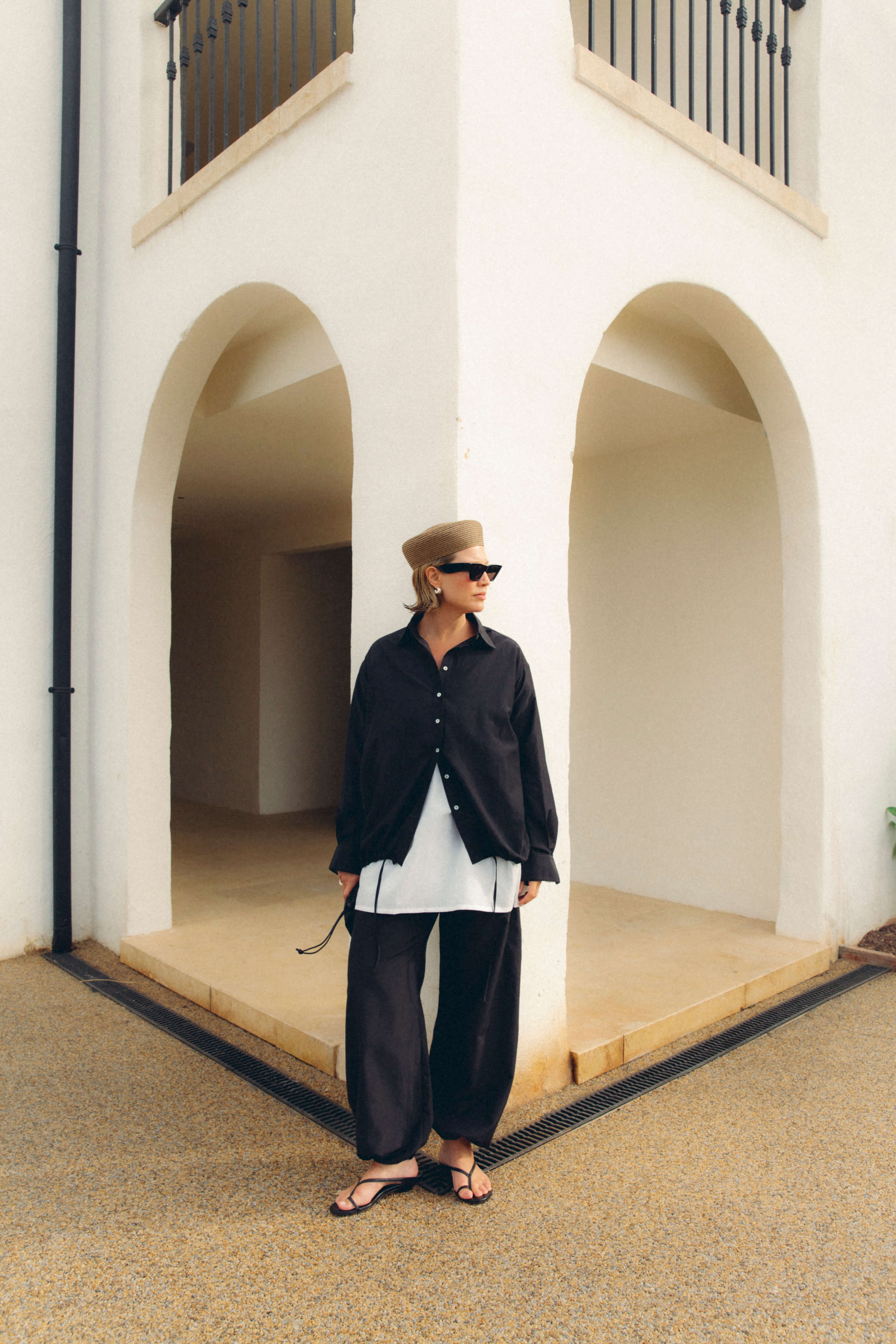
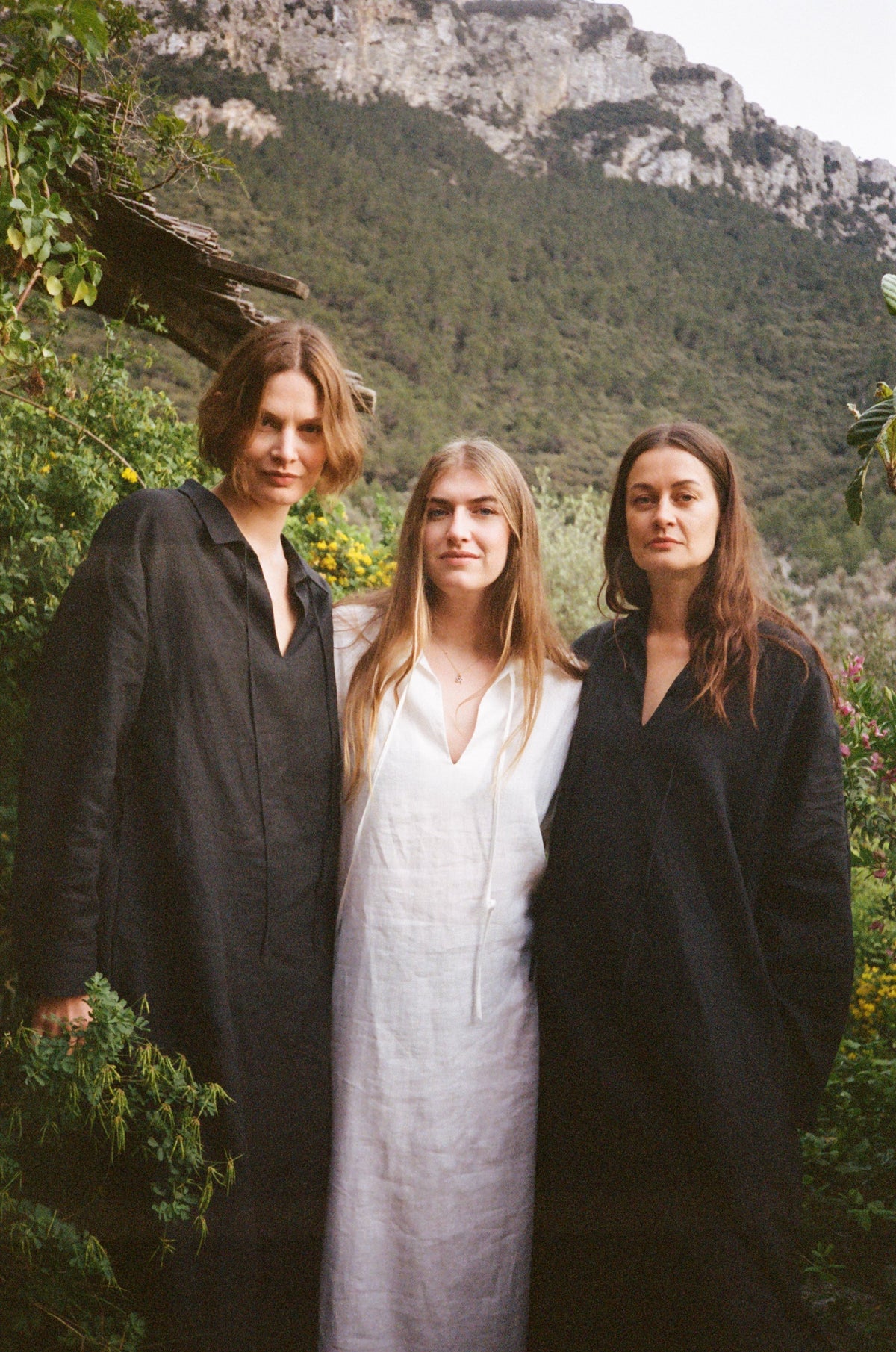
Layer a relaxed white tunic for effortless holiday polish.

7. How to wear white linen trousers for smart-casual workwear
Prioritise fit and tailoring: choose a mid-to-high rise, trim the hem to sit at the ankle or just above the shoe, and press a crisp crease to create a structured silhouette that appears polished on camera and in meetings. Opt for a mid-weight linen or a linen blend to minimise transparency and excessive creasing, and always steam or press before wearing. Pair with skin-toned undergarments to keep lines clean. These small finishing measures elevate relaxed linen into a refined base for smart-casual workwear.
Tuck a crisp button-down or lightweight blouse into linen trousers, then add a single-breasted, lightly tailored blazer to define the waist and create clean lines. Anchor the outfit with closed-toe shoes, such as loafers, brogues, or low block heels, and choose no-show socks or sheer, skin-toned hosiery to temper a summery feel. Keep accessories minimal and purposeful: a leather belt, a slim watch, and a structured tote convey polish, while a small silk scarf or simple studs introduce personality without undermining professionalism. The result balances linen's relaxed texture with considered structure, making the trousers work-appropriate while retaining their ease.
Tuck a silk-cotton tunic into trousers for polished ease.

8. Elevate white linen trousers for evening events
Pair white linen trousers with evening-weight pieces such as silk camisoles, satin blouses, or a velvet jacket to introduce subtle sheen and fluid drape against the matt linen in low light. Refine the silhouette by pressing a crisp crease, ensuring the waist sits correctly, and favouring tapered or straight legs over voluminous cuts for a cleaner profile. If the linen shows under bright lights, add a lightweight lining or a slip camisole, and select richer, darker tops to balance the pale trousers. Check the complete outfit in similar lighting before you leave to confirm opacity and overall balance.
Select footwear to alter proportion and tone. Pointed heels or strappy sandals elongate the silhouette and elevate formality, while a chunky heel stabilises wide trousers without sacrificing poise. Let accessories act as focal points; choose one standout piece, such as a metallic clutch, a structured bag, statement jewellery, or a slim belt, to maintain cohesion. Together, these choices transform casual linen into a considered evening look.
Choose tailored white linen trousers for polished evening looks.

9. Pack white linen trousers for versatile, holiday-ready outfits
To minimise creases and save space, roll white linen trousers loosely around a sheet of tissue paper or with a lightweight top tucked inside the legs. Place them on top of other items in the suitcase, then hang them on arrival to allow the natural fibres to relax. Light creasing is part of linen’s character; smooth wrinkles quickly with a travel steamer or by hanging the trousers in a warm, steamy bathroom. For day-to-day care while on holiday, shake sand out before packing, spot-clean stains with a damp cloth and a little mild soap, and store garments folded over a hanger rather than crushed at the bottom of the case.
Create swap and go wardrobes by packing a small, considered mix of versatile tops and outer layers: a plain lightweight top, a patterned top, a silk or satin camisole, a casual shirt, and a lightweight blazer to elevate evenings. Add two pairs of shoes and two accessories, such as a belt and a statement necklace, to achieve distinct day and evening looks without extra weight. Limiting tops to three and including one or two multipurpose outer layers still produces many combinations. Count outfits as tops × shoes × outer-layer options (excluding bottoms and accessories). Three tops, two shoes, and two outer layers yield 12 permutations. Layer breathable base fabrics such as cotton and silk, carry a thin knit or long-sleeve linen for cooler evenings, and favour quick-drying materials so trousers remain comfortable from warm days into breezy nights.
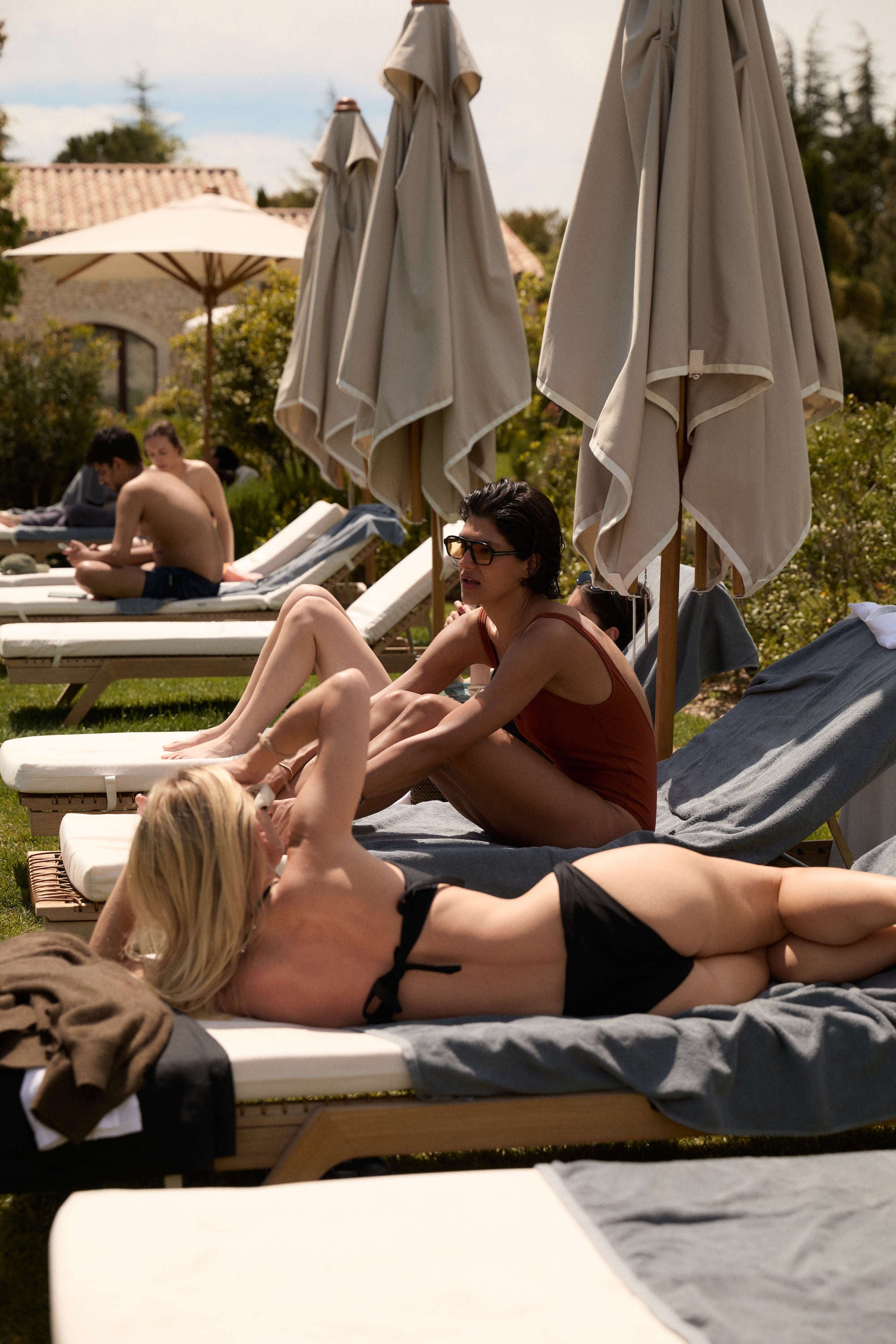
Pack linen-blend shorts for effortless day-to-night outfits

10. Preserve linen: launder gently and choose sustainable fibres
To keep white linen trousers crisp and long-lasting, follow a gentle care routine. Wash on a gentle machine cycle or by hand in cool water with a mild, liquid detergent. Close zips and fasten buttons, and use a mesh bag if machine-washing. Avoid fabric softener, which can coat the fibres and reduce absorbency, and do not overload the machine so garments can move freely and rinse thoroughly. Treat stains promptly. Soak the affected area in cool water, then apply an oxygen-based stain remover, or use a paste of bicarbonate of soda and water for localised marks. Always test any product on an inconspicuous seam before treating the whole garment. Avoid chlorine bleach, which attacks cellulose fibres and can cause yellowing and brittleness. Reshape the trousers while damp, then hang or lay flat to dry in the shade. Avoid high-heat tumble drying. Press with a steam iron while the fabric is still slightly damp, or use a handheld steamer, working from the inside out or with a thin cloth to protect the surface. Alternatively, embrace relaxed creases for a casual look.
Air linen trousers between wears to reduce the need for washing; airing lets moisture and odour dissipate and reduces fabric abrasion. Fold them, or hang on soft-padded hangers, to protect the waistband from stretching. Store garments in breathable cotton bags rather than plastic to prevent yellowing and trapped moisture. Mend loose seams and replace worn fastenings promptly; simple alterations or patching extend a garment's usable life. Choose pre-washed or low-impact processed linen with independent certification, as pre-washed fabric resists shrinkage and certified processing limits chemical use. When travelling, roll trousers to minimise creasing, and on arrival unpack and hang them in a steamy bathroom or use a travel iron to relax the fibres. Spot-clean stains to postpone a full wash while away.
White linen trousers offer breathable comfort with an understated polish. Fabric weight, silhouette, and fit decide whether they read casual, smart, or evening-ready. Opt for midweight or blended linens for greater opacity and a smoother drape that minimises transparency and reduces creasing. Tailor the length and rise for correct proportion: cropped hems and higher rises can lengthen the leg, while full-length, mid-rise cuts create a relaxed, refined line. Pair linen with contrasting textures, such as silk, fine knit, or soft leather, to preserve the fabric’s natural character while elevating the overall look.
Treat the ten headings as a practical checklist: fabric weight and weave; silhouette and tailoring; colour and texture; occasion-specific styling; packing and care. Use them to assemble dependable day, evening, and holiday looks. Change one detail at a time — for example, hem length, a tonal anchor, or an added lining — and you will quickly see how small adjustments sharpen the silhouette and extend a garment's life.

Leave a comment
This site is protected by hCaptcha and the hCaptcha Privacy Policy and Terms of Service apply.